




Guest Post by Eric Peters
It’s important to understand that we are not helpless. That we have never been helpless. They want us to believe we are. That we are caught up in a rip tide of inevitability. It certainly felt that way to many during the late “pandemic,” as it was styled. The thing to remember about that is that all the Sickness Kabuki was voluntary.
You didn’t have to wear a “mask.” Or stand six feet apart. Or do any of the other ridiculous things that they pressured you to do.
The italics are there to emphasize the distinction between having to do a thing and feeling pressured to do a thing. Most of the Sickness Kabuki – especially the “mask” wearing – was enforced by social pressure, creating a feedback loop of sickness psychosis. People wore those stupid (because useless) surgical masks because they saw almost everyone else wearing them. Most people don’t want to be seen (literally, in this case) as not being part of the group. The herd is perhaps a more accurate term. Put anther way, it is difficult – psychologically – for many people to deal with standing apart from the herd.
But it is possible. All you have to do is do it.
I did it. Not once during the entire awful episode did I don a “mask.” I was told I had to leave stores – and told I could not enter various places unless I played along – but I always had the option to not play along. So did everyone else. Yes, there was inconvenience involved; I sometimes had to figure out alternatives. I found a new dentist, for example – who did not demand I play along with the teeth-aching idiocy of wearing a surgical mask to walk from the waiting room to the examination room, where the mask obviously had to come off – as my old dentist demanded.
It was an inconvenience to find a different dentist – but a worthwhile one. The new one turned out to be better, aside from his not pushing masks on anyone.
I bring up bad memories to try to make a point. Most of the things they try to foist on us are things we can refuse to go along with – without risking the gulag. Some are petty degradations that have deeper significance, such as the no-discretion-allowed ID’ing of everyone who wants to buy beer or wine, even when the person attempting to buy it is gray-haired and wrinkled and obviously hasn’t been under age for decades. It’s degrading to both parties. Refuse to be degraded. Tell the cashier no, you’re not giving her your ID and if she persists, walk away – leaving everything you were about to buy on the conveyor belt. It’s not mean. It’s not playing along.
There’s always a way to get alcohol without playing these stupid games that serve an evil purpose, which is to get us used to such degradations so that we will abide more and worse. That’s what the TSA is all about, by the way. It’s what the DWI checkpoint that normalized this sort of thing and made so many people willing to abide being crotch-hefted and scanned by the TSA were all about. Most of us do not have to fly. If enough of us – maybe as few as 20 percent of us – had refused to accept being crotch-hefted and scanned as a condition of being allowed to fly when this conditioning was first rolled out 25 years ago, they would have had to stop it.
If a restaurant hasn’t got menus and asks you to scan a QR code so that you can view the menu on your tiny little screen and peck at your order like a seagull enraptured by a piece of tinfoil on the beach, tell them you don’t have a smartphone and do they have a physical menu for you to read? If they don’t, don’t eat there. There will always be a place to eat that doesn’t demand that you scan a QR code to find out what’s to eat.
Speaking of smartphones . . .
Are you forced to carry one everywhere you go? Or is it that you feel pressured to carry one everywhere you go? You could choose to leave the thing in a desk drawer and maybe check for messages whenever you get back home. This was what people did in the Before Time – roughly, about a decade or so ago, when many people didn’t yet have smartphones. Go back another decade and most people did not have them. They checked messages when they got home. Life was not medieval. Arguably, it was better. It was certainly more human because people generally interacted with each other as opposed to pecking at screens all day.
If you have kids, let them play outside or do something besides pecking at a smartphone or tablet. Life is out there – not in there.
Are you forced to go into debt to buy a new “connected” car that also has the soon-to-be-mandatory (come 2027) so-called “drowsy/distracted driver” eye-movement monitor? Or is it possible to drive something older that you own – that doesn’t watch your eye movements?
I own a 25 year old truck and will never own a vehicle that is “connected” or that has an eye movement monitor. I’ll walk first. Probably, it won’t come to that. It’ll merely be having to put up with the occasional inconvenience of driving an old vehicle that needs fixing every now and then. (As if brand-new cars were perfectly reliable.)
The more we say NO – and the more we push back and get into the habit of ignoring henpecky, effronterous laws, the easier it gets to be bolder in your disobedience. This disobedience can scale, too. I’ve begun ignoring the law in my state that I must wear a helmet when I ride my motorcycle. I never “buckle up” for “safety,” either. Yes, I risk getting a “ticket” – that is, being waylaid by one of the state’s thugs and handed an extortion note. But it’s a risk I’m willing to take, because it’s worth it. Defiance feels good! I also hope that others will also take the same risks if they see me “getting away” with it. Just like back during the “pandemic,” when I showed my face and thereby egged on others to show theirs as well.
The more of us that stop playing along, the harder it becomes for them to pressure us to play along.
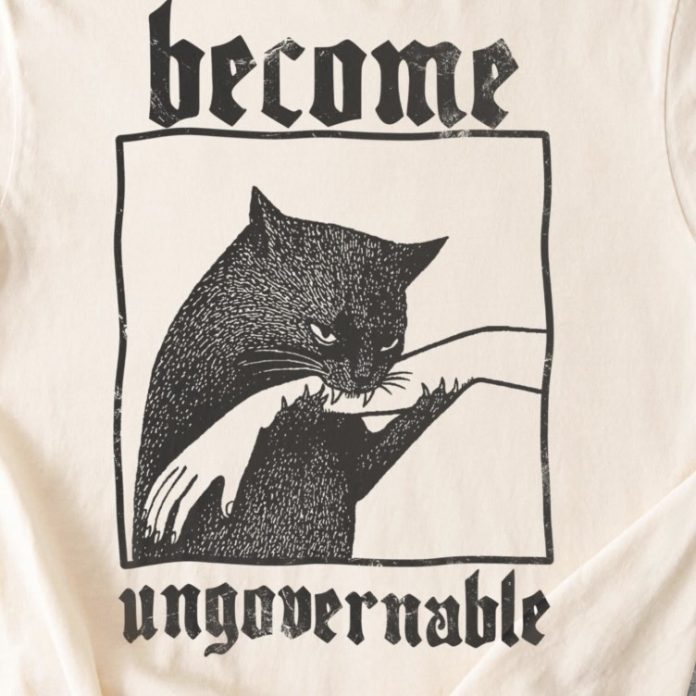
Become ungovernable.
It is vastly more effective – and satisfying – than Voting Harder.
. . .
Tweet
Continue reading...
[ H/T The Burning Platform ]
It’s important to understand that we are not helpless. That we have never been helpless. They want us to believe we are. That we are caught up in a rip tide of inevitability. It certainly felt that way to many during the late “pandemic,” as it was styled. The thing to remember about that is that all the Sickness Kabuki was voluntary.
You didn’t have to wear a “mask.” Or stand six feet apart. Or do any of the other ridiculous things that they pressured you to do.
The italics are there to emphasize the distinction between having to do a thing and feeling pressured to do a thing. Most of the Sickness Kabuki – especially the “mask” wearing – was enforced by social pressure, creating a feedback loop of sickness psychosis. People wore those stupid (because useless) surgical masks because they saw almost everyone else wearing them. Most people don’t want to be seen (literally, in this case) as not being part of the group. The herd is perhaps a more accurate term. Put anther way, it is difficult – psychologically – for many people to deal with standing apart from the herd.
But it is possible. All you have to do is do it.
I did it. Not once during the entire awful episode did I don a “mask.” I was told I had to leave stores – and told I could not enter various places unless I played along – but I always had the option to not play along. So did everyone else. Yes, there was inconvenience involved; I sometimes had to figure out alternatives. I found a new dentist, for example – who did not demand I play along with the teeth-aching idiocy of wearing a surgical mask to walk from the waiting room to the examination room, where the mask obviously had to come off – as my old dentist demanded.
It was an inconvenience to find a different dentist – but a worthwhile one. The new one turned out to be better, aside from his not pushing masks on anyone.
I bring up bad memories to try to make a point. Most of the things they try to foist on us are things we can refuse to go along with – without risking the gulag. Some are petty degradations that have deeper significance, such as the no-discretion-allowed ID’ing of everyone who wants to buy beer or wine, even when the person attempting to buy it is gray-haired and wrinkled and obviously hasn’t been under age for decades. It’s degrading to both parties. Refuse to be degraded. Tell the cashier no, you’re not giving her your ID and if she persists, walk away – leaving everything you were about to buy on the conveyor belt. It’s not mean. It’s not playing along.
There’s always a way to get alcohol without playing these stupid games that serve an evil purpose, which is to get us used to such degradations so that we will abide more and worse. That’s what the TSA is all about, by the way. It’s what the DWI checkpoint that normalized this sort of thing and made so many people willing to abide being crotch-hefted and scanned by the TSA were all about. Most of us do not have to fly. If enough of us – maybe as few as 20 percent of us – had refused to accept being crotch-hefted and scanned as a condition of being allowed to fly when this conditioning was first rolled out 25 years ago, they would have had to stop it.
If a restaurant hasn’t got menus and asks you to scan a QR code so that you can view the menu on your tiny little screen and peck at your order like a seagull enraptured by a piece of tinfoil on the beach, tell them you don’t have a smartphone and do they have a physical menu for you to read? If they don’t, don’t eat there. There will always be a place to eat that doesn’t demand that you scan a QR code to find out what’s to eat.
Speaking of smartphones . . .
Are you forced to carry one everywhere you go? Or is it that you feel pressured to carry one everywhere you go? You could choose to leave the thing in a desk drawer and maybe check for messages whenever you get back home. This was what people did in the Before Time – roughly, about a decade or so ago, when many people didn’t yet have smartphones. Go back another decade and most people did not have them. They checked messages when they got home. Life was not medieval. Arguably, it was better. It was certainly more human because people generally interacted with each other as opposed to pecking at screens all day.
If you have kids, let them play outside or do something besides pecking at a smartphone or tablet. Life is out there – not in there.
Are you forced to go into debt to buy a new “connected” car that also has the soon-to-be-mandatory (come 2027) so-called “drowsy/distracted driver” eye-movement monitor? Or is it possible to drive something older that you own – that doesn’t watch your eye movements?
I own a 25 year old truck and will never own a vehicle that is “connected” or that has an eye movement monitor. I’ll walk first. Probably, it won’t come to that. It’ll merely be having to put up with the occasional inconvenience of driving an old vehicle that needs fixing every now and then. (As if brand-new cars were perfectly reliable.)
The more we say NO – and the more we push back and get into the habit of ignoring henpecky, effronterous laws, the easier it gets to be bolder in your disobedience. This disobedience can scale, too. I’ve begun ignoring the law in my state that I must wear a helmet when I ride my motorcycle. I never “buckle up” for “safety,” either. Yes, I risk getting a “ticket” – that is, being waylaid by one of the state’s thugs and handed an extortion note. But it’s a risk I’m willing to take, because it’s worth it. Defiance feels good! I also hope that others will also take the same risks if they see me “getting away” with it. Just like back during the “pandemic,” when I showed my face and thereby egged on others to show theirs as well.
The more of us that stop playing along, the harder it becomes for them to pressure us to play along.
Become ungovernable.
It is vastly more effective – and satisfying – than Voting Harder.
. . .
Tweet
Continue reading...
[ H/T The Burning Platform ]