



“I was trying to save my own life, but I knew I could not let all those people die.” Those words, spoken by Capt. Smit Machchhar from his hospital bed to Indian Prime Minister Narendra Modi, may best explain what happened aboard Flydubai Flight 1073.
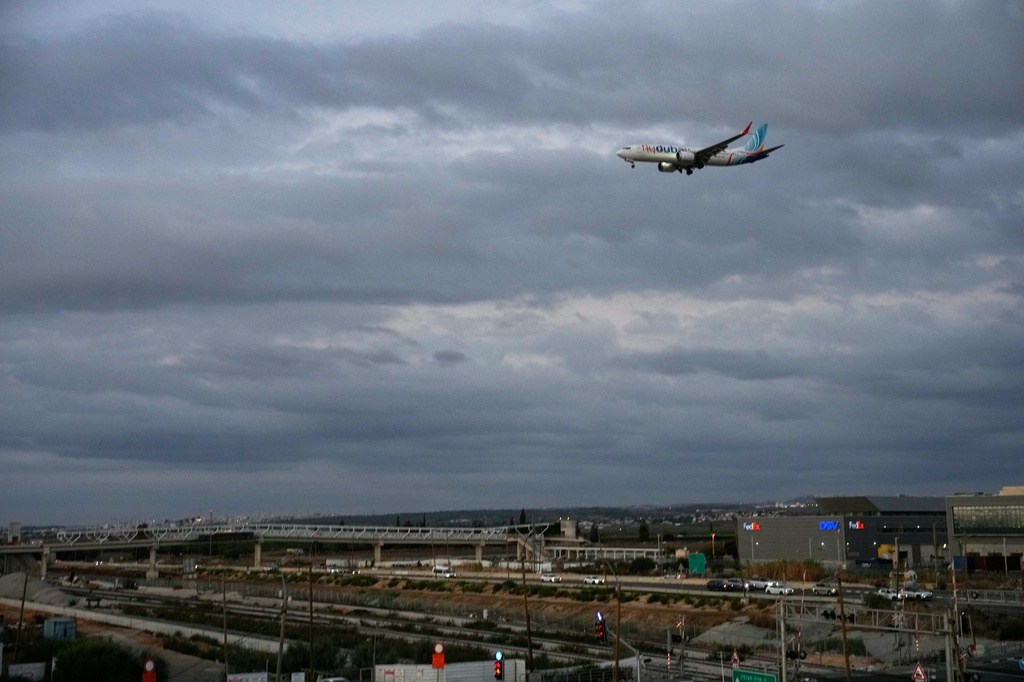
On Sept. 30, Machchhar was flying from Dubai to Tel Aviv when his co-pilot attacked him and sent the aircraft into a plunge. Badly wounded and lying on the cockpit floor, Machchhar sensed that the plane was going down. He later described telling himself he had “one last push” left. He reached the cockpit door and opened it. Passengers and crew rushed in and subdued the attacker, while two Flydubai pilots traveling as passengers helped land the aircraft safely in Saudi Arabia.
Had Machchhar not opened that door, no one outside the cockpit could have reached the attacker. The plane was already plunging. Everyone aboard was likely to die.
Israel has announced that Machchhar will receive its Presidential Award for Civilian Heroism when he recovers. President Isaac Herzog has already presented the award to six others aboard the flight, saying they saved 174 lives.
But it is Machchhar’s honesty — and his humility — that keeps coming back to me.
He did not describe himself as fearless or pretend that his first thought was a perfectly selfless desire to save strangers. He said plainly that he was trying to save his own life.
There is something deeply human about that.
Does wanting to survive make what he did less heroic?
I don’t think it does. If anything, it makes his heroism easier to understand.
We have a romantic idea of heroes as people who rise above ordinary human instinct. They stop fearing death, forget themselves, and act from pure altruism.
Real people are rarely that simple.
Machchhar wanted to live. Of course he did. He wanted to return to his family. But in the same desperate moment, he understood that everybody else aboard was depending on what he did next.
Heroism may not require the absence of self-interest. It may be what happens when self-preservation and responsibility to others occupy the same moment, and a person still chooses to act.
That thought reaches far beyond an airplane cockpit.
We tend to think of history as something made by presidents, generals, and dictators. Sometimes it is. But history is also filled with moments when ordinary people suddenly acquire enormous power over another person’s fate.
Open the door. Hide the family. Report the neighbor. Provide the false papers. Obey. Refuse. Look away.
The choice may take seconds. Its consequences can last generations.
The Holocaust offers some of history’s starkest examples. It was conceived and directed by fanatics at the highest levels of the Nazi regime, but it could not have been carried out by those leaders alone. The U.S. Holocaust Memorial Museum has documented how ordinary people became participants for very different reasons: ideological conviction, prejudice, fear, conformity, careerism, material gain, or simply a willingness to go along.
Civil servants processed confiscated property. Clerks maintained records used in persecution. Railway employees assisted deportations. Neighbors denounced neighbors. Others benefited when Jewish homes and businesses were taken from their owners.
Their motives were not identical. Neither were their choices.
And some people living under those same regimes chose differently.
They hid Jews, brought food, provided false papers, and warned families of impending arrests. Some risked themselves and their own families for people they barely knew.
I am not comparing an attempted airline attack with the Holocaust. The events are incomparable in scale and circumstance.
What connects them is something simpler: circumstances can suddenly give an ordinary human decision extraordinary power over another person’s life.
That does not mean everyone has the same freedom to act. Fear is real. Coercion is real. During the Holocaust, resistance could carry terrible consequences. Circumstances constrain human choice.
But they do not always eliminate it.
That is what makes this uncomfortable.
We like to divide humanity neatly into heroes and villains. The hero is made of different material than we are. The perpetrator belongs to some alien moral species. That is reassuring because it keeps us safely outside the story.
History does not give us that comfort.
People act from mixtures of motives. Fear can coexist with courage. Self-preservation can coexist with compassion. Ambition can coexist with obedience. Few consequential decisions arrive with a warning: This is your moral test.
Sometimes there is simply a door in front of you.
Machchhar was on the cockpit floor, injured and fighting for his own life. Opening that door might save him. It might save everyone else, too.
He opened it.
The question his story leaves us with is not whether his motives were perfectly selfless. It is whether any of us really knows what we would do when ordinary life suddenly presents us with a choice whose consequences are anything but ordinary.
Most of us will never face a decision as dramatic as Machchhar’s, and God willing, we will never face the moral abyss of Nazi-occupied Europe.
But we make choices affecting other people every day, usually without knowing how important they may become.
And when the pivotal moment finally arrives, there may be no time to become the person we always imagined ourselves to be.
We simply choose.
IT COULD HAVE BEEN ISRAEL’S 9/11. THE MEDIA CALLED IT A ‘MIDAIR ALTERCATION’
Sometimes another person’s life depends on it.
And in seconds, the ordinary can become extraordinary.
Arie Blitz, M.D., M.B.A., is a retired physician and independent writer in Weslaco, Texas, who writes on foreign policy, medical ethics, and public policy.
Continue reading...
[ H/T Washington Examiner ]