





In light of an FDA-purported review of chemical abortion pills, it’s important to note that information currently with the Environmental Protection Agency is extremely relevant.
Dr. Michael Varveris and I recently published a paper titled “Anti-Progesterone in Environmental Water” in the journal Issues in Law and Medicine. Our peer-reviewed study was a preliminary screening, testing water upstream and downstream of wastewater treatment plants, and tap water, in three U.S. cities. We found anti-progesterone activity (mifepristone and mifepristone equivalents) in the water in eight of the nine water conditions we sampled.
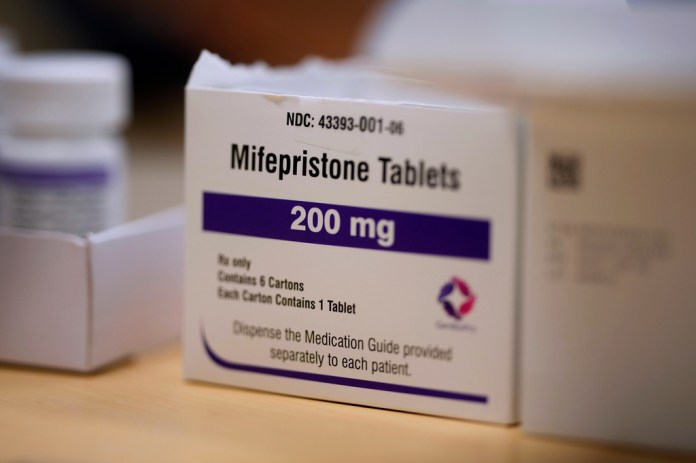
Mifepristone is the first drug administered in a medication abortion. Mifepristone is a human-made anti-progesterone steroid hormone. It is an endocrine disruptor not found in nature. Progesterone is important not only for maintaining a pregnancy, but for women of all ages, and men as well. Wild and domestic animal species would also be affected by mifepristone in the water. Steroid hormones in the water, and especially mifepristone, have been shown to be harmful to fish and other aquatic animals.
The public’s exposure to an endocrine disruptor in our drinking water deserves consideration. The study might be considered controversial by association with abortion, which makes finding common ground difficult to achieve. I want people to consider the facts we observed and not limit our focus to abortion.
A substantial portion of mifepristone is changed to related compounds in a woman’s body. However, all the common metabolites of mifepristone have similar activity to mifepristone itself. They should not be regarded as harmless.
Other studies have shown that unmetabolized mifepristone and its metabolites primarily leave the woman’s body through feces, probably because these compounds are not water-soluble and are therefore unlikely to be in the urine or blood. These compounds could also be in the placenta, which is their intended binding site, but are less likely to be in fetal remains. We have no evidence one way or another about the source of the mifepristone in water, whether feces, the placenta, or fetal remains.
The mifepristone manufacturer claims that 92% of the dose is eliminated from the woman’s body within a few days. That leaves 8% unaccounted for, possibly, or even likely, staying in the fatty tissues.
Because it is fat-soluble rather than water-soluble, mifepristone, like other steroid hormones, could be retained in the tissues, especially fatty tissues. The anti-progesterone activity found in drinking water could lead to bioaccumulation, that is buildup of mifepristone in the woman’s tissues over time. Previous studies of mifepristone metabolism have only studied serum levels of mifepristone.
My co-author, Dr. Varveris, is a clinician treating women with progesterone. He tests their tissue levels for both natural progesterone and remaining artificial steroids. (He gives only bioidentical hormones.) He indicates that it takes nine months to purge the woman’s body of the synthetics after she has stopped taking them.
Moreover, if mifepristone or its metabolites are present in the water, women could be continually microdosing themselves for years. Even if she never wants to get pregnant again, the drug would be a progesterone antagonist, causing all kinds of health problems.
It has been reported anecdotally that doctors have had to prescribe higher doses of progesterone for both young women seeking to maintain pregnancy and older women undergoing hormone replacement therapy. This is a possible effect of mifepristone in the water.
We used the CALUX test because it is recommended by the EPA for preliminary screenings in water quality studies. CALUX is routinely used to detect water pollutants, especially dioxin and steroid hormones. Anti-PR CALUX is a test specifically designed to detect anti-progesterone.
If a metabolite of mifepristone, or any other chemical, did bind to the responsive elements of the CALUX system and produce a luminescent response, that molecule would have anti-progesterone effects, and should be considered harmful and undesirable in our water supply. Other tests may be more specific, but no one has yet done those tests. We intend to confirm our findings with more replicates and a variety of test methods.
A few people take mifepristone for reasons other than abortion, such as Cushing’s syndrome. The Mayo Clinic said fewer than 1,000 people per year were prescribed mifepristone for Cushing’s. It is considered an orphan drug for this use. The number of Cushing’s patients is dwarfed by the number of women getting chemical abortions by a factor of at least 30. The probability is high that the source of mifepristone in water is from induced medication abortion, but we cannot know for sure. Again, there is no direct evidence.
I’M A DOCTOR. VIRGINIA’S ABORTION REFERENDUM GOES MUCH FURTHER THAN YOU REALIZE
Mifepristone is not removed by any conventional wastewater treatment. We tested water both upstream and downstream of treatment facilities and found no removal of anti-progesterone activity. Such water systems are designed to remove bacteria and viruses, not steroid hormones.
Regardless of one’s views on abortion, no one should be exposed to contaminated water. Mifepristone and other compounds with harmful anti-progesterone activity are in the water supply and could affect the next person or animal who drinks that water. Our goal should be to ensure that our water is free from these pharmaceuticals and pollutants.
Study author Elise Rose, Ph.D., received her undergraduate degree from Georgetown University, her MAT at Howard University, and Ph.D. from Kansas State University, and works in the field of environmental studies.
Continue reading...
[ H/T Washington Examiner ]