
Was October The Peak Of Hormuz Ship Attacks?
A renewed diplomatic push between the Trump administration and Tehran ahead of the US midterms sent Brent and WTI futures spiraling lower yesterday.
The selloff comes despite a record number of commercial ship attacks in the Gulf waters during October. Rather than choking off crude shipments through Hormuz, Iran's repeated attacks on tankers and cargo ships did quite the opposite, suggesting Tehran's leverage in the maritime chokepoint has somewhat eroded.
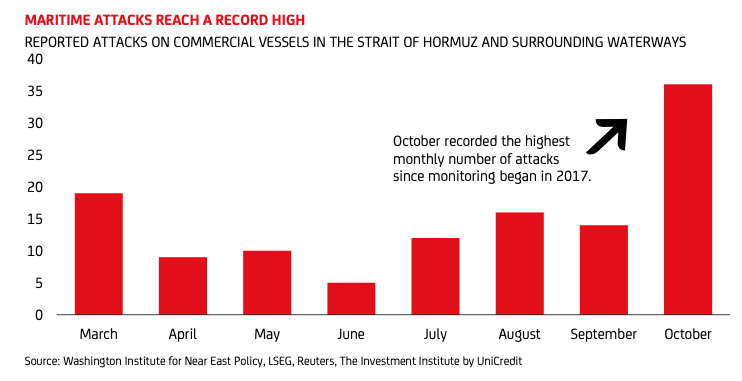
UniCredit investment strategist Tobias Keller shared a chart with clients earlier today showing last month's record number of ship attacks in Hormuz, which topped 35.
"Maritime security in the Gulf has deteriorated in recent weeks. A record number of attacks on commercial vessels in October is testing the recovery in oil flows and keeping geopolitical risk elevated across the region, suggesting that a return to pre-war market conditions may take longer than previously assumed," Keller said.
Keller said that physical supplies have recovered to at least 80% of pre-war levels through the Hormuz chokepoint, with some estimates showing a much larger rebound on alternative routes, including Saudi shipments through the Red Sea.
"Producers and shipowners have maintained exports through rerouting and more complex logistics, reducing the risk of an immediate supply shock. But this resilience has come at a price. Shipping is more expensive and less predictable, while strained product markets and depleted inventories leave the market with little capacity to absorb another major disruption. The eventual rebuilding of stocks could also support demand even as supply conditions improve," the analyst said.
Keller's view of what's next:
The record surge in ship attacks on the Hormuz last month could've been the peak of chaos if diplomatic progress continues, as the latest from Iran's state-run media outlet IRNA says that the Iranian Supreme Leader has granted the government authority for peace talks.
Tyler Durden Tue, 11/03/2026 - 05:20
Continue reading...
[ H/T ZeroHedge ]
A renewed diplomatic push between the Trump administration and Tehran ahead of the US midterms sent Brent and WTI futures spiraling lower yesterday.
The selloff comes despite a record number of commercial ship attacks in the Gulf waters during October. Rather than choking off crude shipments through Hormuz, Iran's repeated attacks on tankers and cargo ships did quite the opposite, suggesting Tehran's leverage in the maritime chokepoint has somewhat eroded.
UniCredit investment strategist Tobias Keller shared a chart with clients earlier today showing last month's record number of ship attacks in Hormuz, which topped 35.
"Maritime security in the Gulf has deteriorated in recent weeks. A record number of attacks on commercial vessels in October is testing the recovery in oil flows and keeping geopolitical risk elevated across the region, suggesting that a return to pre-war market conditions may take longer than previously assumed," Keller said.
Keller said that physical supplies have recovered to at least 80% of pre-war levels through the Hormuz chokepoint, with some estimates showing a much larger rebound on alternative routes, including Saudi shipments through the Red Sea.
"Producers and shipowners have maintained exports through rerouting and more complex logistics, reducing the risk of an immediate supply shock. But this resilience has come at a price. Shipping is more expensive and less predictable, while strained product markets and depleted inventories leave the market with little capacity to absorb another major disruption. The eventual rebuilding of stocks could also support demand even as supply conditions improve," the analyst said.
Keller's view of what's next:
The record surge in ship attacks on the Hormuz last month could've been the peak of chaos if diplomatic progress continues, as the latest from Iran's state-run media outlet IRNA says that the Iranian Supreme Leader has granted the government authority for peace talks.
Tyler Durden Tue, 11/03/2026 - 05:20
Continue reading...
[ H/T ZeroHedge ]