



Editor’s note: This is a lightly edited transcript of “Victor Davis Hanson: In His Own Words” from Daily Signal senior contributor Victor Davis Hanson. Subscribe to Hanson’s own YouTube channel to watch past episodes.
Sami Winc: [Vice President] JD Vance has come out to state that the defeat of the Republicans was due to—he said the economy as well, but—the war in Iran was the first thing he said, and our relationship with Israel. There’s been a big shebang in the media about those two statements, and I was wondering your view on that.
Victor Davis Hanson: He said four things. He said it was the war. Two, it was the economy. I think he means the gas prices that occurred because of the war. And then he said we didn’t put America first, and our relationship with Israel.
I can dispose of the last very quickly. People talk about Tucker [Carlson], and people in that circle talk about all this money. We gave them two and a half billion to three billion.
And it’s not like we give it to them. We give them the money, and then they buy back our stuff, the F-35s. They don’t go out and buy on the market, or they don’t build … They buy our things.
No. 2, it’s one-fifth of 1% of the budget, and we talked about that in the context of that antisemitic ad that Abdul El-Sayed condoned in Michigan, claiming the price of bananas and eggs was because of the Jews in Israel.
It’s 1%, basically, of U.S. foreign aid, 1%. And so, when he says that, he should ask himself: If it’s 1%, how about the other 5% here and the 5% here and the 5%? Are they unduly influencing us? And is there anything unique about Israel besides being a Jewish population in that 500-million-person, mostly Arab, but Iranian as well, Middle East?
And there is, and that is that it has a consensual government. It has free elections. It has free speech. It has religious tolerance. I know Tucker calls it an “ethno-state,” but I don’t think he’s been to enough Arab countries and seen the way Christians are treated, much less Jews, a million of whom were ethnically cleansed from all the Arab countries.
When I go to Israel, I see two million Arabs better off, voting and free, than they are in the West Bank or Jordan or Lebanon. If people don’t believe that, it’s a free country in Israel.
So, the Arabs would say this is an ethno-state, as Tucker Carlson reminded me, and I didn’t realize that I live in an apartheid state, as the people at Columbia and El-Sayed …
He said in his very haughty acceptance speech that we’re going to be against apartheid. OK, so they’re living in apartheid, so why don’t they go across the border to Lebanon, where it’s an Arabic-speaking, predominantly Arab country? Or they could go to Jordan or Iraq. They could go to Egypt. But they don’t want to do that because they know …
And I can tell you an anecdote very quickly that put the whole thing in crystal-clear perspective.
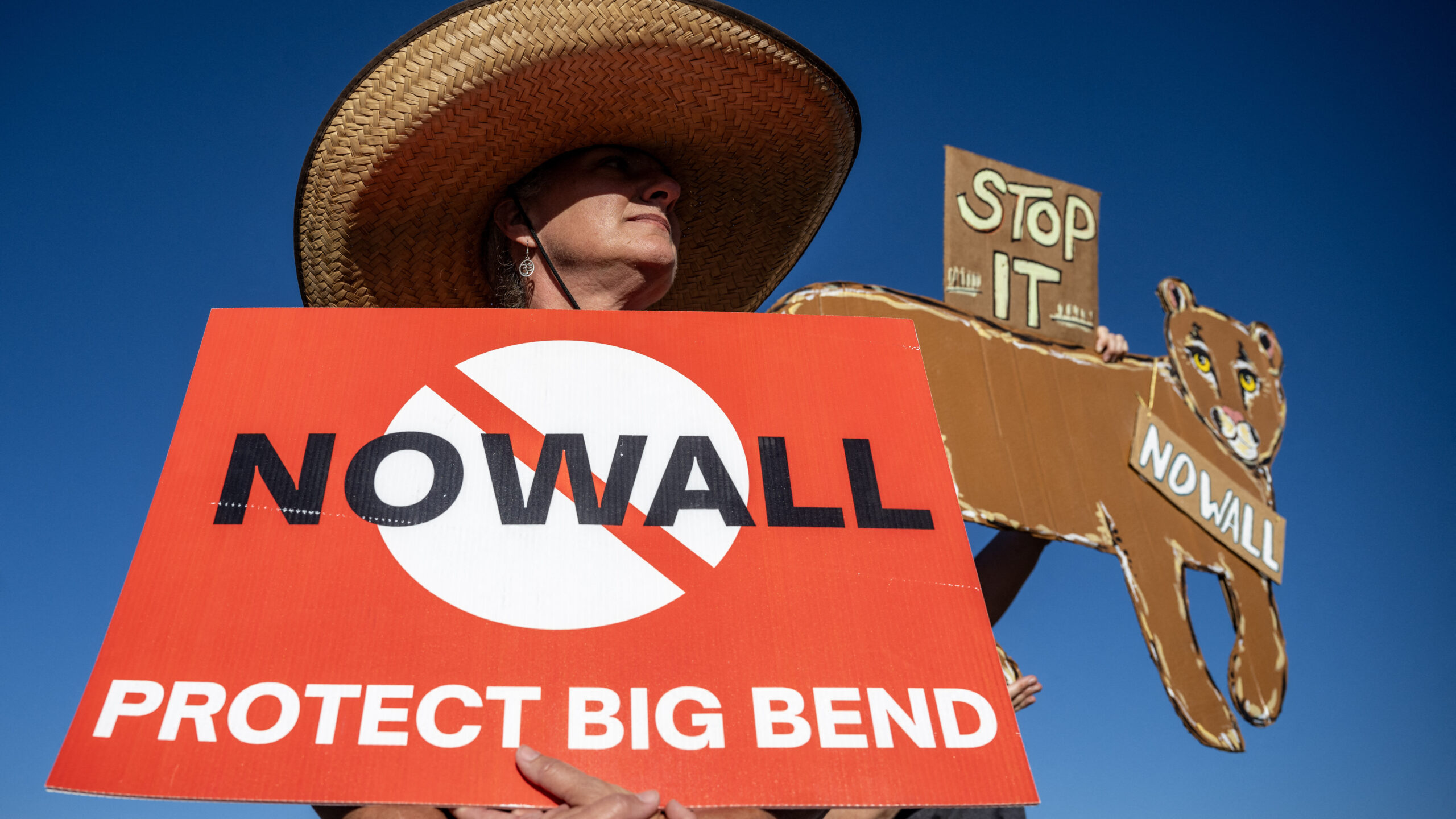
In 2006 or 2007, I went to Israel, and the IDF asked me whether I would be willing to go to the West Bank and talk to people in the West Bank and drive with an Army major who had been an American. And we drove for hours because they were building the wall under [Ariel] Sharon.
So, we got to the northern part, and there was a huge demonstration. And this community, an Arab-majority community, was right in the pathway of, adjacent to, the wall.
And I said, “Wow, what’s going on?”
He said, “We’re making adjustments in the 1948 line, and whatever acreage we take on one side, we’re going to take some out of ’48 Israel so we can add some in Jerusalem, East Jerusalem.”
OK. So, I said, “So they’re very angry. You’re just cutting them off from [Yasser] Arafat in the West Bank?”
He said, “No. They’re angry at us because we’re cutting them off from us.”
I said, “What do you mean?”
He said, “They’re an Arab village. A lot of them are civil servants. They vote in our elections. They have free speech. We don’t interfere with their religion. They have mosques. They can build them anywhere they want, and they’re far more prosperous, and they have Israeli pensions and health care. And if we detour the wall and give them territory … ”
“But,” I said,” you’re giving them territory from your original U.N. mandate, where the battle line stopped in ’48.”
He said, “Yeah.”
So I said, “They don’t want that?”
He said, “No, they want to be in Israel.”
And I said, “Why?”
And he said, “Let me just go down the … ”
And he explained what it was like to live under Arafat. If you spoke out against him or you were a Christian.
Despite what Tucker said about Bethlehem, I went to Bethlehem. And despite what he said about Jews being intolerant of other religions, that wasn’t true.
If it were true, these people would not have protested. And they would have said, “Get us on the Arafat side of the line. We don’t want to live with the Jews.”
They said instead, “I want to live with the Jews and not with Arafat.”
So, I don’t know what JD meant by that.
The war, very quickly. Marc Thiessen, I think, had it right. People supported the war when it first happened because they had seen what Trump had done in the first term: Soleimani, Baghdadi. He bombed the proverbial … I don’t like the word he used, S-H-I, blank, out of ISIS, but it was just a few weeks, and they gave up half of Iraq.
And then he went out, and they just decimated the Wagner Group within a day. Soleimani, Baghdadi, ISIS, Wagner Group.
And then the second term, bam, go down to Panama, straighten it out, no violence. Bam, brilliant kidnapping or extraction of Maduro.
So, then they hit, in June of last year, they bombed the … In 25 hours, they took out a lot of the nuclear facilities. So, everybody was fine with that.
And then they hit Iran, and it looked like it was brilliant. We didn’t know. We lost 23 people. That’s tragic. But it wasn’t 23 people who were lost for a failed cause. They were lost trying to denuclearize Iran, which has largely been achieved.
It wasn’t 13 Marines who were slaughtered in Kabul as we were leaving, $50 billion and being humiliated from Kabul.
So, what I’m getting at is the problem was that war, even though it was less money than we abandoned in infrastructure and weaponry in Kabul or fraud in California, and even though, tragically, we lost 23, compared to fighting in the Middle East, gosh, the point is that gas went up.
And the reason gas went up is they started talking. And JD had a vision that he wanted it over.
But you cannot… Let me say this very carefully. You cannot talk to a theocratic, apocalyptic regime that has just killed 40,000 of its own people. They’re not rational. They’re not even like North Korea, which has a patron like China that tells it what to do.
Nobody tells them what to do. Not China, not Russia.
And then we heard the war’s going to be over in two weeks. And on these podcasts, I kept getting frustrated.
Let’s just devastate them. Hit the nuclear, industrial, military targets. Hit some dual-use targets. Stop all the land bridge traffic into the former Soviet Union. Hit the rail lines. Hit the airports. And then keep the Strait open, keep the sanctions that [Treasury Secretary Scott] Bessent finally evolved into being crippling, keep them on, let them stew in their own juice, forget what Turkey says, arm the Kurds and go home.
And the oil price … Right now, the oil price is going to crash because there’s more oil going out of the Gulf now in various manners, via the Red Sea, Oman pipeline, etc., than before the war.
So let’s just dispense with that. There was a mistake, and all of us said that you don’t stop …
Napoleon told his marshals, he assembled them, and he said, “When one sets out to take Vienna,” the capital of the Austro-Hungarian Empire, “then take Vienna.”
What did he mean by that? You don’t march all the way up into a very risky invasion of the capital city of an imperial power and stop at the gates and say, “Can we negotiate?”
You don’t do that. You don’t do that, and we did that.
And I tried to be as polite as I could. I don’t have any influence, but I thought that was a mistake, and that was JD’s mistake.
Well, ultimately, it’s the commander in chief. I shouldn’t say that. But that was his modus operandi, the memorandum of agreement, MOI.
OK. The third thing, I’ll just not even talk about “America First.” I don’t know.
Donald Trump is being reviled every day in The Washington Post, The New York Times, but especially The Wall Street Journal for America First policies.
The tariffs. Why are you doing the tariffs? Why can’t you get industry back in the United States?
We have a, what, $1.2 billion Audi plant that just opened. We have more new jobs. The jobs report came out on job creation. It’s fantastic. Most of the jobs that have been created are almost all U.S. citizens.
We have lost three million illegal aliens. The Wall Street Journal said that was going to cripple the economy. Instead, it’s booming at 3.4% GDP, and it’s all going to Americans.
So, it is America First.
So, now we get to the crux: economic activity. And there is a legitimate economic question, and that is that gas right now is $4.18 a gallon. So, I think today it’s $4.10 on average. It got up to about $4.40.
Does anybody remember what gas was under Joe Biden in July 2022, a midterm year? It was $5.03.
Does anybody remember what gas was when Joe Biden had midterms? Gas was $4.10.
And was there a red wave? No. There was no red wave.
So, what was the difference? Why did Donald Trump, in every single category, have an economy that any disinterested observer would say was booming compared to Biden’s?
Winc: Let me answer what I think the ordinary person would say to you, or what the ordinary person’s logic was. They had high prices, and they thought that the prices themselves were going to come down, but nothing in economic history suggests that prices come down.
Hanson: Bingo. Bingo. That’s what I was going to say.
So, here’s the deal. Joe Biden had 3.3% smaller GDP. The stock market in the 2022 midterms was 20,000 points lower. The per-family median income was $14,000 lower. Job creation was lower. Inflation was three times higher than it is in this one.
So, all of those things together should have said it wouldn’t … Trump should … But he made a critical mistake.
I don’t mean he, Trump, but the whole administration.
The difference was that Joe Biden inherited a 1.9% inflation rate in 2021 and an aggregate of only 7%. So when he went up to 9.1%, what that meant was that in 2022, the price increase had been 16%, right?
When Donald Trump came in, he had 21%. So, he added 2.4%. That went up to 23%, and then this year it’s 3%. That went up to 26%.
Twenty-six is a lot different than 16%, number one.
No. 2, I went back, as I said earlier, and looked at the media. They didn’t even call it a crisis. And [Janet] Yellen said it’s just temporary. It’s supply chains.
And I wrote at the time, I said, “Yeah, it’s idiocy.”
The supply chains are still aborted and disrupted from COVID, but there’s pent-up demand. People want the dryer they couldn’t get for four years. They want the car they couldn’t buy.
And all of a sudden, there’s too little product for too much demand, and you exacerbated the problem by sticking $7 trillion in stuff into this inflationary atmosphere.
So, what am I getting at?
What if Donald Trump and Bessent had said this when they came into office?
We’re going to lower the inflation rate by two-thirds. We’re going to do it the first year, and we’re going to create more jobs than Biden did. And the stock market is going to go crazy, and you’re going to have a lot more money in your pocket.
But I inherited 21% inflation, and there is a difference between affordability, i.e., the price of things, versus the inflation rate.
To get 21% down to where I left office, if you want the Trump prices of January 2021 and not the Biden prices of January 2005, we need a recession or a depression because that’s deflation, and you’re not going to lower it 21%.
So, what I’m trying to do is two things. I’m trying to cut inflation the first year by two-thirds, and then I’m trying to raise the median income and the family income by 3% or 4% so that gradually these prices don’t go any higher, but your disposable income and spending are much higher, and then that won’t matter.
But they didn’t explain that, and the media just attacked them. And one of the biggest attackers was The Wall Street Journal.
All they could talk about was tariffs.
And then when something happened, like a low inflation rate or a record stock market or a record family income or a record low poverty rate, the poverty rate is almost two points lower than Biden’s, they would use this adverb: unexpectedly.
Unexpectedly.
So, the media coverage was biased. They didn’t explain to the consumer the difference between prices and the inflation rate, and all of a sudden, the price was high.
And that explains why the MAGA people, they did take the House in 2022. They only had nine seats, and they lost one Senate seat. That’s unheard of in a midterm election from a doddering …
But they had the entire echo chamber on their side.
And when this time came around, Donald Trump and his team paid the price for a 21% increase in prices that the public felt they should have ended.
And there was no way in the universe you could end that. You could only ameliorate it by raising wages, getting no tax on tips, helping the middle class and then cutting drastically the rate of inflation.
We publish a variety of perspectives. Nothing written here is to be construed as representing the views of the Daily Signal.
Continue reading...
[ H/T The Daily Signal ]
