


US Sanctions Charity, Gold-And-Cash Smuggling Network Accused Of Funding Hezbollah
Authored by Savannah Hulsey Pointer via The Epoch Times,
The Treasury Department has announced new sanctions targeting charity and smuggling operations allegedly used to finance the terror group Hezbollah, also spelled Hizballah, meaning "Party of Allah" in Arabic.
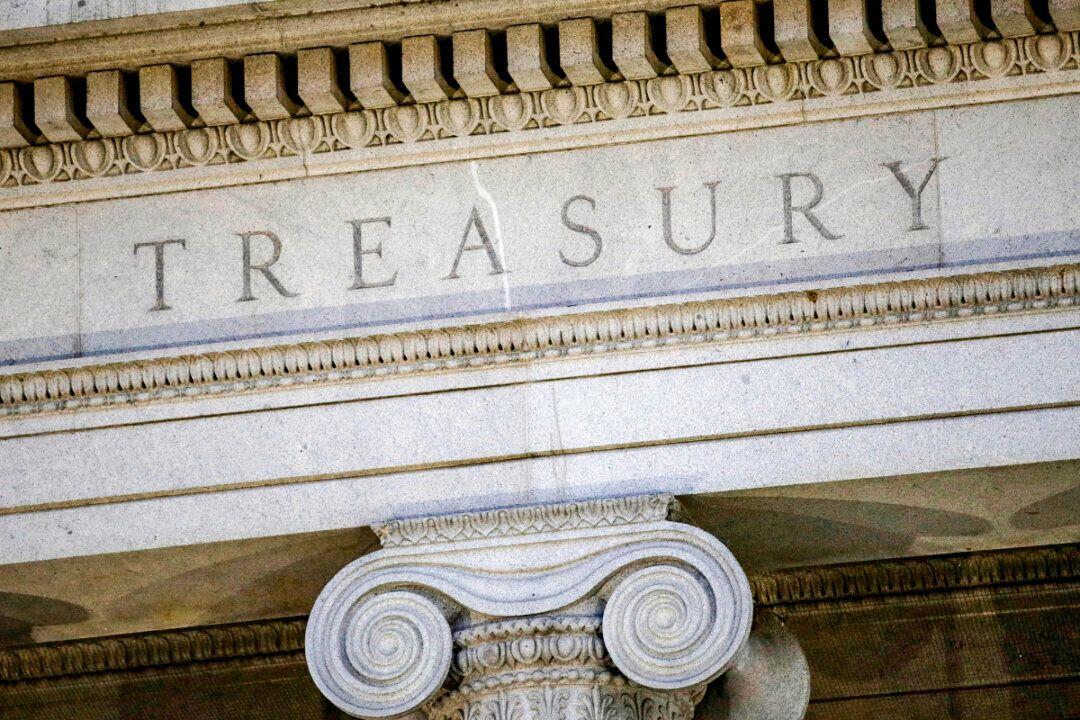
The Treasury Department building is pictured at dusk in Washington on June 6, 2019. Patrick Semansky/AP Photo
According to a Nov. 18 announcement, a charity and a gold-and-cash smuggling operation were allegedly using their legitimate covers to help finance the Iran-backed group.
Lebanon-based charity Wa Ta'awanu, which provides emergency relief services for those in the southern part of the Hezbollah-paralyzed nation, is accused of channeling donor funds to Hezbollah's terrorist activities.
The U.S. State Department has designated Lebanon-based Hezbollah as a foreign terrorist organization since 1997.
The Treasury Department launched Operation Economic Outcast in August to disrupt Iran's financial support for Hezbollah and Kata'ib Hezbollah (Battalions of the Party of Allah) based out of Baghdad. Both groups are members of the Iranian regime's so-called Axis of Resistance against Israel and the United States.
"The Iranian regime's attempts to infringe on Lebanon's sovereignty through terror proxies like Hizbollah will not be tolerated," U.S. Treasury Secretary Scott Bessent said on Nov. 18.
"The U.S. government will continue to disrupt Iran's attempts to exert influence in the region and fund its proxies."
According to the Treasury Department, the actions taken by Operation Economic Outcast will increase pressure on Hezbollah's financial networks, as the terrorist group evades pressure to disarm coming from the international community through the United Nations, the Lebanese government, Israel, and the United States.
The gold and cash network was allegedly run by Hezbollah and Iran's Islamic Revolutionary Guard Corps-Quds Force (IRGC-QF), coordinated with two Lebanese brothers whom the Treasury Department accuses of transferring "significant funds" from the IRGC-QF to Lebanon for Hezbollah.
The brothers, Hassan and Ibrahim Khechen, allegedly transferred money to Hezbollah through Hassan Khechen's Lebanon-based Gold Global Company, the Treasury Department said. Hassan Khechen's network also uses couriers to transfer cash across borders.
Ibrahim Khechen has allegedly participated in Hezbollah's money smuggling network and has ties to a courier who was arrested at Beirut airport early in 2025 carrying $2.5 million in cash.
Another gold company, Turkey-based Sankari Gold, which is controlled by Hassan Khechen, allegedly assisted in the transport of gold and cash from Africa to Lebanon.
Those implicated in the sanctions are founder Afif Abdel Rida Chouman and his charity Wa Ta'awanu Association, the Khechen brothers, and Gold Global Company and Sankari Gold.
With the sanctions, the individuals' assets under U.S. jurisdiction have been blocked. Companies that are at least 50 percent owned by the sanctioned parties have also been blocked.
Additionally, any foreign financial institution that knowingly does business with the individuals or their businesses in violation of the sanctions could face secondary sanctions.
The United States has been engaged in conflict with the Iranian regime for the better part of the year, and Tehran increased attacks on U.S. allies in the Persian Gulf on the same day as the Treasury Department's announcement.
According to the Institute for the Study of War and Critical Threats Project, the IRGC targeted U.S. military radar systems in Bahrain on Nov. 13 and 15. The systems are used for early warning to defend U.S. military assets in the region. The United States responded with strikes on an Iranian missile launch site on Qeshm Island in the Strait of Hormuz on Nov. 17. The next day, Kuwait and Bahrain said they intercepted further Iranian strikes targeting U.S. assets in the region.
Tyler Durden Sun, 11/22/2026 - 11:55
Continue reading...
[ H/T ZeroHedge ]
Authored by Savannah Hulsey Pointer via The Epoch Times,
The Treasury Department has announced new sanctions targeting charity and smuggling operations allegedly used to finance the terror group Hezbollah, also spelled Hizballah, meaning "Party of Allah" in Arabic.
The Treasury Department building is pictured at dusk in Washington on June 6, 2019. Patrick Semansky/AP Photo
According to a Nov. 18 announcement, a charity and a gold-and-cash smuggling operation were allegedly using their legitimate covers to help finance the Iran-backed group.
Lebanon-based charity Wa Ta'awanu, which provides emergency relief services for those in the southern part of the Hezbollah-paralyzed nation, is accused of channeling donor funds to Hezbollah's terrorist activities.
The U.S. State Department has designated Lebanon-based Hezbollah as a foreign terrorist organization since 1997.
The Treasury Department launched Operation Economic Outcast in August to disrupt Iran's financial support for Hezbollah and Kata'ib Hezbollah (Battalions of the Party of Allah) based out of Baghdad. Both groups are members of the Iranian regime's so-called Axis of Resistance against Israel and the United States.
"The Iranian regime's attempts to infringe on Lebanon's sovereignty through terror proxies like Hizbollah will not be tolerated," U.S. Treasury Secretary Scott Bessent said on Nov. 18.
"The U.S. government will continue to disrupt Iran's attempts to exert influence in the region and fund its proxies."
According to the Treasury Department, the actions taken by Operation Economic Outcast will increase pressure on Hezbollah's financial networks, as the terrorist group evades pressure to disarm coming from the international community through the United Nations, the Lebanese government, Israel, and the United States.
The gold and cash network was allegedly run by Hezbollah and Iran's Islamic Revolutionary Guard Corps-Quds Force (IRGC-QF), coordinated with two Lebanese brothers whom the Treasury Department accuses of transferring "significant funds" from the IRGC-QF to Lebanon for Hezbollah.
The brothers, Hassan and Ibrahim Khechen, allegedly transferred money to Hezbollah through Hassan Khechen's Lebanon-based Gold Global Company, the Treasury Department said. Hassan Khechen's network also uses couriers to transfer cash across borders.
Ibrahim Khechen has allegedly participated in Hezbollah's money smuggling network and has ties to a courier who was arrested at Beirut airport early in 2025 carrying $2.5 million in cash.
Another gold company, Turkey-based Sankari Gold, which is controlled by Hassan Khechen, allegedly assisted in the transport of gold and cash from Africa to Lebanon.
Those implicated in the sanctions are founder Afif Abdel Rida Chouman and his charity Wa Ta'awanu Association, the Khechen brothers, and Gold Global Company and Sankari Gold.
With the sanctions, the individuals' assets under U.S. jurisdiction have been blocked. Companies that are at least 50 percent owned by the sanctioned parties have also been blocked.
Additionally, any foreign financial institution that knowingly does business with the individuals or their businesses in violation of the sanctions could face secondary sanctions.
The United States has been engaged in conflict with the Iranian regime for the better part of the year, and Tehran increased attacks on U.S. allies in the Persian Gulf on the same day as the Treasury Department's announcement.
According to the Institute for the Study of War and Critical Threats Project, the IRGC targeted U.S. military radar systems in Bahrain on Nov. 13 and 15. The systems are used for early warning to defend U.S. military assets in the region. The United States responded with strikes on an Iranian missile launch site on Qeshm Island in the Strait of Hormuz on Nov. 17. The next day, Kuwait and Bahrain said they intercepted further Iranian strikes targeting U.S. assets in the region.
Tyler Durden Sun, 11/22/2026 - 11:55
Continue reading...
[ H/T ZeroHedge ]