
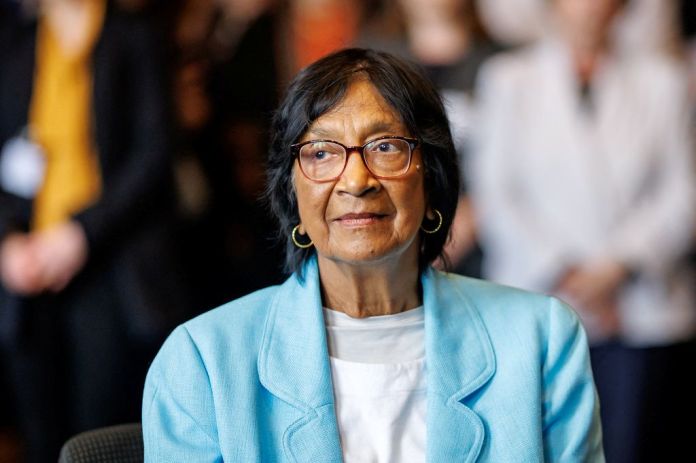
A U.N. whistleblower accused former U.N. human rights chief Navi Pillay, who was announced as the winner of the Nobel Peace Prize on Friday, of ignoring and even being “complicit in the Uyghur genocide.”
Almost as soon as Pillay, 85, was chosen for the award, a flurry of criticisms emerged, largely around her focus on Israel and her accusation that the country is committing genocide in Gaza, as well as her alleged selective prosecutions of human rights.
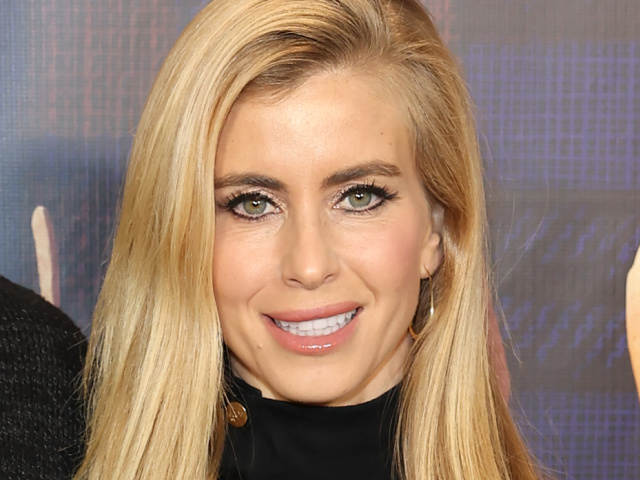
Emma Reilly, a former U.N. human rights officer-turned-whistleblower, denounced her award on Friday, holding her personally responsible for the U.N.’s lack of action toward China and its abuses against its Uyghur minority. She claimed that under Pillay’s leadership, the U.N. human rights commission turned over a list of the names of Uyghur dissidents and their families to Chinese authorities.
“Unfortunately, the winner is an absolute disgrace,” she said, in statements carried by UN Watch, adding that Pillay was “quite literally complicit in the Uyghur genocide.”
“If she didn’t have diplomatic immunity, three victims would have sued her. How much has China subverted human rights? Well, Navi Pillay just got the Nobel Peace Prize. The same Navi Pillay who was High Commissioner when I first reported the UN handing names of dissidents to China. Her response? Bring her a different chair, she was uncomfortable,” Reilly added.
According to Reilly, Pillay oversaw the transmission of the names of more than 50 Uyghur dissidents to China, directly putting them and their families in danger.
“Families of the dissidents testified in court. They testified, under oath, to their family members being intimidated, arbitrarily detained, tortured, disappeared, and even killed in concentration camps. This is an absolute travesty of ‘peace.’ All staffers [of Pillay] who directly handed over names were promoted … I was fired for speaking up,” she said.
The Nobel committee said Pillay was awarded the prize for her role in having “significantly enlarged the scope and impact of international law.”
Pillay, a South African of Tamil origins, was the first nonwhite person appointed to South Africa’s High Court, and would then go on to hold several major positions in international law, ascending to become the U.N. high commissioner for human rights. Her most notable move, that which earned her the prize and intense scrutiny, was chairing the U.N.’s Independent International Commission of Inquiry on the Occupied Palestinian Territory, which in September 2025 ruled that Israel had committed genocide against the Palestinians.
Staunch supporters of Israel slammed Pillay after her award announcement and the whistleblower allegations. Former Secretary of State Mike Pompeo called Pillay “one of the leading purveyors of the modern-day blood libel.”
“How telling that the Nobel committee should honor one of the leading purveyors of the modern-day blood libel the same week that the UN admitted UNRWA workers participated in the October 7 pogrom,” Pompeo wrote.
“Absolutely disgusting — but hardly surprising,” he continued.
Other criticism has contrasted her stringent stance against Israel with her lax approach toward China, culminating in a failure to take action against the crackdown on its Muslim Uyghur minority.
“The Nobel committee owes an explanation to the dissidents whose names were handed to China,” Hillel Neuer, executive director of UN Watch, said in a statement. “Emma Reilly has raised devastating allegations of complicity in genocide against the woman they have chosen to honor. Where was the scrutiny? Where was the concern for the victims and their families?”
NETANYAHU LEADS OUTCRY OVER ICC JUDGE WHO DECLARED GENOCIDE IN GAZA BEING AWARDED NOBEL PEACE PRIZE
He noted that Pillay refused to attend the 2010 ceremony to award Chinese human rights activist Liu Xiaobo the Nobel Peace Prize.
“Pillay’s failure to confront powerful dictatorships was a pattern,” Neuer said. “Our study found silence on abuses in 34 countries rated ‘Not Free,’ including Cuba, North Korea, Saudi Arabia and Sudan. When Iran’s regime beat and arrested protesters in 2009, she took three months to comment. Victims needed a champion willing to challenge their oppressors.”
Continue reading...
[ H/T Washington Examiner ]