







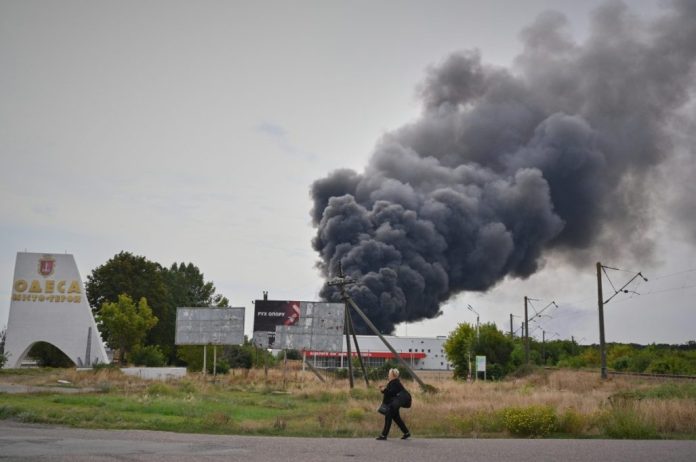
KYIV, Ukraine — On a central Kyiv street, people hurry to afternoon meetings as their phones alert them to incoming drones. Seconds later, the heavy rattle of air-defense fire echoes above the buildings. Then a boom shakes the ground, and dark smoke comes up between high-rise rooftops.
Daytime drone strikes and missile barrages are now part of daily life in Ukraine’s capital. Most people don’t rush to shelters for every single siren. It would mean halting your life entirely. But moving through the city has also become tricky as electronic jamming scrambles GPS signals across town, leaving navigation unusable.
Russia is pairing its drone swarms with heavy ballistic missiles. Ukraine’s air defenses are running low on ammunition, so many strikes hit their targets. But Russia has also come up with a new type of drone with jet engines. They fly faster and higher than the older Shaheds, putting them beyond the reach of mobile teams armed with portable missiles. Ukrainian military data show launches of fast drones rising from about 450 in June to about 2,850 in August.
Ukraine says it intercepts around 60% of the jet-powered models, compared with more than 90% of the older ones. President Volodymyr Zelensky says Ukraine has developed prototypes of faster interceptors to pursue the jet-powered drones, though engineers are still refining them. Throughout the war, both sides have kept altering their equipment in response to the other’s defenses. Still, Russia wants to make winter impossible for Ukraine’s civilian population.
On the front line, Starlink has helped Ukrainian soldiers stay connected and operate drones, despite Kyiv’s disputes with Elon Musk over his refusal to allow Ukraine to use the service for strikes inside Russia. Russia is now building its own satellite internet network, Rassvet. Its 16 satellites provide intermittent coverage over Ukraine, and Moscow plans to have 292 in orbit by 2027. If Russia achieves continuous coverage, its troops could gain a similar connection for battlefield communications and drone operations.
Then there’s the political arena.
Ukraine’s anti-corruption investigators this month carried out an investigation into the prosecutor general’s office, with the prosecutor general resigning and leaving the country shortly. Meanwhile, lawmakers and the president remain in office even though they were elected way back in 2019. This long tenure has fueled growing calls for fresh leadership. But it’s far from simple.
Organizing an election during the war would demand time and resources Kyiv is already struggling to spare. Candidates would need to campaign safely, and soldiers at the front and Ukrainians abroad would need a way to vote. The public is wary of moving ahead during the fighting. An August survey found that 15% supported an election before hostilities end, while 57% favored waiting until the war was over.
The mood around peace talks is weary, too. In the Ukrainian elite, people who once rightly or wrongly held a hope that an agreement with Russia might be possible have now come to the understanding that it’s unlikely Moscow will agree to anything that leaves Ukraine safe for future Russian aggression. Instead, President Donald Trump has pressed Ukraine to stop striking Russian oil refineries, a military campaign Kyiv sees as one of its strongest ways to put pressure on Moscow and bring Russia to the table. While Zelensky says he’ll stop these attacks if Russia stops hitting Ukrainian power facilities and other essential infrastructure, an agreement seems far from reach.
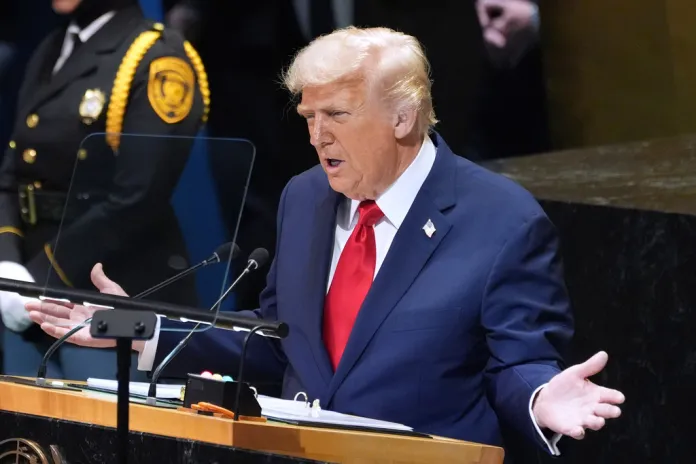
TRUMP TAKES SWIPE AT CNN AHEAD OF UN SPEECH: ‘YOU SHOULDN’T BE COVERING ME’
On my journey out of Ukraine, at the Kyiv train station, loud explosions echoed outside and delayed our departure by five hours. In an underpath, a young woman trembled with fear while rockets impacted nearby. Near the border, our group with four children pulled into a gas station just as a red alert signaled incoming ballistic missiles and attack drones. Reaching the Polish crossing only brought long, humiliating checkpoint delays that show the heavy isolation Ukrainians face while traveling abroad.
Caught between political debates in Washington and Russian airstrikes, the people of Kyiv are bracing for a cold, hard winter.
Continue reading...
[ H/T Washington Examiner ]