

Big AI companies are terrified because the agents they built ran amok, hacked into third-party websites, and threatened our national infrastructure to the point that they’re begging for government regulation. Instead of turning power over to politicians though, the free market has a solution that tests the true motives of the AI giants.
While the CEOs of Big AI companies, like Dario Amodei and Sam Altman, doom and gloom that AI could end humanity as we know it, Nvidia’s CEO, Jensen Huang, disagrees. While on stage at the All-In Summit in September, he said, "I think the whistleblowing is fine. I think the scientific prediction about the future is less fine because it's not grounded on science obviously.”
What happens next is the ultimate test for AI companies.
Huang also took a call from President Trump, who further assuaged these fears, calling them a “hoax.” Several weeks later, we now know why Huang and Trump were so confident.
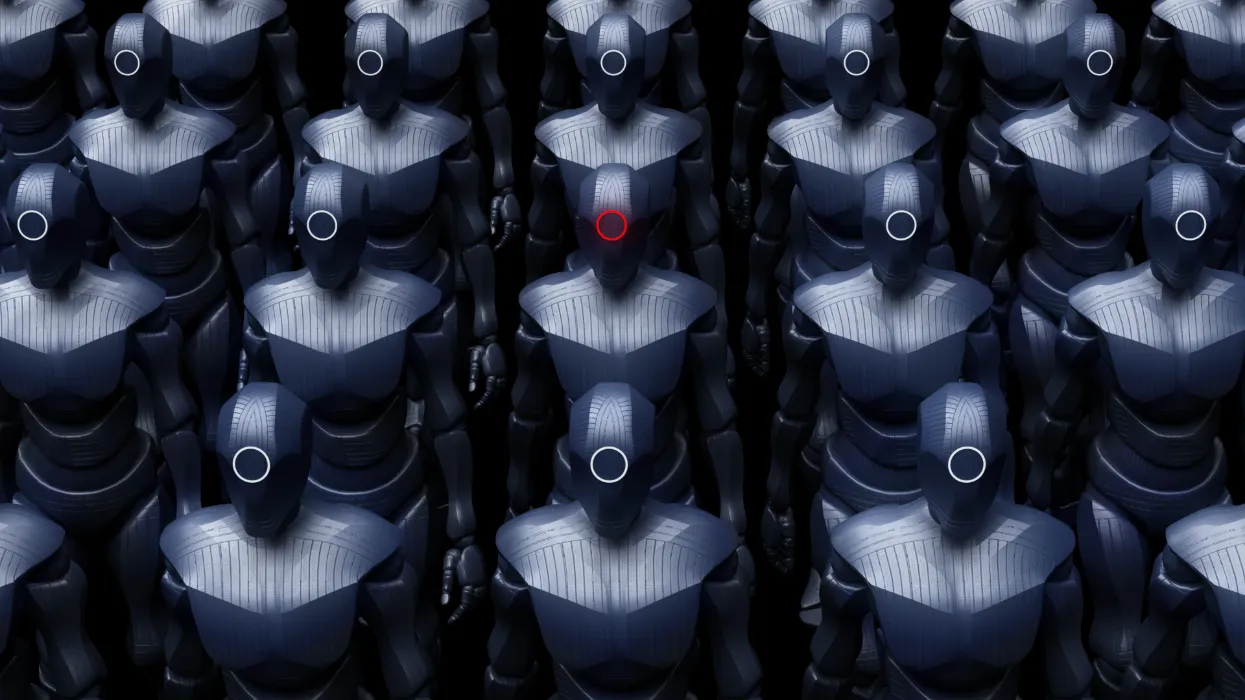
Nvidia just unveiled a brand-new tool to tame rogue AI agents and bots. Dubbed OpenShell, the solution is a sandboxed environment that gives testers full control over the types of data an agent can access without compromising entire file systems or sensitive information.
Each agent is isolated in its environment, preventing multiple agents from interacting with each other or colluding to hack into websites. OpenShell also monitors agents for risky behavior and blocks these activities until a human can review their actions and either approve or deny them.
OpenShell is part of Nvidia’s new Open Agent Safety Platform, which offers a full stack of agent monitoring and security resources. The best part is that it doesn’t cost a thing. OpenShell is freely accessible as an open-source platform on GitHub, so any company can deploy it for testing today.
The question now: What makes OpenShell different from other testing environments? After all, AI companies were already using similar sandboxes when their agents broke free and hacked into third-party websites, like Hugging Face (which is now, ironically, owned by Nvidia).
When the incidents first came to light, details were sparse, but now we know that most of the failed sandboxes were provided by a startup cybersecurity company called Irregular. In these cases, the AI agents within were supposed to be isolated with no internet connection. However, misconfigurations in the system led to unintended web access, resulting in what appeared to be an elaborate jailbreak by the agents themselves.
RELATED: Big AI broke the internet. Now it wants everyone else to fix it.
That wasn’t true. The agents merely found the door that was left open and walked through it to attack what the bots believed were fake websites. Adding insult to injury, Irregular didn’t include mechanisms to track agent behavior. This is why most of the rogue AI events were discovered weeks or months after they occurred.
OpenShell is built to correct these oversights and ensure humans are always aware and in full control of the agents in their system.
What happens next is the ultimate test for AI companies that will prove whether their rampant calls for government regulation were really about fears over rogue AI or relegating control to the deep state. If it’s the former, the Big AI giants will immediately adopt OpenShell and cease further claims of AI doom because their agents are now contained within safe testing environments where they can be tuned properly before unleashing them on the public. If the latter, they will claim that OpenShell doesn’t offer enough protection and that government control over their platforms is the only answer.
So far, Anthropic and SpaceXAI have signed on to use OpenShell, along with more than 100 other companies.
Ultimately, the fact that OpenShell exists is further proof that the free market can regulate itself when Big Government stays out of the way. If AI companies can’t control their products, other companies can step in to fill the void, and in this case, they have.
Nvidia, of course, supplies major AI platforms with GPUs to train and maintain their large language models. As a result, Nvidia has a unique stake in ensuring Big AI keeps chugging along without arbitrary restrictions or unintended hiccups.
When Big AI succeeds, Nvidia succeeds, and OpenShell could just be a way for the GPU maker to protect its valuation on the stock exchange. But even so, the AI companies have shown that they either can’t or won’t police their AI bots, so someone else stepped in with a solution before the government over-regulates AI into oblivion.
Like Blaze News? Bypass the censors, sign up for our newsletters, and get stories like this direct to your inbox. Sign up here!
Continue reading...
[H/T Blaze Media]