





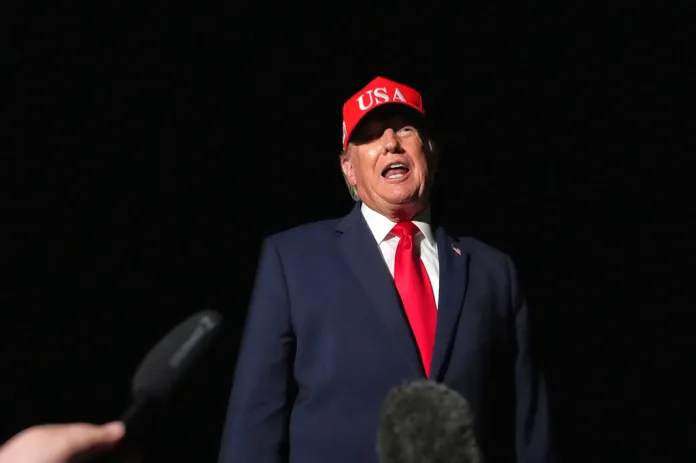
President Donald Trump’s recent diesel agreement with Russia has sparked backlash from Ukraine and a bipartisan group of senators. Under the agreement, Russia has pledged to supply more than 300,000 metric tons of diesel to U.S. and global markets to ease rising fuel prices. As lawmakers press the administration to withdraw from the agreement, Nigeria could emerge as a potential additional diesel supplier if the Trump administration seeks other fuel sources. Nigeria remains Africa’s top crude oil producer, the largest African supplier of crude oil to the United States, and has significantly ramped up its refining capacity, becoming an important supplier of diesel to global markets.
Historically, the U.S. and Nigeria have a complex, strategic partnership based on deep economic and security cooperation with periods of diplomatic friction. While the foundation for expanding bilateral energy cooperation already exists, Nigeria’s capacity to supply additional diesel to the U.S. and international markets faces multiple challenges, such as refining constraints, rising domestic fuel demand, and declining crude oil production.
Nigeria has made significant progress in expanding its domestic refining capacity in recent years. In 2026, Nigeria’s Dangote refinery raised its crude oil processing capacity to 700,000 barrels per day, showing that the country’s ability to produce refined petroleum products, including diesel, has progressed rapidly. The refinery has also expanded diesel exports to European and West African markets, which demonstrates Nigeria’s growing role in global diesel supply. Although Nigeria’s refining capacity is increasing, security issues threaten the reliability of crude oil supplies. For instance, in April, Nigerian troops arrested 15 individuals suspected of attempting to steal crude oil by illegally tapping into a discharge point on a vessel supplying crude to the Dangote refinery. Such incidents indicate that the security risks could complicate efforts to increase refining output and expand diesel exports.
Nigeria’s growing domestic demand for diesel could also limit the amount available for export to the U.S. and global markets. In April 2026, Nigeria’s daily diesel consumption reached 17.3 million liters, and domestic refineries produced approximately 23.6 million liters per day. Although these figures indicate that Nigeria has the capacity to export surplus diesel, rising domestic consumption could reduce available volumes and limit further export growth.
Another challenge is Nigeria’s declining crude oil production, which could undermine its ability to sustain higher diesel output. Nigeria’s Bonga Complex and Agbami oil field have matured, and oil theft and vandalism continue to disrupt production and discourage investment from energy companies. Major oil companies such as Shell, Exxon Mobil, and Equinor divested Nigerian oil assets due to operational challenges and shifting investment priorities. Although these assets have been transferred to other operators, sustaining production from mature fields requires continued investment for Nigerian refineries to secure reliable domestic crude oil and increase diesel exports.
UKRAINE LAUNCHES NEW ATTACKS AGAINST RUSSIAN OIL REFINERIES AFTER BRIEF TRUCE DECLARED BY TRUMP
Despite these challenges, Nigeria remains a potential supplier that Washington should consider as part of its broader energy security strategy. The Trump administration could strengthen energy cooperation with Nigeria by encouraging American investment in crude oil production, refining infrastructure, and supply chain security. Such investments could help Nigeria address its production constraints and create new opportunities for diesel exports.
However, these initiatives would take time, and neither Russia nor Nigeria can resolve the current fuel crisis alone. Russia produces and exports significantly more diesel than Nigeria, but the initial volume pledged under the agreement is equivalent to less than one day of U.S. transportation-sector diesel consumption. Rather than relying on a single country to ease the fuel crisis, Washington should pursue a diversified energy strategy that encourages Nigeria and other emerging suppliers to expand diesel production and exports.
Yagiz Sullu, Ph.D., is the founder and lead analyst at Sullu Strategic Advisory LLC and holds a Ph.D. in Planning, Governance, and Globalization from Virginia Tech.
Continue reading...
[ H/T Washington Examiner ]