




WALTZ: ‘PEOPLE LEAKING … DESERVE TO BE IN JAIL’: As various news outlets — including the New York Times, the Wall Street Journal, NBC News, CBS News, CNN, the New York Post — are reporting that the United States is facing a dwindling supply of munitions after nearly two weeks of daily attacks on Iran, the president and the Pentagon are disputing there’s a shortage.
In a statement to the Wall Street Journal yesterday, President Donald Trump insisted the U.S. has “far more munitions than anyone in the world, and far more than we need.”
Reports from the region suggest that the U.S. is expending large numbers of defensive missiles — including Patriot and THAAD interceptors — protecting U.S. bases and troops in Jordan, Kuwait, Qatar, and Bahrain, and suggested the U.S. was prioritizing protecting troops over runways and infrastructure to conserve limited supplies.
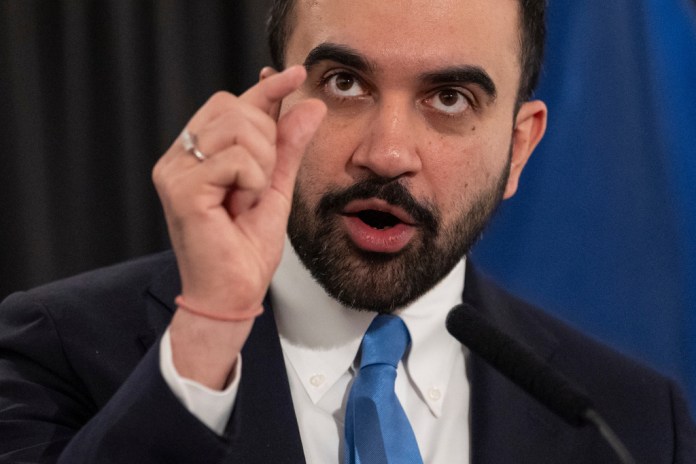
U.S. Ambassador to the United Nations Mike Waltz was the designated official dispatched by the administration to make the rounds of the Sunday show and bristled when the host of NBC’s Meet the Press, Kristen Welker, raised the issues.
“NBC News is reporting the Pentagon is actually rationing some defense weaponry amid diminishing supplies,” Welker said. “Is America backing away from a larger military attack because its military stockpile has been depleted?
“No, I want to be crystal clear,” Waltz responded. “The U.S. military, and I’ve verified this every which way, has everything that it needs to conduct this campaign as effectively as it needs to be. And I have to tell you, the people that are leaking this nonsense deserve to be in jail.”
On CBS’s Face the Nation, Waltz gave a similar denial. “I also want to address this nonsense that somehow we don’t have the assets that we need,” Waltz said. “Not only do we have what we need in theater. There’s more moving into theater,” meaning there is ammunition ready in the area where the conflict is taking place.
“Well, specifically, CBS has reported we cannot sustain the rate at which the United States has expended precision munitions as we did early in the campaign with Iran, that there is a shortage of interceptors,” host Margaret Brennan replied.
TRUMP’S THREATS TO EXPAND IRAN STRIKES COME AS CONCERNS OVER TRANSPARENCY ESCALATE
AXIOS: CENTCOM COMMANDER RECOMMENDED THE PAUSE: Last Thursday Trump told Axios that he was “considering a massive attack. Bigger than ever before,” and that he was “close to making a decision.”
Then came a big meeting at the White House on Friday, where Joint Chiefs Chairman Gen. Dan Caine reportedly expressed concern about “declining inventories of air defense interceptors,” and who, according to the Wall Street Journal, believes that while “the low inventories wouldn’t preclude a resumption of major combat operations,” it would “add to the risk.”
Citing “two sources with knowledge of his position,” Axios is now reporting that U.S. Central Commander Adm. Brad Cooper “recommended stopping the bombing campaign around the Strait of Hormuz because it has reached the limit of its effectiveness,” and noting “The designated bombing targets had been mostly exhausted.”
“Absent a decision to return to major combat operations,” Cooper reportedly argued, “there was no point in continuing the bombing campaign.” It was after that meeting Trump called a halt to the bombing, after 13 straight days of U.S. attacks.
“It’s giving diplomacy some space. It’s giving diplomacy a little bit of time,” Waltz said on CBS. “He is a president of peace. He is giving diplomacy a chance.
“But, make no mistake,” Waltz said. “Additional military assets are moving into the region. They should believe the president. The regime should believe the president when he says they’re locked and loaded, and where all options are on the table.”
There were no attacks by either side over the weekend.
“Americans stopped their attacks over the past two nights. Since our strategy has been entirely retaliatory, we also stopped our retaliatory operations,” Iranian army spokesman Amir Akraminia said. “The U.S. strategy is unclear even to the country’s own officials. This is evident in the remarks of U.S. officials, particularly the U.S. president, as well as in the
JOHN KENNEDY SAYS TRUMP SHOULD NOT ‘CUT AND RUN’ IN IRAN
‘THESE GUYS ARE FLAILING’: “I don’t see a clear strategy. And there’s never been a clear strategy.” Sen. Chris Van Hollen (D-MD) said in an appearance on ABC’s This Week. “I’m glad that they’re not going to unload again with a big military strike. That would just drag it more deeply into this conflict. A conflict that we should be getting out of, not getting deeper into.”
“We have depleted our interceptors, which are the weapons we use to intercept incoming Iranian attacks. Which are, obviously, necessary to protect American troops,” Van Hollen said. “We are depleting these every day, despite the fact that we could face other potential conflicts around the world.”
“I think these guys are flailing and this thing is completely stuck because this president got into this without a strategic goal,” Sen. Mark Kelly (D-AZ) said on CBS. “Of course we’ve used a lot of munitions. We hit a lot of targets, 14,000, as of the last time I heard Pete Hegseth talk about this.”
On Friday, Trump outlined the stark choices that he faces.
“There’s a military exit where we just keep going just the way we are. And we can even make it a heavier dose. And it’s knocking out everything they have,” Trump told reporters in the Oval Office. “Or there’s a smarter strategy that you make a deal. And they want to make a deal. I just don’t think they’re ready yet.”
“There’s two ways. I mean, it’s — you can just keep doing exactly what we’re doing and take them apart piece by piece. We can do it in a more rapid fashion, which we might do, or we can negotiate with them, which we’re also doing right now. I mean, as we speak, we’re talking to them,” he continued.
TRUMP AND PUTIN ARE LEARNING PARALLEL LESSONS ABOUT THE REALITIES OF MODERN WARFARE
Good Monday morning and welcome to Jamie McIntyre’s Daily on Defense, written and compiled by Washington Examiner National Security Senior Writer Jamie McIntyre (@jamiejmcintyre) and edited by Keely Bastow. Email here with tips, suggestions, calendar items, and anything else. Sign up or read current and back issues at DailyonDefense.com.
CLICK HERE TO SIGN UP OR READ BACK ISSUES OF DAILY ON DEFENSE
HAPPENING TODAY: Ukrainian President Volodymyr Zelensky is stopping in the U.K as he heads to Washington tomorrow for the funeral of the late Sen. Lindsey Graham, and an expected meeting with Trump. Zelensky is meeting with newly installed British Prime Minister Andy Burnham at a naval base in England, and is the first foreign leader hosted by Burnham since taking office one week ago.
Burnham, who was elevated to prime minister from relative obscurity as mayor of Greater Manchester, has expressed support for Ukraine and Zelensky as did his predecessor, Keir Starmer. “Russia should be in no doubt of our resolve, and we will not back down until we achieve long lasting and just peace for Ukraine,” Burnham said ahead of the visit.
“I hope that we will have a productive bilateral meeting where we will speak about all sorts of things. We did a lot with Keir, and we need to carry on, open a new chapter in our relations,” Zelensky posted on X this morning. “ For example, the Drone Deal. I want to build a big factory in Britain based on new technologies, share them with our partners.”
The U.K. will reportedly share with Ukraine the intellectual property behind its new “Stone Cloak” electronic warfare system, which blocks drones from being detected.
LAURA LOOMER’S UKRAINE REVERSAL COULD DEEPEN TRUMP’S SHIFT ON THE WAR
ZELENSKY: RUSSIA HELPING IRAN WITH TARGETING: When Zelensky meets with Trump tomorrow, he will be bringing with him Ukrainian intelligence reports that he says shows Russia is directly assisting Iran in the targeting of U.S. assets in the Gulf region with precise coordinates from Russian spy satellites.
“Since the beginning of July, we have recorded active Russian satellite surveillance of the Gulf states and U.S. military facilities located there. These images subsequently appear in Iran,” Zelensky said in a video address Saturday. “At the same time, there is a clear correlation between Russia’s satellite imagery of these sites and Iranian strikes – both before the attacks, in preparation for them, and afterward, to assess the damage inflicted.”
In testimony before the Senate Appropriation Committee last week Defense Secretary Pete Hegseth said both China and Russia are “at different levels enabling some of the things Iran is doing.” But Trump, speaking to reporters Friday, scoffed at the idea.
“Well, I don’t know that they’re enabling,” Trump said. “I mean, I will tell you that President Xi said he will not partake. And President Putin said the same thing. I think — you know, I trust them.”
“There could be some things they do. But thus far at least it has not been major. I don’t think they’d want to have me disappointed,” he said.
DEADLY UKRAINIAN ATTACK ON IRANIAN VESSEL ‘CANNOT GO UNANSWERED,’ TEHRAN SAYS
LATEST WAR DEAD NOT LISTED AMONG IRAN KIA: In what appears to be an effort to delineate between the major combat operations of “Epic Fury,” and the current ‘skirmish” with Iran over the Strait of Hormuz, the Pentagon has reclassified the four latest deaths as occurring in a nebulous category called OO, Overseas Operation.
Pentagon Spokesman Sean Parnell issued a furious denial last week when the New York Times reported that the Pentagon has lowered the casualty count in the Iran war because — according to three military who spokes on the condition of anonymity — their deaths occurred after Trump declared a ceasefire in the war in April.
Parnell accused the outlet of “manufacturing lies out of thin air,” but a check of the Pentagon’s Defense Casualty Analysis System reveals the four soldiers — Staff Sgt. Angel Rampersad, 28; Capt. Tyler Finn, 25; Pvt. 1st Class Isabella Gonzalez, 19; and Staff Sgt. Michael Swinton, 30 — are now in a category by themselves with no reference how they died other than they were killed in action by hostile fire.
The move is consistent with Trump’s effort to skirt the War Powers Resolution limit of 60 days of combat without Congressional authorization. The current strikes and counterstrikes are apparently just part of the response to ceasefire violations.
READ MORE FROM THE WASHINGTON EXAMINER
THE RUNDOWN:
Washington Examiner: Trump and Putin are learning parallel lessons about the realities of modern warfare
Washington Examiner: Trump’s threats to expand Iran strikes come as concerns over transparency escalate
Washington Examiner: John Kennedy says Trump should not ‘cut and run’ in Iran
Washington Examiner: US blames Russia for deteriorating situation in Mali
Washington Examiner: Deadly Ukrainian attack on Iranian vessel ‘cannot go unanswered,’ Tehran says
Washington Examiner: Leakers of US munition shortages ‘should be in jail,’ UN Ambassador Waltz says
Washington Examiner: Saudi nuke ‘last thing we want,’ Netanyahu says after US inks energy deal
Washington Examiner: Netanyahu says ICC prosecutor used Israeli PM’s arrest warrant as ‘political shield’
Washington Examiner: Laura Loomer’s Ukraine reversal could deepen Trump’s shift on the war
Washington Examiner: Will the US and Canada be friends again?
Washington Examiner: Trump administration to expand ICE detention significantly on East Coast with new facility: Report
Washington Examiner: ICE arrests under Trump top 602,000, DHS says, but some are skeptical
Washington Examiner: ICE to expedite Haitian arrests and deportations as protected status expires: Report
Washington Examiner: Opinion: Winning in Iran means boots on the ground. Just win, baby
Washington Examiner: Opinion: China shoots itself in ASEAN foot with latest Philippines skirmish
Axios: Trump ordered military not to conduct strikes in Iran Friday
AP: Pentagon’s official Iran war death toll no longer lists 4 troops killed during renewed fighting
Wall Street Journal: A Truce in Yemen Unravels, Threatening to Widen Mideast War
New York Times: Trump Seems Trapped by Iran War, Even as He Wields the World’s Biggest Hammer
The Economist: America has few good options for a “massive attack” on Iran
Foreign Policy: How the Iran War Reshaped the Global Landscape of Power
AP: In a Ukrainian bomb shelter, Laura Loomer explains shift on Russia’s war
Wall Street Journal: Cheap, Accurate and Lethal: Iran’s Best Missile Is Getting More Dangerous
AP: 2 dead in Ukraine from Russian attacks, 4 more in Russian-held area hit by Ukrainian drones
The Atlantic: Inside the Feud Over Ukraine’s Drone Success
New York Times: An Admiral’s Rise Reveals the Politics Driving Hegseth’s Pentagon
The War Zone: Pathway to Larger B-21 Raider Fleet Was Baked into Production Ramp-Up Deal
CBS News: Trump Flew from Turkey on Older Air Force One After Credible Threat from Iran and Its Proxies
New York Times: Inside the Rushed Effort to Get Trump His New Air Force One
Air & Space Forces Magazine: Space Force Wants Commercial Bandwidth for SATCOM Experiments
DefenseScoop: DIU’s First Active-Duty Military Deputy Wants to Help US Forces Meet Future Fights ‘with Swagger’
Air & Space Forces Magazine: Air Force: Waist-to-Height Ratio Required by July 31 Will Not Be Scored
Breaking Defense: What We Learned About GCAP at the Farnborough Airshow
Defense One: As Drones Take Over, Ejection-Seat Makers Prepare for a Pilotless Battlefield
Air & Space Forces Magazine: Summer at USAFA: Behind the Scenes of Basic Cadet Training
THE CALENDAR:
MONDAY | JULY 27
10:30 a.m. — The Mitchell Institute for Aerospace Studies virtual discussion: “An Update on Airpower and the Pacific Theater,” with Air Force Gen. Kevin Schneider, commander, Pacific Air Forces and air component commander, U.S. Pacific Command https://www.mitchellaerospacepower.org/events/gen-kevin-b-schneider/
2:30 p.m. — Middle East Institute virtual discussion: “The Next Phase of the U.S.-Iran War,” with Karen Young, MEI senior fellow; Alex Vatanka, MEI senior fellow; and Ken Pollack, MEI vice president for policy https://us02web.zoom.us/webinar/register/
3 p.m. Milford, Mich. — President Donald Trump delivers remarks at the General Motors Proving Ground https://who.nucleuspages.com/credentialing/qk9x6z29q6
4 p.m. — Atlantic Council virtual discussion: “The Future of Israel and the Region — three months before the Israeli legislative elections,” with former Israeli Prime Minister and Foreign Minister Yair Lapid https://www.atlanticcouncil.org/event/opposition-leader-yair-lapid
TUESDAY | JULY 28
11 a.m. — Foreign Policy Research Institute virtual discussion: “The Steel Triangle: The Future of a Shipbuilding Alliance,” with Jonathan Caverley, professor of strategy at the Naval War College and visiting senior fellow of the International Institute for Strategic Studies; Luke Collin, principal for the Asia Group; Peter Dombrowski, professor at the Naval War College’s Strategic Research Department; and Shihoko Goto, vice president of programs and director, FPRI Asia Program https://www.fpri.org/event/2026/the-steel-triangle-maritime-power
11:30 a.m. — Atlantic Council Project for Middle East Integration virtual discussion: “Transforming IMEC (India-Middle East-Europe Economic Corridor Initiative) in response to the Iran war,” with Framcesco Talo, special envoy of Italy to the India-Middle East-Europe Economic Corridor; Rafael Dreyfus, founder, Cabynda; Maisson Kafafy, senior adviser, Atlantic Council Project for Middle East Integration; Afaq Hussein, nonresident senior fellow of the Atlantic Council Project for Middle East Integration; and Allison Minor, director, Atlantic Council Project for Middle East Integration https://www.atlanticcouncil.org/event/transforming-imec-in-response-to-the-iran-war/
12 p.m. — Association of the U.S. Army “Noon Report,” webinar with Kevin Hymel, author, Patton’s War: An American General’s Combat Leadership Volume 3: January 1-December 21, 1945, highlighting Gen. George Patton’s battlefield leadership during World War II https://www.ausa.org/events/noon-report/pattons-war
WEDNESDAY | JULY 29
9 a.m. 1616 Rhode Island Ave. NW — Center for Strategic and International Studies discussion: “Future of U.S. Land Power,” with Undersecretary of the Army Mike Obadal; and Jerry McGinn, director, CSIS Center, Industrial Base and senior fellow of the CSIS Defense and Security Department https://www.csis.org/events/future-us-land-power
THURSDAY | JULY 30
8 a.m. 1201 Pennsylvania Ave. NW, — Hudson Institute discussion: “Responding to Global Threats,” with Sen. Rick Scott (R-FL) https://www.hudson.org/events/responding-global-threats
8 a.m. 7920 Jones Branch Dr., McLean, Va — Potomac Officers Club “2026 Air and Space Summit,” with Air Force Vice Chief of Staff Gen. John Lamontagne; and Deputy NASA Administrator Matt Anderson https://www.potomacofficersclub.com/events/2026-air-and-space-summit/
9:30 a.m. Mitchell Institute for Aerospace Studies virtual discussion: beginning at 9:30 a.m., on a new report, “Defeating the Drones: The Airman’s Imperative to Defend Against Small Uninhabited Aerial Vehicles,” with author retired Air Force Brig. Gen. Houston Cantwell, Mitchell Institute senior fellow; and retired Air Force Gen. Glen VanHerck, former commander, U.S. Northern Command https://afa-org.zoom.us/webinar/register/WN_f1KgJjLESLaiZaHzepMZSg#/registration
10 a.m. — Arab Center Washington D.C. virtual discussion: “The Board of Peace’s Gaza Plan: Broken or Working as Intended?” with Daniel Levy, president, U.S./Middle East Project; Mohammed Mhawish, Palestinian writer and journalist; Susan Akram, non-resident senior fellow of the Arab Center Washington D.C.; Dana El Kurd, non-resident senior fellow, Arab Center Washington D.C.; and Yousef Munayyer, head of the Arab Center D.C. Palestine/Israel Program and senior fellow, Arab Center Washington D.C. https://arabcenterdc.org/event/the-board-of-peaces-gaza-plan-broken-or-working-as-intended/
FRIDAY | JULY 31
12 p.m. — Federalist Society for Law and Public Policy Studies virtual discussion: “What Was the Founders Design for National Security Beyond the Battlefield?” with Alberto Coll, director, global engagement for Vincent de Paul and professor, law at Depaul University College of Law; Matthew Waxman, professor of law at Columbia School of Law; John Yoo, professor, of law at the University of California at Berkeley, senior research fellow at the University of Texas at Austin Civitas Institute School of Civic Leadership; and non-resident senior fellow of the American Enterprise Institute; and Molly Nixon, senior fellow in executive power at the Cato Institute https://fedsoc.org/events/what-was-the-founders-design-for-national-security
Continue reading...
[ H/T Washington Examiner ]