

.jpg)




The Trump Justice Department just put one of America’s most elite law schools on notice.
Federal investigators found that UCLA Law discriminated against white and Asian applicants while favoring black and Hispanic applicants across three consecutive incoming classes.
The most explosive finding was not buried in academic jargon: UCLA Law rejected white and Asian applicants who had the same LSAT scores as black and Hispanic applicants the school admitted.
President Trump’s Civil Rights Division says that is illegal race discrimination, plain and simple.
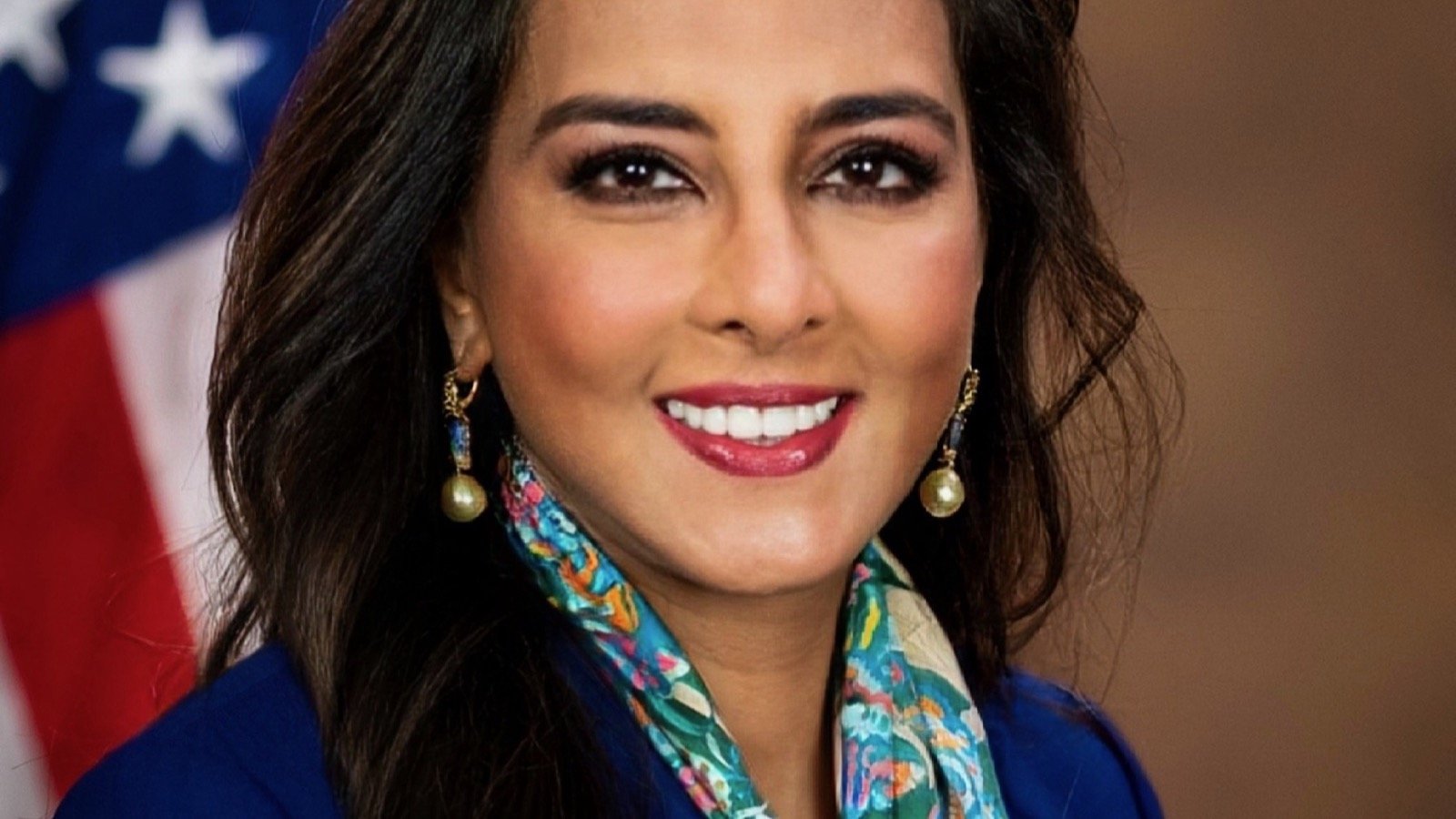
Assistant Attorney General Harmeet Dhillon delivered the core finding directly:
The Justice Department announced Thursday that its Civil Rights Division found discrimination in UCLA Law’s 2023, 2024 and 2025 incoming classes.
The department says the conduct violated Title VI of the Civil Rights Act of 1964, which bars race and color discrimination by recipients of federal financial assistance. UCLA receives federal support, so its admissions system must comply with that law.
Investigators also tied the findings to the Supreme Court’s 2023 decision in Students for Fair Admissions v. Harvard. That ruling ended the use of race as a direct admissions preference, while still allowing schools to consider how an applicant’s individual experiences shaped qualities such as courage, leadership or character.
According to the DOJ, UCLA Law crossed that line by using application essays and personal statements designed to reveal an applicant’s race after the Supreme Court ruling.
Admissions staff allegedly went even further. The department says prospective students were coached on how to disclose their race in those materials during race-focused recruitment events, including UCLA Law’s annual “Diversity Admissions Open House.”
The numbers described by investigators are striking. Across the 2024 and 2025 classes, half of the admitted black applicants had LSAT scores at or below the scores earned by 90 percent of admitted white applicants.
Federal officials concluded that some white and Asian applicants would have been admitted if they had been black or Hispanic.
That is why Dhillon described UCLA’s operation as a two-tier system with an academic bar that moved according to skin color.
The department’s formal findings letter makes clear that this was an investigation of actual admissions outcomes, not a dispute over slogans or campus politics.
The Civil Rights Division examined the school’s practices after the Supreme Court decision and compared objective academic measures across racial groups. Its conclusion was that UCLA Law continued to treat race as an advantage for some applicants and a disadvantage for others.
The letter also focuses on the methods allegedly used to keep race in the process after explicit preferences became legally indefensible. Those methods included race-revealing essay prompts, recruitment programs divided by race and subjective review practices that could function as proxies for racial preferences.
That distinction matters because the Supreme Court did not authorize universities to replace a racial checkbox with an essay-based workaround. Schools may evaluate an applicant’s personal story, but they may not award a benefit because the person writing it belongs to a preferred racial group.
The DOJ’s finding is the beginning of an enforcement process, not the final judgment in a lawsuit. Federal officials say they will first seek a voluntary resolution that forces UCLA Law’s admissions practices into compliance.
If the school refuses to resolve the violations, the department says it will sue.
That escalation path gives UCLA Law a choice: produce a race-neutral admissions system that can withstand scrutiny, or defend the current one in federal court.
The announcement immediately hit the news cycle as another major front in President Trump’s campaign against illegal DEI programs:
The Associated Press reports that UCLA Law defended its process and said admissions decisions are made through a comprehensive, merit-based review of each applicant’s achievements and experiences, a response that squarely denies the federal government’s conclusion that race changed who cleared the admissions bar.
The school said it is confident its system complies with applicable law.
That response sets up a direct factual collision. UCLA says merit governs its decisions; the Justice Department says applicants with matching objective credentials were treated differently because of race.
The AP also notes that California voters barred affirmative action in public university admissions nearly three decades ago. UCLA therefore faced a state-level prohibition long before the Supreme Court imposed a nationwide constitutional rule in 2023.
This is also not the administration’s first confrontation with UCLA. The Justice Department previously found race discrimination at UCLA’s medical school, and the administration has separately challenged the university over its response to antisemitic harassment on campus.
That history makes Thursday’s announcement part of a widening enforcement campaign rather than an isolated warning. UCLA now faces federal scrutiny across multiple schools and multiple civil-rights theories, while its law school must decide whether to negotiate a resolution or risk a new lawsuit.
The immediate dispute will turn on records, admissions data and the mechanics of UCLA’s review process. That gives the school an opportunity to rebut the government’s analysis, but it also gives federal lawyers a measurable standard against which UCLA’s claims of merit-based review can be tested.
In March 2025, Attorney General Pam Bondi ordered compliance reviews at UCLA, UC Berkeley, UC Irvine and Stanford as part of President Trump’s broader directive to end illegal race preferences in higher education.
That original Justice Department announcement promised that applicants would be judged by work, intellect and character rather than skin color, with federal enforcement aimed at universities that continued using illegal preferences after the Supreme Court ruling.
The UCLA Law findings show the administration is now moving from reviews and warnings to concrete enforcement decisions.
The 2025 review covered Stanford, UC Berkeley, UCLA and UC Irvine after the Supreme Court rejected race-based college admissions. Bondi said every university should expect federal scrutiny if it continued using racial quotas or preferences under a different label.
UCLA Law’s case supplies the first hard answer for this school: investigators say the post-ruling process still produced race-keyed outcomes, and the department is demanding correction rather than another promise of internal compliance.
The warning is aimed beyond one campus. Every federally funded law school now has a fresh example of the evidence and enforcement theory the Civil Rights Division is prepared to use.
There is a principle here that should not be controversial: discrimination does not become acceptable when an elite institution gives it a sophisticated name.
A lower academic bar for one race necessarily creates a higher bar for another. The applicant denied under that system does not experience an abstraction.
He or she loses a seat, a career opportunity and years of potential earnings.
UCLA Law can dispute the DOJ’s evidence and defend itself through the legal process. But if the numbers hold, “holistic review” will not erase what happened.
Equal treatment means one standard for every applicant.
And this Justice Department is signaling that America’s law schools will be expected to follow the law they teach.
Continue reading...
[ H/T WLT Report ]