
The Sept. 30 deadline for Iraq’s militias to surrender their weapons is approaching, and Baghdad is already looking beyond it. That should surprise no one.
The problem was never the date on the calendar. The problem is whether the Iraqi government has the power to disarm organizations that have spent years embedding themselves in the country’s political, security, and economic system.
At the center of that problem is the muqawama, the “resistance” network of Iran-aligned armed factions that has accumulated military and political power inside Iraq.
The meetings in New York this week offered a striking picture of Baghdad’s dilemma.
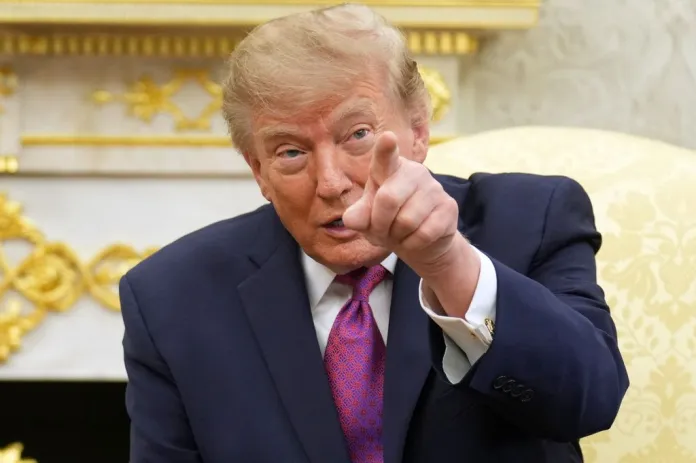
An Iraqi delegation traveled to New York for the United Nations General Assembly. But when Iraq’s prime minister sat down with President Donald Trump, the Iraqi leader was accompanied only by his interpreter.
Trump sat across from him, surrounded by members of his team.
That contrast was more than an interesting photograph. It captured something fundamental about the relationship between Washington and Baghdad.
The Iraqi prime minister can sit privately with an American president and discuss sovereignty, militias, Iran, and the future of the U.S.-Iraq relationship. But whatever he says in New York, he still has to return to Baghdad and implement it.
That is where the real problem begins.
No Iraqi prime minister can simply issue an order and expect the country’s most powerful armed factions to surrender their weapons.
Iraq’s political system is too fragmented for that.
Power is divided among the prime minister’s office, ministries, political parties, parliamentary blocs, armed factions, economic networks, and institutions with competing loyalties and interests. Some of the most powerful factions maintain longstanding relationships with Tehran.
The muqawama is not simply a collection of men carrying rifles.
These factions have spent years building political organizations, economic interests, patronage networks, and connections inside the Iraqi state. Some participate in elections and politics while maintaining armed capabilities.
They are no longer merely outside the system.
They are part of it.
That is why Sept. 30 matters.
If the deadline passes without meaningful disarmament, it will expose a reality Washington has struggled with for years: Iraq’s militia problem cannot be solved simply by announcing another timetable and waiting for Baghdad to enforce it.
Even if the prime minister genuinely wants all weapons placed under state authority, wanting it and possessing the power to accomplish it are two very different things.
There is also an unavoidable question of trust.
Washington is discussing some of its most sensitive regional concerns with a government operating inside a political system in which different parties and factions maintain very different relationships with Tehran.
That does not mean every Iraqi official works for Iran. It does not mean Iraq should be treated as an Iranian possession. Millions of Iraqis want a sovereign country capable of making its own decisions without interference from Washington, Tehran, or anyone else.
But the fragmentation of Iraqi power is real.
And whatever commitments the prime minister makes behind closed doors in New York, he cannot implement them alone when he returns to Baghdad.
This is also why the militia question cannot be separated from Iran.
As long as Tehran retains political, financial, and organizational relationships with key elements of the muqawama, asking those factions to surrender their weapons means asking them to surrender one of the principal sources of their influence.
Why would they do that, simply because another deadline has arrived?
For years, Washington has concentrated heavily on the weapons themselves. But the weapons are only the most visible part of the problem.
Money matters. Political protection matters. Government positions matter. Economic networks matter. Iranian support matters.
Most of all, state authority matters.
A sovereign government must ultimately determine who carries weapons on its territory. It must control public money and enforce its own laws. Decisions of war and peace cannot simultaneously belong to an elected government and to armed organizations operating beyond its effective command.
Otherwise, sovereignty becomes little more than a word.
That is the real test facing Baghdad.
Sept. 30 was supposed to demonstrate that Iraq had reached the point where weapons would finally come under state control. If the deadline comes and goes while the muqawama remains armed, Washington should resist the temptation to believe that another date on the calendar will solve the problem.
HOW DEMOCRATS AND THEIR MEDIA ALLIES HID SADDAM HUSSEIN’S INVOLVEMENT IN 9/11
The question is no longer simply when Iraq’s militias will surrender their weapons. It is whether Baghdad possesses enough authority to make them do so.
If Baghdad cannot disarm the muqawama, then the Sept. 30 deadline exposes an uncomfortable reality: When it comes to Iraq’s most powerful Iran-aligned armed factions, Tehran still possesses influence that Baghdad has struggled to overcome.
Heyrsh Abdulrahman is a Washington-based senior intelligence analyst and former Kurdistan Regional Government official. He writes on U.S. foreign policy, Middle East security, Iraqi politics, and regional affairs. His analysis and commentary have appeared in major U.S., Middle Eastern, and international news outlets.
Continue reading...
[ H/T Washington Examiner ]