







Treasury Hits Remaining 'Shadow Fleet' Shipping Iranian Oil To Asia With New Sanctions
The Trump administration is late this week moving to identify, punish, and cut off remaining tankers in Iran's so-called 'shadow fleet' which are still engaged in shipping Iranian oil to Asia.
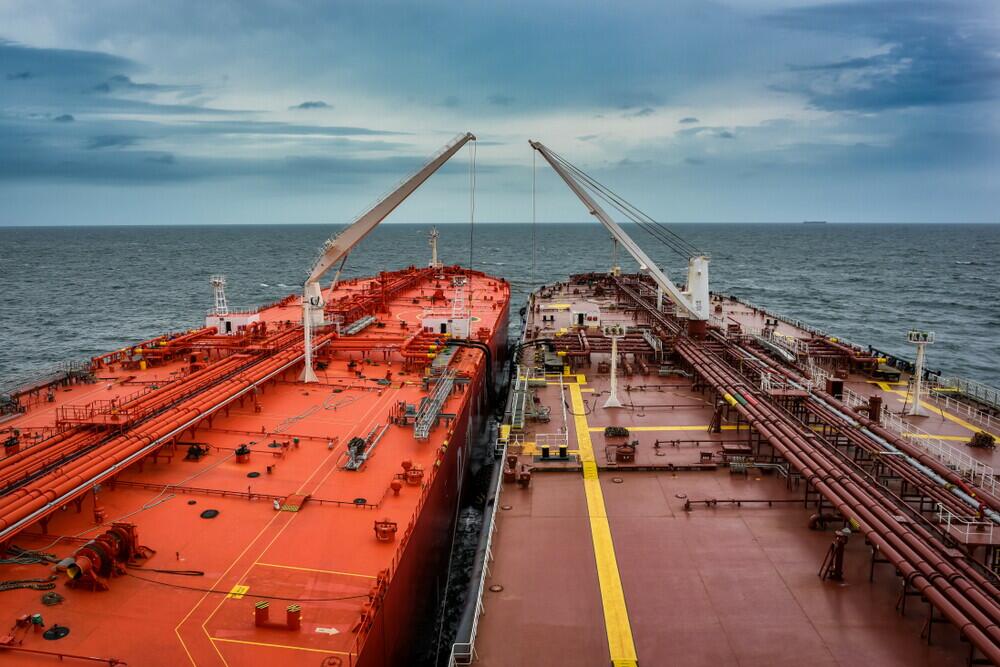
Thursday saw the US Treasury impose sanctions on 17 vessels and their owners involved in transporting Iranian crude oil, petroleum products and petrochemicals - with these being mostly aging oil tankers which conduct ship-to-ship transfers and other evasive, concealment tactics.
via Shutterstock
The Treasury Department hailed the action as effectively neutralizing the vast majority of the Islamic Republic's remaining shadow fleet, through which Tehran still rakes in potentially billions in foreign oil sales, circumventing the ongoing US naval blockade of its ports.
However, it's commonly estimated that some 20 million barrels of Iranian crude remain aboard ships which are far outside the reach of the Persian Gulf-centered US naval blockade, sitting off southeast Asian ports.
"Treasury is starving the tyrannical regime in Tehran of the money it uses to wage war in the region, and we will continue exposing those who enable the regime’s oil sales," Treasury Secretary Scott Bessent stated alongside the sanctions announcement.
"No enabler of Iranian sanctions evasion is safe from the full force of Treasury’s authorities," Bessent added.
Some of the notable specific targeting actions taken include—
Further details of the action are in the following:
Last weekend Bessent in an interview with The Axios Show sought to bast that Washington is isolating the Iranians "economically like this never happened before. You know, right now, the score: barrels out of the Strait: U.S. about 1.1 billion, Iran zero."
Bessent added, "For the first time in history, they, since they started pumping oil, they will have no oil on the water this week. They will have no revenue."
However, Tehran has showed a willingness to endure and suffer hardship thus far, and hasn't yielded amid the immense economic and external pressure. Instead, the IRGC has over the last week or so been ramping up attacks on foreign vessels violating the Iranian protocol for the Strait of Hormuz, pushing oil global prices higher.
Well over a dozen attacks have been launched on international vessels in about the past nine days.
Tyler Durden Fri, 10/09/2026 - 15:30
Continue reading...
[ H/T ZeroHedge ]
The Trump administration is late this week moving to identify, punish, and cut off remaining tankers in Iran's so-called 'shadow fleet' which are still engaged in shipping Iranian oil to Asia.
Thursday saw the US Treasury impose sanctions on 17 vessels and their owners involved in transporting Iranian crude oil, petroleum products and petrochemicals - with these being mostly aging oil tankers which conduct ship-to-ship transfers and other evasive, concealment tactics.
via Shutterstock
The Treasury Department hailed the action as effectively neutralizing the vast majority of the Islamic Republic's remaining shadow fleet, through which Tehran still rakes in potentially billions in foreign oil sales, circumventing the ongoing US naval blockade of its ports.
However, it's commonly estimated that some 20 million barrels of Iranian crude remain aboard ships which are far outside the reach of the Persian Gulf-centered US naval blockade, sitting off southeast Asian ports.
"Treasury is starving the tyrannical regime in Tehran of the money it uses to wage war in the region, and we will continue exposing those who enable the regime’s oil sales," Treasury Secretary Scott Bessent stated alongside the sanctions announcement.
"No enabler of Iranian sanctions evasion is safe from the full force of Treasury’s authorities," Bessent added.
Some of the notable specific targeting actions taken include—
- Starway was sanctioned for transporting over 3 million barrels of Iranian naphtha since 2025.
- Gas Lucky and Shenzhen were targeted for shipping more than 500,000 barrels of Iranian ethylene and 3.5 million barrels of Iranian crude, respectively.
- Paritosh and Bitu were sanctioned for transporting Iranian bitumen and asphalt in 2026.
Further details of the action are in the following:
Last weekend Bessent in an interview with The Axios Show sought to bast that Washington is isolating the Iranians "economically like this never happened before. You know, right now, the score: barrels out of the Strait: U.S. about 1.1 billion, Iran zero."
Bessent added, "For the first time in history, they, since they started pumping oil, they will have no oil on the water this week. They will have no revenue."
However, Tehran has showed a willingness to endure and suffer hardship thus far, and hasn't yielded amid the immense economic and external pressure. Instead, the IRGC has over the last week or so been ramping up attacks on foreign vessels violating the Iranian protocol for the Strait of Hormuz, pushing oil global prices higher.
Well over a dozen attacks have been launched on international vessels in about the past nine days.
Tyler Durden Fri, 10/09/2026 - 15:30
Continue reading...
[ H/T ZeroHedge ]