








To Limit Immigration, Japan Hikes Residency App Fee 20-Fold, Requires Incomes Higher Than National Average
Via Remix News,
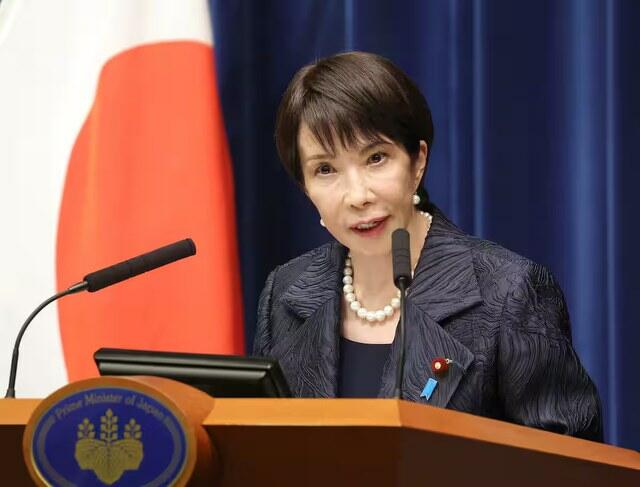
Japan has raised the fee for permanent residency applications twentyfold and imposed stricter income, pension and language requirements on foreigners seeking to settle long-term, as Prime Minister Sanae Takaichi's government moves to curb growth in the foreign resident population.
The move is being presented as a tool to protect public finances and social cohesion.
The fee for permanent residency rose from 10,000 yen to 200,000 yen (about $1,270) on Oct. 1, the Immigration Services Agency reported. Charges to change or extend other residence statuses, long fixed at 6,000 yen, now scale with the length of stay and reach 75,000 yen for permits of five years or more. Reduced rates remain available for applicants facing severe hardship who also qualify for humanitarian consideration.
The adjustments arrive after the foreign resident population reached a record 4.12 million at the end of 2025, up 9.5% in a single year. Prime Minister Sanae Takaichi has framed the tighter rules as a way to keep acceptance orderly.
"The government acknowledges that some citizens feel anxious or a sense of unfairness due to the rising number of foreign residents," Takaichi wrote on X. The changes, she said, are meant to "ensure order" and allow "both citizens and foreign nationals to live safely and securely."
Under the revised guidelines, permanent-residency applicants must show continuous household income at or above the average for Japanese households of similar size - 5.75 million yen (about $36,500) in 2024 official data.
They must also demonstrate projected pension benefits comparable to 30 years of contributions to the employees' pension system, a shortfall that can be covered by assets. From April 2027, applicants will need Japanese proficiency at the level of an independent user and a working grasp of local social rules.
The standard residence period remains 10 years; marriage-based pathways were lengthened as well.
The approach is straightforward. Settlement becomes available to people who can support themselves, contribute to the pension system, and function in Japanese society, rather than to anyone who simply accumulates years of temporary status.
Extra fee revenue is earmarked in part for language education and for removing people who overstay or break the rules. A related fivefold rise in visa fees took effect in July, the first adjustment since 1978, which Foreign Minister Toshimitsu Motegi described as a correction "to reflect inflation and exchange rate fluctuations."
Meanwhile, European states face larger and faster inflows of migrants, strained housing and welfare systems, and repeated public backlash over irregular migration and failed integration. Japan's harder line comes at a time when the country already has far fewer foreigners to deal with, especially from troubled Third World countries.
The radically different approaches to immigration are made clear through sheer numbers. In Germany, the former government cut the standard residency wait from eight years to five on June 27, 2024. The largest practical change is dual citizenship: applicants no longer have to renounce their existing nationality. Since the changes, Germany granted about 292,000 citizenships in 2024 and about 333,000 in 2025.
In Japan, authorities generally approve citizenship after ten years in most cases. On top of more rigorous standards, Japan does not recognize dual nationality for people who naturalize. Approvals are modest - about 11,500 in 2025, and roughly 7,000 to 10,000 a year before that - against a foreign resident population of 4.12 million. Formal applications that are filed are approved more than 90 percent of the time, but many people are screened out before they apply.
European countries that already struggle to enforce returns or to require newcomers to reach median earnings could adopt similar thresholds to dramatically reduce immigration.
Read more here...
Tyler Durden Tue, 10/06/2026 - 17:00
Continue reading...
[ H/T ZeroHedge ]
Via Remix News,
Japan has raised the fee for permanent residency applications twentyfold and imposed stricter income, pension and language requirements on foreigners seeking to settle long-term, as Prime Minister Sanae Takaichi's government moves to curb growth in the foreign resident population.
The move is being presented as a tool to protect public finances and social cohesion.
The fee for permanent residency rose from 10,000 yen to 200,000 yen (about $1,270) on Oct. 1, the Immigration Services Agency reported. Charges to change or extend other residence statuses, long fixed at 6,000 yen, now scale with the length of stay and reach 75,000 yen for permits of five years or more. Reduced rates remain available for applicants facing severe hardship who also qualify for humanitarian consideration.
The adjustments arrive after the foreign resident population reached a record 4.12 million at the end of 2025, up 9.5% in a single year. Prime Minister Sanae Takaichi has framed the tighter rules as a way to keep acceptance orderly.
"The government acknowledges that some citizens feel anxious or a sense of unfairness due to the rising number of foreign residents," Takaichi wrote on X. The changes, she said, are meant to "ensure order" and allow "both citizens and foreign nationals to live safely and securely."
Under the revised guidelines, permanent-residency applicants must show continuous household income at or above the average for Japanese households of similar size - 5.75 million yen (about $36,500) in 2024 official data.
They must also demonstrate projected pension benefits comparable to 30 years of contributions to the employees' pension system, a shortfall that can be covered by assets. From April 2027, applicants will need Japanese proficiency at the level of an independent user and a working grasp of local social rules.
The standard residence period remains 10 years; marriage-based pathways were lengthened as well.
The approach is straightforward. Settlement becomes available to people who can support themselves, contribute to the pension system, and function in Japanese society, rather than to anyone who simply accumulates years of temporary status.
Extra fee revenue is earmarked in part for language education and for removing people who overstay or break the rules. A related fivefold rise in visa fees took effect in July, the first adjustment since 1978, which Foreign Minister Toshimitsu Motegi described as a correction "to reflect inflation and exchange rate fluctuations."
Meanwhile, European states face larger and faster inflows of migrants, strained housing and welfare systems, and repeated public backlash over irregular migration and failed integration. Japan's harder line comes at a time when the country already has far fewer foreigners to deal with, especially from troubled Third World countries.
The radically different approaches to immigration are made clear through sheer numbers. In Germany, the former government cut the standard residency wait from eight years to five on June 27, 2024. The largest practical change is dual citizenship: applicants no longer have to renounce their existing nationality. Since the changes, Germany granted about 292,000 citizenships in 2024 and about 333,000 in 2025.
In Japan, authorities generally approve citizenship after ten years in most cases. On top of more rigorous standards, Japan does not recognize dual nationality for people who naturalize. Approvals are modest - about 11,500 in 2025, and roughly 7,000 to 10,000 a year before that - against a foreign resident population of 4.12 million. Formal applications that are filed are approved more than 90 percent of the time, but many people are screened out before they apply.
European countries that already struggle to enforce returns or to require newcomers to reach median earnings could adopt similar thresholds to dramatically reduce immigration.
Read more here...
Tyler Durden Tue, 10/06/2026 - 17:00
Continue reading...
[ H/T ZeroHedge ]