



Do you ever notice how the WNBA demands respect but seems to have an awfully hard time giving it?
Respect the players. Respect the league. Respect the game.
Imagine a white player committing a hard foul on a black opponent, getting ejected, then posting 'BLACK PRIVILEGE' at the other team.
All reasonable requests.
Now how about respecting the fans who pay to watch? The players who don’t hold the approved opinion? And while we’re at it, how about respecting the rule book?
The 2026 season is finally over. Mercifully. But believe me, this play is not over.
The WNBA is on fire. And not in a good way. Commissioner Cathy Engelbert keeps handing out fiddles when somebody ought to be looking for a fire extinguisher. And too much of the sports media stand beside the flames explaining that the real problem is the people pointing at the fire.
Before we address the blaze, ma’am, what does your T-shirt say?
I've worked for Walt Disney Studios, the WWF, and the Dodgers. Alongside my wife, I own an independent production company. I thought the idea of running a business was fairly straightforward: Give people something they want. Make them feel welcome. Give them a reason to come back.
Apparently, I missed the Ted Talk where you learn to resent the customers.
The WNBA finally has people looking through the window. More people are buying tickets, following players, and turning on games. Now would seem like a good time to open the door. Instead, parts of the league seem determined to slam it in their faces.
You’re watching for the wrong reason. You’re cheering for the wrong player. You’re wearing the wrong shirt.
I've had easier relationships with cable companies.
I have never seen so many people associated with a business work so hard to make new customers regret showing up. Except Hollywood. Tinseltown has spent years insulting its audience and then acting bewildered when the masses find something else to do on opening weekend. The WNBA seems determined to see whether that business model works with a shot clock.
The escape lane
Start with A’ja Wilson’s confrontation with a fan during the Indiana playoff series. The rule book says a player who deliberately enters the stands, other than as a continuation of play, is subject to ejection. After a lengthy discussion, the officials gave Wilson a technical. That was it.
The league declined further punishment, explaining that she remained in the “player escape lane.”
The what? Yes. The “player escape lane.” Even as your lying eyes clearly show Wilson moving toward the fan and leaning over him in his second-row seat.
Apparently, the WNBA’s escape lane is expandable. Perhaps the most flexible boundary in professional sports. Does it go all the way to the concession stand? The parking lot? Somewhere, a surveyor is watching the footage and wondering whether he needs to renew his license.
Show us the boundary. Explain the ruling. Apply it consistently.
Then there’s the officiating, which of course brings us to Caitlin Clark. During a June game, Phoenix’s Alyssa Thomas made contact with Clark’s throat with her fist. The officials called no foul. After reviewing the play, the league assessed a flagrant 2 and suspended Thomas for one game.
The league eventually recognized what happened. Unfortunately, the officials on the floor apparently needed to wait for the morning papers.
Later, in Indiana’s deciding playoff game against Las Vegas, Clark ended up with a bloody mouth. No flagrant review. Lexie Hull gets brought down with a perfect WWE suplex. But she gets called for the foul.
I worked in the WWF. Yes, before the E. I've seen more than a few people get taken to the mat. At least there, when somebody landed on his back, we knew who had done the slamming.
The answer is better officiating for everyone. Clark. Reese. Hull. Cunningham. Wilson. All of them. Of course basketball is physical. So is moving furniture. But you still notice when somebody drops a refrigerator on you.
Instead, we get another promise of improvement. The league says it will begin using the NBA's centralized replay facility in 2027. Wonderful. Rome's new sprinkler system opens next spring.
The golden goose
Meanwhile, the league keeps supplying reasons to question whether its biggest commercial attraction is appreciated inside her own workplace.
Clark finished 11th among guards in player All-Star voting. Eleventh. The WNBA's own announcement had her fifth in league scoring and second in assists. She was second among guards in fan voting, was third in media voting, and was selected as a starter.
You can argue about who belongs first. Eleventh requires considerably more imagination.
I'm beginning to think some of those ballots were filled out with the same map that located A’ja Wilson in the escape lane.
The golden goose is bringing people through the gates. And some of her colleagues appear to be shopping for stuffing.
That doesn't mean other players aren't talented. They are. It doesn't mean the league started with Clark. It didn't. But her drawing power has helped fuel growth that supports bigger media deals, higher salaries, and opportunities throughout the league. The smart business move is to give those new fans a reason to stay and discover the rest of the talent.
The selective sisterhood
And then there's the racism.
The WNBA and its media defenders have spent plenty of time condemning racist behavior directed at black players. They should. No player should be subjected to racial abuse for playing basketball.
But the principle seems to get fuzzy when the hostility is directed toward white players.
Chicago's DiJonai Carrington was ejected after striking Indiana Fever guard Sophie Cunningham in the head and neck. Then Carrington posted “WHITE PRIVILEGE” and tagged the Indiana Fever.
Imagine a white player committing a hard foul on a black opponent, getting ejected, then posting “BLACK PRIVILEGE” at the other team. How many days would that dominate the coverage?
I keep hearing that judging people by the color of their skin is wrong. I could not agree more. Racism directed at black players is wrong. Racism directed at white players is wrong. That really should be a two-sentence policy.
Then there's Cunningham, who said she wants to protect girls' opportunities and safety in girls' sports. Coaches and players are free to disagree with her. But disagreement too often seems insufficient. She needs to be corrected, condemned, and made an example of.
And check your shirt at the door, because the wardrobe department appears to operate by a different set of rules.
Minnesota coach Cheryl Reeve can wear a “Trans kids belong” shirt while coaching against Indiana. Meanwhile, fans wearing XX-XY Athletics shirts, supporting female-only sports, have been told to cover them.
At Game 1 of the Finals, XX-XY Athletics founder Jen Sey and friends wore the company’s shirts. Sey says fans cursed at them and told her to kill herself; she posted video of parts of the confrontation. Security pulled the group aside after complaints about their clothing.
Earlier in the season, Seattle Storm co-owner Celeste Keaton confronted young fans wearing XX-XY shirts. The league fined her and suspended her from five home games. Good. It acted. But consider what it took to get there: A team owner had to be reminded how to behave toward paying customers.
Usually, when an owner approaches your seat, you expect a handshake and appreciation. Now you wonder whether you should bring an attorney.
That's an interesting approach to inclusion. Everybody belongs. Except you.
The rule book, again
And a big one for me, that pesky little thing known as our national anthem.
In all seven games of the championship Finals, the Atlanta Dream and Golden State Valkyries left the floor before the anthem, then returned as soon as it was over. The Valkyries say it's part of a long-standing pregame routine.
I've seen the timing. As a veteran, I find their absence during the anthem offensive. Others can disagree. I'm not asking them to agree with me. I am asking the league to explain its own rule.
The WNBA rule book contains language about players standing and lining up during the anthem. But the league suspended the protocols in 2017. If the rule has been suspended, say so clearly. If teams can leave, explain who decided that. And if the words no longer mean what they appear to say, why are they still in there?
The WNBA can spot an objectionable shirt from across an arena. Finding a straight answer in its rule book apparently requires a search party.
The media plays along
Some of the coverage has been every bit as selective. USA Today columnist Nancy Armour invoked the murder of Emmett Till in a column about Clark's on-court reactions. Think about how far a sports column has to travel to connect a basketball player arguing calls with one of the most horrific racial murders in American history.
The Guardian characterized Cunningham's concern about girls competing against biological males as an “anti-trans dog-whistle.” There's a convenient way to avoid debating someone's actual argument: Assign an ugly motive to it and move on.
The WNBA doesn't need a cheering section in the press box. It needs people willing to cover the whole story.
Here's an interesting little stat. A YouGov survey commissioned by the Bulwark and Pablo Torre Finds Out asked 1,417 American adults about their opinions of public figures. Caitlin Clark registered 56% favorable and 11% unfavorable. Sophie Cunningham scored 38% favorable. Angel Reese stood at 24% favorable, with 21% unfavorable and 54% saying they didn't know who she was.
Popularity doesn't make anyone right about everything. It doesn't win a basketball game, either. But it ought to tell the league something about the people bringing an audience to its product.
And just when you thought the WNBA couldn't find another way to make its business more difficult, there was Game 6 of the Finals. The tip-off at Atlanta's State Farm Arena? 12:30 on a Thursday afternoon. That's 9:30 in the morning for Golden State fans.
Nothing says “championship basketball” quite like watching the opening tip between your first cup of coffee and your second meeting.
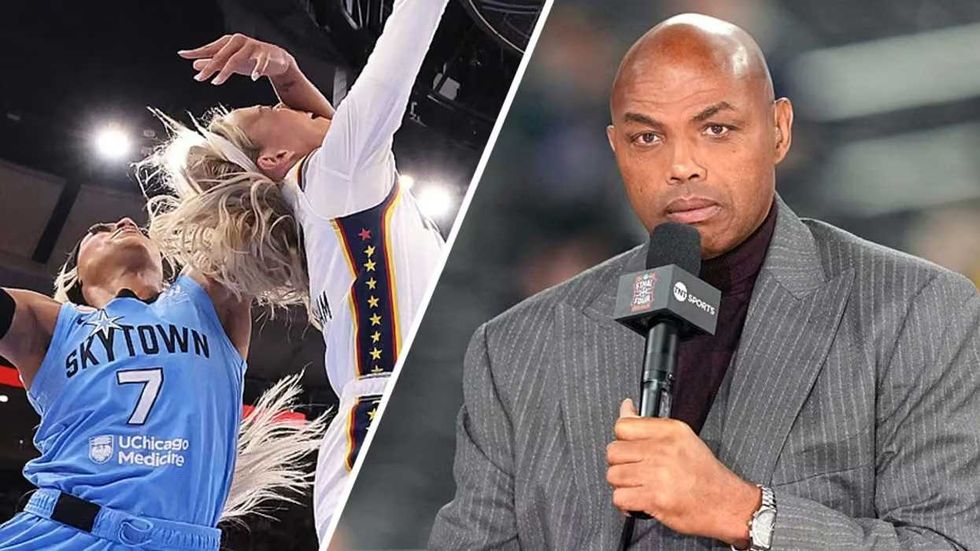
RELATED: Charles Barkley defends WNBA, but says 'race' and 'sexuality' are behind Sophie Cunningham clashes
A new conductor
Cathy Engelbert has announced that she will retire as commissioner at the end of the year. Having worked for large corporations, I know how these announcements can sound.
Thank you for your years of service and dedication. There's cake in the conference room, a lovely parting gift on the table. Oh, and your key card will stop working at five.
Now, Engelbert says the decision was hers. Okay, I'll take her at her word.
The bigger question is what happens next. Will the next commissioner enforce the rules consistently? Protect all the players? Welcome fans who don't think exactly like everyone in the front office?
The WNBA has grown. New viewers, new money, new opportunities for extraordinary athletes. It has something very valuable to squander.
Give the fans a better game. Enforce the rules. Protect the players. Treat the customers with respect. Let people disagree without deciding that half the audience needs to be shown the door.
Instead, we keep getting smoke, excuses, and another lecture.
Rome is burning. League leaders are fiddling. And too many sportswriters are reviewing the concert.
Continue reading...
[H/T Blaze Media]