


.jpg)


As the West abuses its corporate responsibilities, Beijing sees the persistent discord between the “rules-based order” rhetoric and the stark realities of America’s abusive self-interests.
Protect & SurviveThe Financial Jigsaw Part 2 (Episode 93) Continues to explain China’s financial strategy as it navigates the spider’s web of corporate governance and controls. Have you forgotten about Theranos and nobody went to jail? Xi Jinping will be in Washington on September 24th, but is this summit a genuine reset, or just China managing an American system that can no longer manage itself? America’s dysfunction arises from decades of financialisation in an economy that rewards speculation over honest corporate productivity. America is now an oligarchy having hollowed out its own middle class while blaming China for the damage.
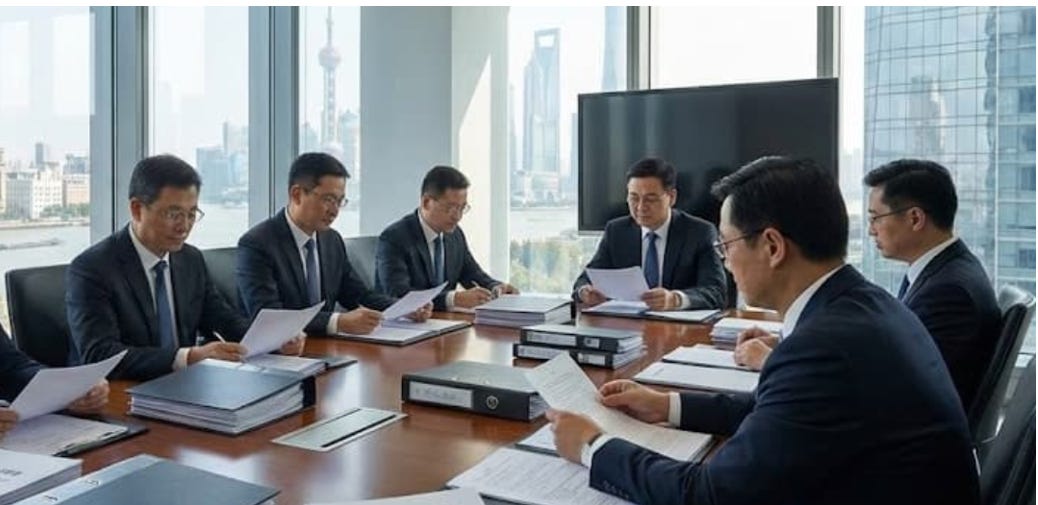
This is part of a series examining the emergence of China’s banking system and corporate governance as it competes with the weaponised US dollar in the field of international finance and trade exchange.
The Western model of corporate accountability absolves senior executives of responsibility for crimes and corruption by hiding behind limited liability corporations. I explained (see link) how this has allowed the financial elite to escape retribution using corporate structures embedded in the Western global financial system.
Austrian’s Newsletter is a reader-supported publication. To receive new posts and support my work, consider becoming a free or paid subscriber.
I contend that this goes to the root of corruption rife in most western companies and their private/public entities. There are a multitude of examples, where executives and politicians have walked free from their crimes, with the public and shareholders paying fines, and in my view is one cause of the failing western economies through embedded and legalised fraud and corruption.
Corporate personhood or juridical personality is the legal notion that a juridical person such as a corporation, separately from its associated human beings, has at least some of the legal rights and responsibilities enjoyed by natural persons. In most countries, a corporation has the same rights as a natural person to hold property, enter into contracts, and to sue or be sued.[Ref Wikipedia]
Although business corporations were formed in England as early as the 16th century, these enterprises were monopolies chartered by the crown for the pursuit of strict mercantilist policies and were thus closer, in some respects, to the form of the modern transnational public corporation than to that of the private business corporation. The fusion of the two forms took place incrementally over the first two-thirds of the 19th century in Great Britain, the United States, France, and Germany with the passage of general incorporation laws, which gradually made incorporation more or less a routine matter for business enterprises. Read more at Britannica HERE. Penalties are seen by corporates as the ‘cost of doing [corrupt] business’, in other words: crime pays.
Even members of the US Congress are unaware of the identities of the shareholders in transnational corporations such as GE, JP Morgan, Exxon Mobil, et al. They are hidden even from the nation’s lawmakers, so what else is secret about the ownership and control of these giant and influential corporations? The public oligarchs are merely trustees of the ‘London Money Power’, centred on the City of London. When the banker, John Pierport Morgan died, everyone believed that he was the world’s wealthiest man. But it turned out that he owned only 9% of his bank and was acting merely as the trustee of the bank’s real owners who were (and perhaps still are) in the City of London.

One of many examples of Western corporate malfeasance is the case of Elizabeth Holmes, who came out of nowhere to become the youngest female, ‘self-made’ billionaire and was widely promoted in the media. This worked through the Money Power playbook until her company, Theranos collapsed in disgrace and it turned out that she had invented nothing and controlled nothing. The Theranos Board of Directors are shown below: The Who’s Who of the Deep State:
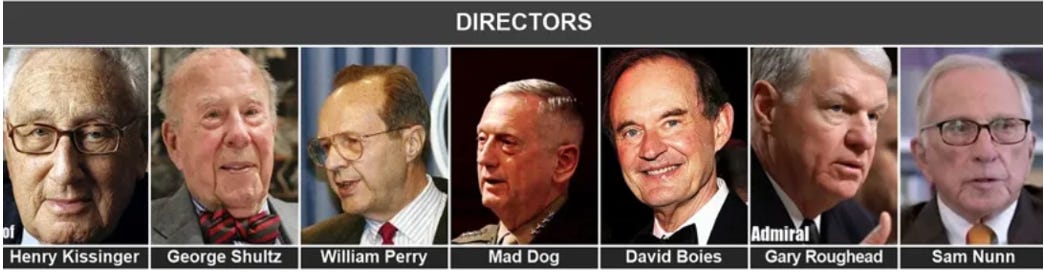
The disintegration of that business model showed to the world that Ms. Holmes was the public front and a ‘stand-in’, controlled by her board of directors (every last member was a veteran of the Deep State, and US defence establishment), and the people who funded the whole fraud. This article dissects that fraud: Theranos Scandal: the real story. And nobody went to prison; as usual they hid behind limited liability.
China is addressing this Western malfeasance as their corporate governance landscape undergoes a seismic shift. The newly revised Company Law of the People’s Republic of China, effective July 1, 2024, introduces stringent personal liability for directors and senior management, fundamentally altering risk exposure for foreign businesses engaging Chinese partners. Understanding these changes isn’t just advisable—it’s critical for mitigating financial and reputational damage.
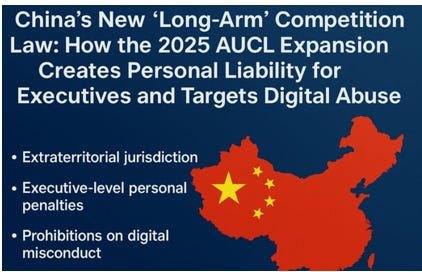
Personal Liability in China now takes Centre Stage. Gone are the days when corporate structures fully shielded individuals. The 2024 amendments explicitly target directors and officers for personal accountability in key operational failures. This is part of the emerging multipolar system in action as China confronts the Western money-power’s capital monopoly.
Capital Contribution Enforcement (Article 53 & 252): Directors face joint liability if they fail to diligently verify shareholder capital contributions. If a shareholder evades or withdraws capital, responsible directors and senior managers must compensate the company alongside the shareholder. The ‘China Securities Regulatory Commission’ (CSRC) can impose fines ranging from 3-10% of the evaded amount.
Fiduciary Duty is Expanded (Article 180 & 188): The law codifies enhanced “duty of loyalty” and “duty of care.” Directors must proactively avoid conflicts of interest and act with “reasonable care” expected of a prudent manager. Violations, such as misappropriating funds, accepting unauthorised commissions, or seizing corporate opportunities without disclosure and approval (Article 181-184), now carry explicit personal liability for resulting company losses.
Creditor Protection Empowerment (Article 54): Creditors gain a powerful tool. If a company defaults on debts, creditors can demand early payment from shareholders whose capital contributions are not yet due. Directors facilitating contribution delays risk facilitating this creditor action against shareholders.
This Matters for all transnational businesses. Chinese partners’ directors are now under unprecedented legal pressure. This directly impacts risk profiles. There is increased scrutiny on partner viability: Directors facing personal liability for under-capitalisation or financial mismanagement signal deeper corporate instability. A partner whose directors are embroiled in legal disputes or enforcement actions poses a significant counterparty risk.
Due Diligence becomes non-negotiable: Verifying the credibility and track record of a partner’s directors is no longer optional. Are they known for compliance? Have they been implicated in past violations? Their personal risk is a business risk. Contractual Safeguards will need updating: Force majeure clauses, indemnities, and representations/warranties regarding director compliance and company capitalisation require review in light of these new liabilities.
The ‘Official Enterprise Credit Report’ is a Due Diligence Shield. China’s National Enterprise Credit Information Publicity System (NECIPS) remains the bedrock of corporate transparency. The ‘Official Enterprise Credit Report’ is now more vital than ever for identifying director-related risks. The report lists all current directors, supervisors, and senior managers, including their names and positions and track sudden or frequent changes in key personnel. While shareholder contributions are detailed, director liability under Article 53 arises from their oversight of this process. Cross-referencing shareholder contribution timelines and amounts helps assess potential director exposure.
The report highlights critical compliance issues. Records of fines or sanctions (Article 251) directly indicate governance failures, potentially implicating directors. Inclusion on this list often stems from failures like unreported address changes or false disclosures, areas where director responsibility is heightened.
Major infractions carry severe consequences, including potential jail-time, and market bans for responsible directors (Article 262). Director appointment/departure history within the “Change Information” section provides context on governance stability; integrates director risk assessment into a China strategy by making the Official Enterprise Credit Report, and often a deeper Professional Report, a non-negotiable step before signing contracts or major transactions with any Chinese entity and verify director identities and look for compliance red flags. The 2024 Company Law marks a decisive move towards greater director accountability in China. For all international businesses, this translates to elevated counterparty risk tied directly to the actions and oversight of Chinese partners’ leadership.
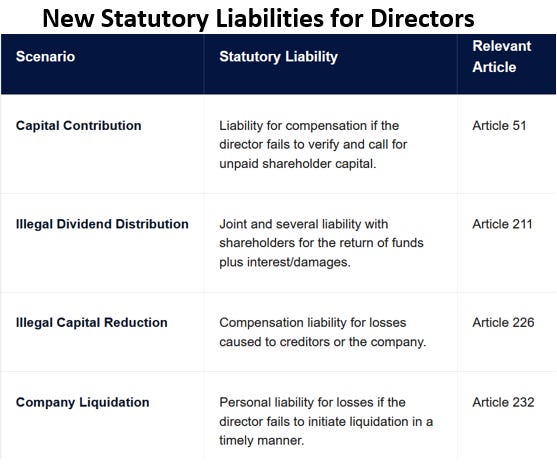
Under the new 2026 director duties framework of China’s Company Law, being a director is no longer just a ceremonial title; it is a high-risk legal responsibility. The latest amendments have fundamentally shifted liability from the corporate entity to individuals. Directors now face personal liability for everything from unpaid registered capital to botched liquidations.
If you sit on a board in China, the days of “wilful blindness” are over; you are now the primary gatekeeper of corporate capital and creditor safety. Ignorance of these new diligence and loyalty duties can lead to personal bankruptcy and criminal charges. Directors must take active measures to avoid conflicts between personal and company interests. Prohibited acts under Article 181 include:
- Misappropriating company funds or using company assets as personal security.
- Seeking business opportunities that belong to the company for personal gain.
- Engaging in business that competes with the company without explicit board or shareholder approval.
The new standard requires directors to exercise “reasonable care” in performing their duties, as an “ordinarily prudent officer” would. This means that “passive” directors, those who simply attend meetings without reviewing financials, are now at high risk of liability if the company suffers losses due to their lack of oversight.
With the expansion of personal liability, the 2024 Company Law also formally introduces Directors and Officers (D&O) Insurance (Article 193). For foreign directors and local executives alike, negotiating a comprehensive insurance policy into an employment contract is now a standard “must-have.” This insurance can cover legal defence costs and settlement amounts, provided the breach was not intentional: Corporate Law in China.
Questions about Director Duties under China’s Company Law:
Can a foreign director be held liable for a Chinese company’s debts? Generally, no, provided the corporate veil remains intact. However, under the 2024 Law, if a foreign director fails in their statutory duties (e.g., neglecting to oversee capital injection or liquidation), they can be held personally liable to the company or its creditors for the resulting losses.
What is the “Shadow Director” rule in the 2024 Law? Article 180 extends fiduciary duties to controlling shareholders or actual controllers who do not hold a formal director title but exercise de facto control. If they instruct a director to perform an act that harms the company, both the controller and the director can be held jointly and severally liable.
Does a director have to verify capital contributions? Yes. Article 51 makes it a mandatory duty for the board of directors to verify that shareholders have paid their registered capital. If a director fails to issue a written notice of payment (capital call) and the company loses money, that director must personally compensate the company.
Can a third party sue a director directly in China? Yes. Article 191 establishes that if a director, through “intentional misconduct or gross negligence,” causes damage to a third party (like a creditor or consumer) while performing their duties, they are personally liable along with the company.
How does the 2024 Law change the role of the Legal Representative? The Legal Representative is no longer restricted to the Chairman or General Manager. Any director who “manages company affairs” can be appointed. However, if that director resigns, they are deemed to have resigned as the Legal Representative simultaneously, simplifying the exit process.
The 2026 era of director duties under the China Company Law demands professionalism and active management. The strategy of appointing “dummy directors” is now legally toxic. Directors must be active fiduciaries, verifying capital, policing conflicts, and executing liquidations precisely. If you cannot fulfil these duties, resignation is safer than remaining on the board of a non-compliant entity.
China’s domestic politics have changed significantly over the past decade, with the top leadership enacting much stronger policies to limit the power of large corporations while also deploying extensive measures to support firms, especially in key industries. When engaging with partners, the United States will need to acknowledge diverging approaches to Chinese investment, corporate law, and economic vulnerabilities. Sources
- 2024 China Law Changes You Can’t Ignore https://cnbizinsight.com/directors-liability-alert-2024-china-law-changes-you-cant-ignore/
- Director Duties China Company Law 2026: Liability Guide https://www.chinalegalexperts.com/news/director-duties-china-company-law
- Linkages Between the Chinese State and transnational corporations https://bigdatachina.csis.org/unpacking-linkages-between-the-chinese-state-and-private-firms/
- FINANCIAL CORRUPTION; Markets & The Global Corporations https://austrianpeter.substack.com/p/the-financial-jigsaw-part-2-84-financial?
Tweet
Continue reading...
[ H/T The Burning Platform ]