









Explore how China’s Social Credit System operates in 2026, including corporate accountability, blacklists, AI surveillance, privacy risks, and the latest policy reforms shaping its future.
Protect & SurviveThe Financial Jigsaw Part 2 (Episode 86); Examines China’s internal imperialist approach to central government using the latest in AI technology applied to Social Credit systems. Renewed hostilities in the Middle East marks the decline of the American empire but who will fill the evolving global power vacuum? China is the obvious choice and this episode explains how their developing Social Credit system offers an alternative to the current direction of the Western model of agentic global dominance.

Iain Davis writes: “In the 2014 Chinese State Council Notice concerning Issuance of the Planning Outline for the Establishment of a Social Credit System. The Chinese government laid out its vision for its social mechanism:
- Accelerating the establishment of a social credit system is an important foundation for comprehensively implementing the scientific viewpoint of development.
- Accelerating and advancing the establishment of the social credit system is an important precondition for promoting the optimised allocation of resources and an urgent requirement for improving mechanisms for scientific development.
This comes under the heading of: ‘Technocracy’ which is a centralised system of control based upon the distribution and allocation of all resources, right down to the individual level. It gives those who command the whole system absolute behavioural control of the entire population. Technocracy is currently being trialled in China. The Western ruling oligarchs have noticed, which is why they are flooding the West with massive AI data centres.
Austrian’s Newsletter is a reader-supported publication. To receive new posts and support my work, consider becoming a free or paid subscriber.
China’s Social Credit System stands as one of the most ambitious governance experiments in modern history, blending big data, administrative enforcement, and behavioural incentives into a sprawling national framework. By early 2025, the National Credit Information Sharing Platform had collected over 80.7 billion records covering approximately 180 million businesses, making it one of the largest regulatory databases ever constructed.
The system does not operate as a single unified score for every citizen, despite widespread assumptions in Western media about its design. It is best understood as a patchwork of local pilot programs, industry-specific blacklists, and corporate compliance tools connected through shared data platforms. A March 2025 policy directive from the Communist Party leadership introduced 23 new measures aimed at standardising credit management across government, businesses, and individuals, what has changed since its inception, and what it means for individuals, businesses, and the global community in 2026. The stakes are significant: the system touches everything from loan access and travel privileges to international trade and cross-border regulatory influence.
China’s Social Credit System is a government-led regulatory framework designed to evaluate the trustworthiness of individuals, businesses, and government entities through data collection, blacklists, and administrative enforcement. The system connects financial credit data, regulatory compliance records, and behavioural assessments into a policy infrastructure that affects how entities operate within China’s economy, and it remains under active development rather than being a completed, monolithic program
The term “social credit” (社会信用, shèhuì xìnyòng) is intentionally broad and does not translate neatly into a Western concept of credit scoring. A law professor in Beijing has described it as a “working term,” meaning it functions as an umbrella category covering multiple national initiatives and city-level pilot projects. The system emerged from a 2014 State Council planning document that outlined a vision for building a “credit-worthy society” by 2020, though that deadline passed without a single unified system being completed.
Instead, central authorities continued emphasising improvement and standardisation of social credit policies rather than deploying one integrated platform. The most common misconception about the system is that it assigns a single numerical score to every Chinese citizen, which is not how it currently operates. What exists in practice is a decentralised collection of agency-managed databases, local experiments, and corporate compliance mechanisms linked through shared data-sharing agreements.
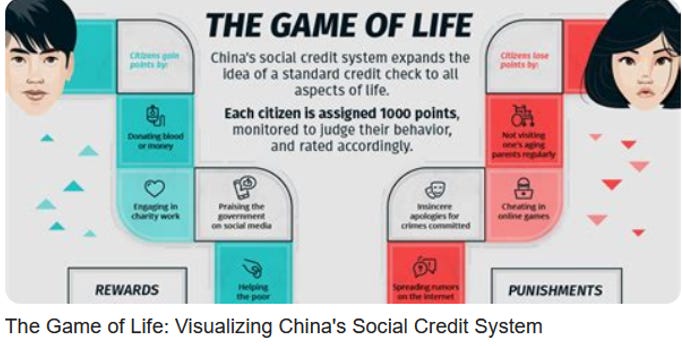
Between 2016 and 2024, China shifted from fragmented local pilots toward a more coordinated national framework managed through centralised platforms. The National Credit Information Sharing Platform became the core data hub, linking ministries, provincial databases, and regulators into a single information backbone. By 2023 a total of 118 national-level regulations were issued specifically for the Social Credit System, supported by more than 500 detailed regulations at the local level. This legislative activity signalled that the system was far from dormant, even as international attention faded from the headlines. The pace of regulatory updates also created challenges for companies struggling to keep up with rapidly shifting compliance requirements across different provinces and agencies.
A pivotal moment arrived on March 21, 2025, when the General Office of the Communist Party Central Committee and the General Office of the State Council jointly released a 23-point policy directive. This document expanded the role of creditworthiness assessments across government institutions, businesses, social organisations, and individuals simultaneously.
The directive emphasised data-driven governance, stronger legal safeguards for information security, and protections against excessive data collection and illegal use of personal information. In 2026, the National Development and Reform Commission promulgated Credit Repair Management Measures effective April 1, 2026, establishing clear rules for how entities can challenge and repair their credit records. The trajectory of policy development reveals a system that is becoming more formalised and standardised, not less.
Every company registered in China has been assigned a Unified Social Credit Code, an 18-digit identifier used across all datasets linked to the corporate social credit system. The cross-agency structure gives the system its enforcement power, because a violation in one domain can trigger consequences across multiple regulatory bodies simultaneously. Local governments maintain their own credit management offices and often run distinct scoring pilots tailored to regional priorities and economic conditions.
Provincial and municipal authorities have considerable latitude in designing their own implementation strategies, which explains why the system looks different in Rongcheng, Zhejiang, Shanghai, and other jurisdictions. The “Credit China” portal (creditchina.gov.cn) functions as the primary public-facing platform where individuals and companies can check published blacklists, administrative penalties, and credit repair procedures.
This portal has become the sole authorised platform for publishing public credit information following the 2025 directive, consolidating what was previously a scattered system of regional disclosure websites. The decentralised structure creates both flexibility and inconsistency, allowing innovation at the local level while complicating efforts to build a truly unified national standard.
The data collection process extends well beyond traditional financial records into behavioural and regulatory domains that have no direct equivalent in Western credit systems. Government departments report administrative permits, penalties, license revocations, and court-ordered enforcement actions to the shared platform, building layered profiles on businesses and individuals.
For companies, the record includes annual report filings, tax payment histories, customs declarations, environmental compliance audits, and even the personal credit standing of key personnel. The resulting corporate profile is an aggregate of potentially hundreds of data points compiled by dozens of entities operating at national, provincial, and municipal levels. Understanding how big data intersects with regulatory systems is essential for grasping the scale of the infrastructure involved.
Data sharing across agencies operates through “joint enforcement agreements” that amplify consequences beyond a single regulatory domain. A company blacklisted by the State Tax Administration for evasion can face additional customs penalties, more frequent financial audits, and restrictions on government procurement eligibility under cooperation agreements between those agencies. This is how China is preparing to control the Western-style model of corporate limited liability protection which I discussed HERE.
The 2025 update formalised this cross-ministry data sharing, creating what amounts to a unified compliance dashboard where a bad score in one category blocks access in others. This interconnected enforcement model represents the system’s most powerful practical feature, because it transforms isolated regulatory violations into system-wide consequences. This is the ‘Clearing House’ model.
Critics argue that this linkage risks compounding punishments beyond what the original infraction would warrant, while supporters contend it eliminates the loopholes that allowed bad actors to evade accountability by shifting between jurisdictions.

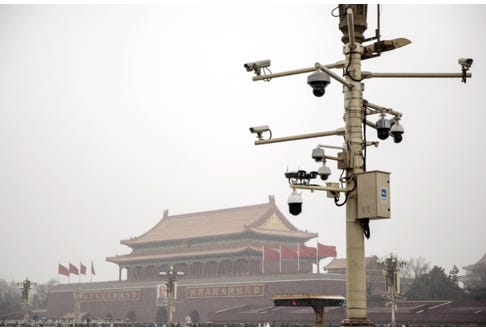
Artificial Intelligence (AI) and surveillance technology have become increasingly intertwined with China’s credit monitoring infrastructure, though the degree of integration is often exaggerated in international reporting. As of 2025, China operates an estimated 600 million surveillance cameras across the country, many equipped with AI-powered facial recognition capabilities developed by companies like SenseTime, Megvii, and CloudWalk. By comparison in 2026, the United States is estimated to host well over a billion active security cameras across all sectors
These cameras serve multiple government functions including public safety, traffic enforcement, and urban management, though their direct connection to social credit scoring varies significantly by locality. AI facial recognition software is used in tandem with these cameras to identify individuals in real-time, track movements across urban spaces, and flag potential infractions. The technology enables government authorities to process behavioural data at a scale that would be impossible through human observation alone.
Despite the technological capabilities available, the actual deployment of AI in credit scoring remains more fragmented and less automated than popular accounts suggest. Experts studying the system note that much of the administration still relies on human decision-making rather than fully automated AI-driven scoring.
Government plans call for greater integration and standardisation of technology platforms in the future, but practical constraints including bureaucratic silos, data format inconsistencies, and resource limitations slow the pace of full automation. The gap between the system’s theoretical capability and its practical implementation is significant, and caution is advised against conflating China’s surveillance capacity with the actual operations of the social credit system. That said, the trajectory is toward greater technological integration, and ongoing developments in AI ethics suggest the challenges will intensify before they are resolved.
Surveys of Chinese citizens reveal a surprisingly high level of support for the social credit system, complicating the narrative that it functions purely as a top-down instrument of state control. Research published in The Journal of Politics by academics from Stanford and other institutions found that nearly 80% of Chinese citizens expressed support for social credit programs in opinion surveys.
This level of public backing reflects a genuine desire among many Chinese citizens for improved social trust, reduced fraud, and more reliable enforcement of existing laws and regulations. Supporters of the system frequently cite specific benefits such as reduced food safety risks, fewer scams, and more reliable business partners as reasons for their positive assessment. The high approval rating challenges the assumption that the system is universally resented by the Chinese public, even as it raises questions about the conditions under which that support is formed.
Public support is partly sustained by limited access to information about the system’s more coercive applications. Government propaganda and censorship play a role in shaping perceptions by emphasising benefits like fraud reduction while obscuring cases of political targeting and privacy violations related to AI-powered monitoring. The relationship between public opinion and policy development is reciprocal, as the government calibrates its messaging and reform efforts to maintain popular legitimacy for the system
What makes China’s approach distinct is the explicit government strategy connecting surveillance data, regulatory enforcement, and cross-agency punishment mechanisms into a coordinated system backed by state authority. Western credit systems are primarily operated by unaccountable private and public corporations hiding behind limited liability protection, while China’s system is government-led and directly enforces accountability through administrative consequences including travel bans, employment restrictions, and public shaming.
The integration of behavioural surveillance with credit assessment also distinguishes the Chinese model, because Western systems typically do not yet link surveillance camera footage or social media activity directly to financial creditworthiness. China’s system is viewed as a paradigm shift, not because of any single feature, but because of its combination of scale, government authority, and data integration, creating a comprehensive behavioural governance apparatus without precedent in modern history. Critics argue this combination creates unique risks for abuse, while defenders contend it addresses systemic trust deficits that Western regulatory approaches have failed to solve in comparable markets.
China’s surveillance technology companies have expanded their reach dramatically through partnerships with governments across Africa, Central Asia, and Southeast Asia, creating dependencies that extend Chinese technical standards beyond national borders.
More than 18 countries had adopted Chinese surveillance technologies as of 2019, and the number has continued growing. These installations lock recipient countries into Chinese technical ecosystems that are difficult and expensive to replace, a critique that has drawn attention from European and American policymakers concerned about digital sovereignty in the developing world.
China’s Social Credit System is entering a phase of consolidation and formalisation that will define its impact for years to come, moving beyond experimental pilots toward institutionalised infrastructure with legal backing. The most likely trajectory involves continued strengthening of corporate credit enforcement, given that this dimension has the clearest institutional support and generates the least domestic political resistance.
Individual social credit remains fragmented, and the rollout of a comprehensive personal ranking system appears to be on hold, with most local pilot programs having concluded by 2025. The March 2025 policy directive and April 2026 Credit Repair Measures suggest the government is prioritising standardisation, legal frameworks, and procedural safeguards alongside continued expansion. The system’s evolution will be shaped by three competing pressures:
- The government’s desire for comprehensive data integration
- Growing domestic expectations for privacy protections
- International scrutiny of surveillance-enabled governance models.
The system is far from complete, but it has already become an embedded feature of China’s regulatory landscape that no serious analysis of the country’s governance, economy, or international posture can afford to ignore.
Summary of findings
The system’s global influence extends beyond China’s borders, with surveillance technology exports and international standard-setting reshaping social credit frameworks in developing nations.
- China’s Social Credit System is not a single score but a network of blacklists, redlists, and compliance databases managed by dozens of government agencies.
- Corporate social credit enforcement has intensified since 2025, with cross-ministry data sharing and formalised penalties for regulatory violations.
- Public opinion surveys suggest nearly 80% of Chinese citizens support the system, though research indicates this support partly stems from limited awareness of its repressive potential.
While no country has replicated China’s approach exactly, surveillance technology exports and digital governance programs are extant in many developed nations incorporating elements of the Chinese social credit model. Sources
- Edited extracts from China’s Social Credit System https://www.aiplusinfo.com/blog/chinas-social-credit-system/
- Elon Musk’s Chinese Public-Private Partnership
Iain Davis Substack
Elon Musk’s Chinese Public-Private Partnership.
In the previous article, we discussed the “gaggle of Silicon Valley oligarchs” who can be distinguished by their “liking for the ideas presented in Nick Land’s Dark Enlightenment and their enthusiasm for Technocracy.” Calling them the NRx accelerationists, we noted that Elon Musk is part of this group…
Read more https://iaindavis.substack.com/p/el...tm_medium=web&embedding_publication_id=762792
14 days ago · 69 likes · 10 comments · Iain Davis
- Technocracy Rising: Why It’s Crucial to Understand the End Game https://www.globalresearch.ca/techn...ing_wp_cron=1783923378.7922260761260986328125

Tweet
Continue reading...
[ H/T The Burning Platform ]


