The DOE Demands Faster Uranium Enrichment Buildout. Who's Answering The Call?
DOE officials told Reuters they are pressing Centrus Energy, General Matter, and France's Orano to accelerate their new build programs.
The start of the Russia-Ukraine war in 2022 sent prices soaring across the nuclear fuel chain, as the start of the war was also followed by the US implementing a ban on importing Russian enriched uranium.
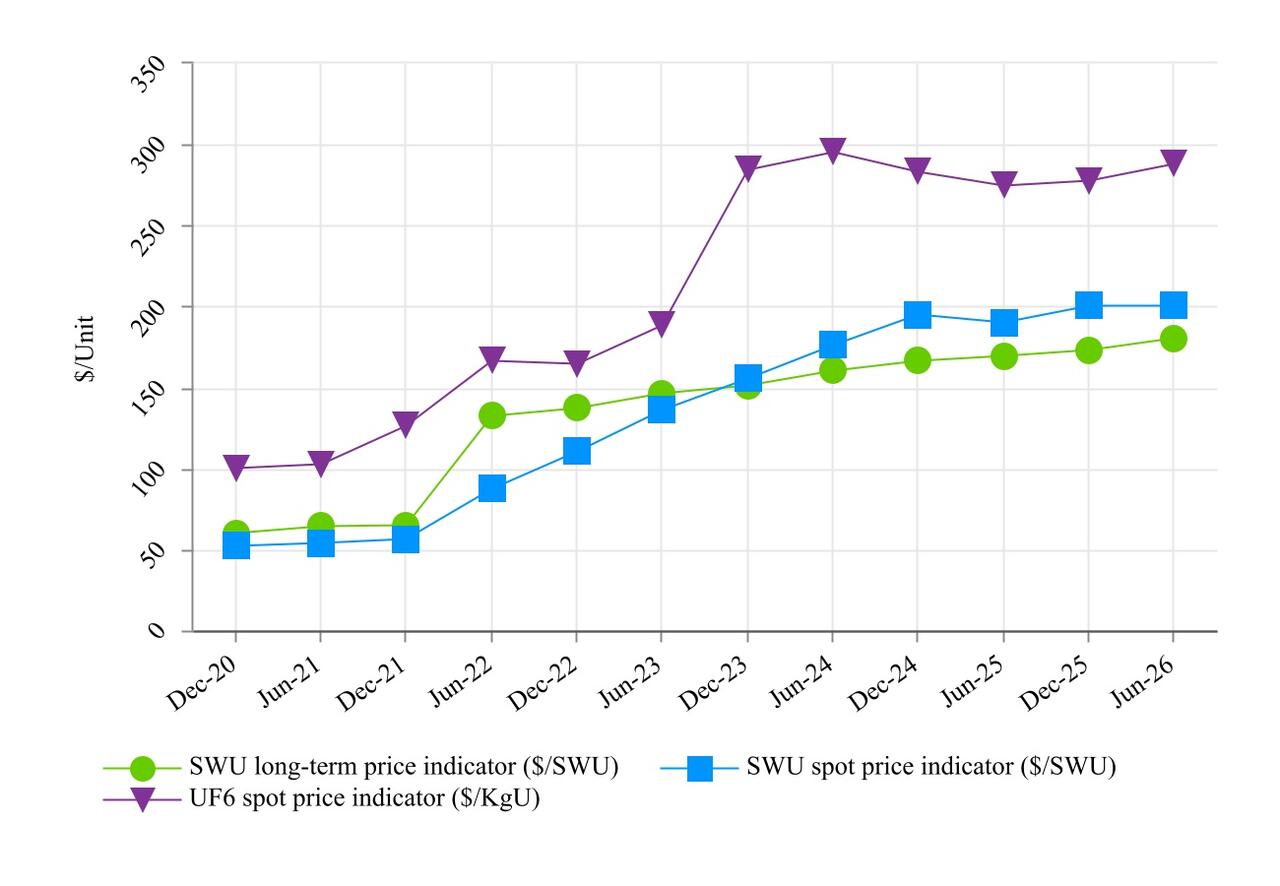
The panic of fuel for the US commercial reactor fleet not showing up evaporated almost immediately, as waivers were granted to any and all importers (mostly Centrus and US reactor-owning utilities). But, those waivers are set to expire at the start of 2028, and DOE's Michael Goff says there are no plans to extend them.
To solve the enrichment capacity gap, Washington is doing what they do best: throw as much money as they can at the problem. Earlier this year, money was getting thrown around at almost $1 billion per handful.
“If we are going to have this nuclear renaissance, we are not going to be able to do it without fuel,” Deputy Energy Secretary James Danly said.
The government has started by awarding $900 million apiece for Centrus Energy, General Matter, and Orano.
Centrus Energy traces its roots back to the Manhattan Project, when the US invented uranium enrichment technology to fuel the bombs that were dropped over Japan. With the last domestically owned enrichment facility being shutdown over 10 years ago, Centrus has since served as an enriched uranium broker, supplying reactor-owning utilities in the US and abroad with imports from Europe and Russia.
Orano is the state-backed uranium enrichment company from France. The company has been supplying the massive French fleet for decades and has previously tried to expand in the US but failed for lack of support in the post-Fukushima era. The company is now attempting a second run at a project in Tennessee to assist the US in replacing Russian imports.
Then, there’s General Matter. The secretive, Peter Thiel-backed startup led by former SpaceX engineer Scott Nolan.
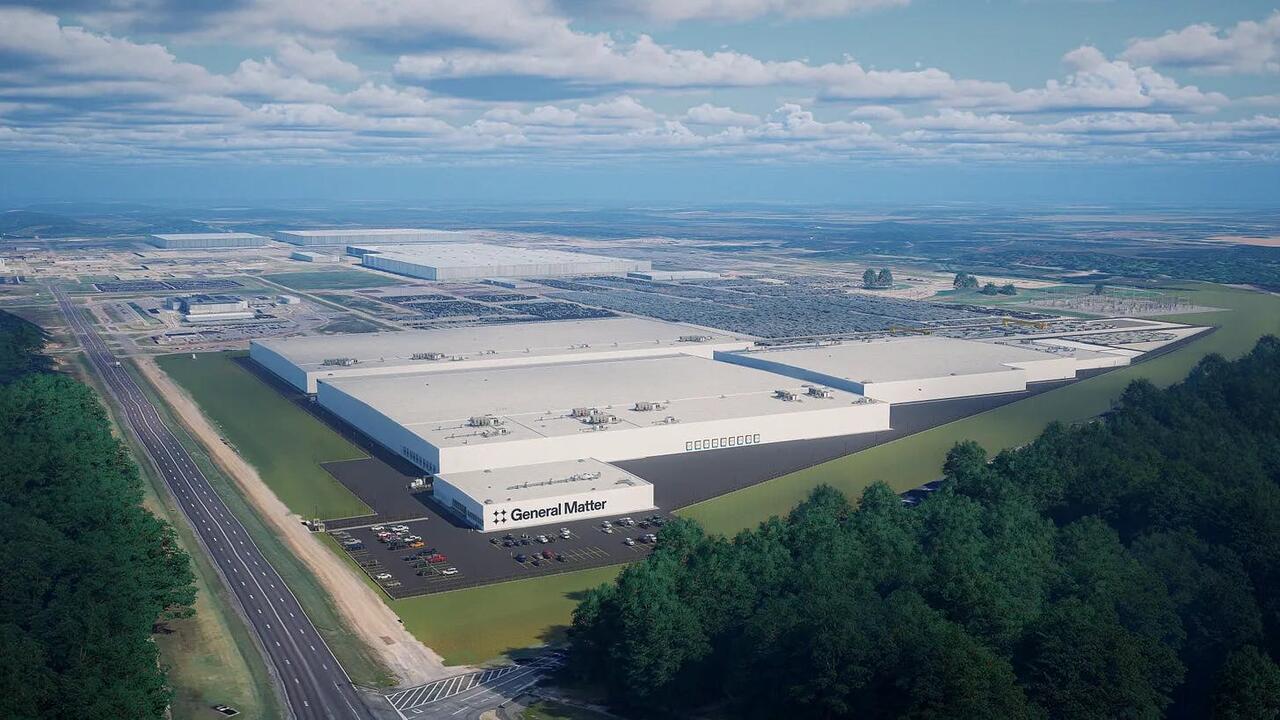
The nuclear industry has been mostly devoid of any details on the uranium enrichment startup, with only traces of their business being seen in some of the prep work for a facility in Paducah, Kentucky, and discussions of operations in California, Utah, and Washington State.
Finally, though, it seems Politico found a way to squeeze some details out of the silent company.
Politico’s reporter Francisco Camacho notes a diversified team of outsiders and nuclear veterans, as well as some backstory and the plans ahead. He also brings particular attention on a couple of occasions to the barbed relationship between Centrus Energy and General Matter.
First, when Founders Funds' Scott Nolan was first looking for how to go about entering the enrichment industry. Camacho describes Nolan as looking to initially find an existing company he could invest in. Nolan reportedly concluded the centrifuge design used by Centrus was not commercially competitive.
Second is when Camacho shed some light on the details of discussions between the enrichment companies and the DOE when competing for the $900 million awards earlier this year.
Equal taxpayer dollars for almost 30 times the annual capacity ambition is painfully difficult to ignore. The reporting doesn't explicitly state that the goal is 355 MTU annually right off the bat when the company anticipates starting in 2029. But, the difference, as printed, is significant.
Centrus also expects its first new capacity in 2029, while February guidance placed the full 12-ton annual rate after 2030. With the DOE posturing that no further extensions of the ban are going to be affected in 2028, it's understandable why Reuters is reporting the DOE’s desire for companies to start moving faster.
Centrus does deserve credit for being the only facility in the US licensed by the NRC to produce HALEU-level uranium. The company has also been producing the higher-enriched uranium for almost three years, giving them time to improve operations and centrifuge designs.
Centrus has tried to demonstrate some additional concrete offtake agreements with recent supply contracts being signed with advanced reactor development companies Radiant, X-energy, and Antares, with target deliveries by the end of this decade.
Details about General Matter were also revealed in the Politico article, as the company apparently also signed contracts with X-energy and Antares, as well as an unnamed utility.
Based on the numbers provided in Politico, only one of the enrichment companies is actually targeting enough supply capacity to make these deliveries happen in commercial quantities.
We previously highlighted Centrus's $560 million manufacturing expansion for good reason. The company holds preference with the US government over foreign-owned enrichers such as Centrus, Orano, and GLE. But, if Centrus wants to keep its position as the leader of American-owned and operated enrichment capacity, the build times need to drop dramatically and goals need to be raised significantly.
Tyler Durden Sun, 09/27/2026 - 13:25
Continue reading...
[ H/T ZeroHedge ]
DOE officials told Reuters they are pressing Centrus Energy, General Matter, and France's Orano to accelerate their new build programs.
The start of the Russia-Ukraine war in 2022 sent prices soaring across the nuclear fuel chain, as the start of the war was also followed by the US implementing a ban on importing Russian enriched uranium.
The panic of fuel for the US commercial reactor fleet not showing up evaporated almost immediately, as waivers were granted to any and all importers (mostly Centrus and US reactor-owning utilities). But, those waivers are set to expire at the start of 2028, and DOE's Michael Goff says there are no plans to extend them.
To solve the enrichment capacity gap, Washington is doing what they do best: throw as much money as they can at the problem. Earlier this year, money was getting thrown around at almost $1 billion per handful.
“If we are going to have this nuclear renaissance, we are not going to be able to do it without fuel,” Deputy Energy Secretary James Danly said.
The government has started by awarding $900 million apiece for Centrus Energy, General Matter, and Orano.
Centrus Energy traces its roots back to the Manhattan Project, when the US invented uranium enrichment technology to fuel the bombs that were dropped over Japan. With the last domestically owned enrichment facility being shutdown over 10 years ago, Centrus has since served as an enriched uranium broker, supplying reactor-owning utilities in the US and abroad with imports from Europe and Russia.
Orano is the state-backed uranium enrichment company from France. The company has been supplying the massive French fleet for decades and has previously tried to expand in the US but failed for lack of support in the post-Fukushima era. The company is now attempting a second run at a project in Tennessee to assist the US in replacing Russian imports.
Then, there’s General Matter. The secretive, Peter Thiel-backed startup led by former SpaceX engineer Scott Nolan.
The nuclear industry has been mostly devoid of any details on the uranium enrichment startup, with only traces of their business being seen in some of the prep work for a facility in Paducah, Kentucky, and discussions of operations in California, Utah, and Washington State.
Finally, though, it seems Politico found a way to squeeze some details out of the silent company.
Politico’s reporter Francisco Camacho notes a diversified team of outsiders and nuclear veterans, as well as some backstory and the plans ahead. He also brings particular attention on a couple of occasions to the barbed relationship between Centrus Energy and General Matter.
First, when Founders Funds' Scott Nolan was first looking for how to go about entering the enrichment industry. Camacho describes Nolan as looking to initially find an existing company he could invest in. Nolan reportedly concluded the centrifuge design used by Centrus was not commercially competitive.
Second is when Camacho shed some light on the details of discussions between the enrichment companies and the DOE when competing for the $900 million awards earlier this year.
Equal taxpayer dollars for almost 30 times the annual capacity ambition is painfully difficult to ignore. The reporting doesn't explicitly state that the goal is 355 MTU annually right off the bat when the company anticipates starting in 2029. But, the difference, as printed, is significant.
Centrus also expects its first new capacity in 2029, while February guidance placed the full 12-ton annual rate after 2030. With the DOE posturing that no further extensions of the ban are going to be affected in 2028, it's understandable why Reuters is reporting the DOE’s desire for companies to start moving faster.
Centrus does deserve credit for being the only facility in the US licensed by the NRC to produce HALEU-level uranium. The company has also been producing the higher-enriched uranium for almost three years, giving them time to improve operations and centrifuge designs.
Centrus has tried to demonstrate some additional concrete offtake agreements with recent supply contracts being signed with advanced reactor development companies Radiant, X-energy, and Antares, with target deliveries by the end of this decade.
Details about General Matter were also revealed in the Politico article, as the company apparently also signed contracts with X-energy and Antares, as well as an unnamed utility.
Based on the numbers provided in Politico, only one of the enrichment companies is actually targeting enough supply capacity to make these deliveries happen in commercial quantities.
We previously highlighted Centrus's $560 million manufacturing expansion for good reason. The company holds preference with the US government over foreign-owned enrichers such as Centrus, Orano, and GLE. But, if Centrus wants to keep its position as the leader of American-owned and operated enrichment capacity, the build times need to drop dramatically and goals need to be raised significantly.
Tyler Durden Sun, 09/27/2026 - 13:25
Continue reading...
[ H/T ZeroHedge ]