


A federal jury in Maryland ruled last week that the University of Maryland let harassment of a cleared student continue. An outside hearing officer had cleared him of sexual assault in 2021 and found his accuser’s credibility badly undercut. According to his lawsuit, students then told his club lacrosse team he was a rapist, and he lost his spot. The jury called the school’s response “clearly unreasonable” and awarded him $1. That may be the cheapest lesson in the history of higher education.
Sexual misconduct on campus is back in the headlines, and the lesson is old. Blackstone argued that ten guilty men should go free before one innocent suffers. Wait for the facts, all of them, before you share, post, or pile on. Innocent until proven guilty governs courtrooms. It doesn’t govern group chats, and the damage done there is rarely refundable.
I hold two beliefs that seem to confuse the internet. Sexual assault is a serious crime, and every accuser deserves a real investigation. An accusation is also a long way from a verdict. I studied criminal justice at Northeastern, and as an expert witness, I’ve sat through enough depositions to know that the first version of a story rarely survives the document production.
Remember Duke. In 2006, three lacrosse players were accused of rape. A year later, North Carolina Attorney General Roy Cooper declared all three innocent. The prosecutor, Mike Nifong, was later disbarred for ethics violations, including lying about withholding exculpatory DNA evidence. The crowd had convicted those young men long before any of that came out.
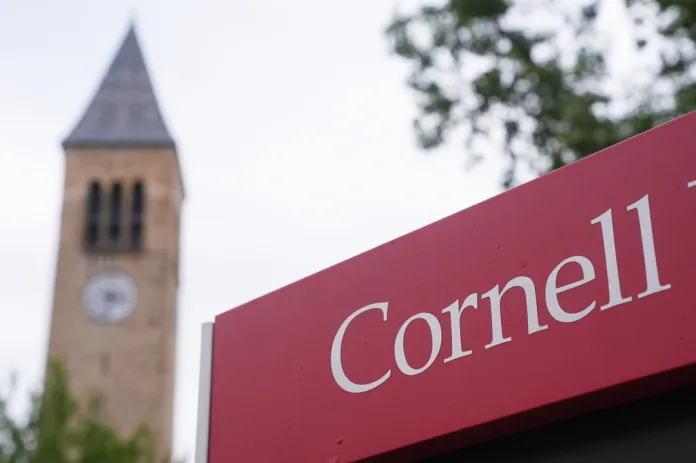
Now comes Cornell. A former student alleges that seven men assaulted her at a Chi Phi house in October 2024. All seven deny wrongdoing. No one has been charged. The local district attorney declined to prosecute based on her signed six-page police statement, then told CBS News he had never seen her full interview transcript: “I never saw it, never heard it until tonight.” Cornell’s own panel expelled two men, suspended two, and found two not responsible.
The record cuts both ways. The fraternity’s Snapchat messages are vile, and one defense lawyer concedes they’re ugly. Yet texts CBS obtained from Oct. 22 and 23, days after that night, show the accuser writing “none of the sexual stuff was illegal” and suggesting another meeting, minus the extra men and the ketamine. Her advocates point to trauma and heavy intoxication, while the accused point to the texts. I can’t tell you who’s right, and neither can anyone tweeting about it. The public version reads like a morality play; the record reads like a deposition transcript.
The prosecutor matters too. Before Gov. Kathy Hochul appointed her special prosecutor, Attorney General Letitia James publicly called what the accuser endured horrific and unacceptable. An accused man’s lawyer has now asked her to step aside, and he says he isn’t accusing her of bad faith. He has a point about appearances. Prosecutors owe both sides an open mind, and the appearance of one.
Critics say waiting protects abusers and that victims already face enough disbelief. Waiting for evidence takes nothing from a victim, though, and a rushed, botched case hands every future defense lawyer a talking point.
LETITIA JAMES IS TURNING THE ‘CORNELL SEVEN’ CASE INTO DUKE LACROSSE 2.0
So fix the process. Let police and prosecutors handle alleged felonies first, rather than letting campus panels run a parallel trial. Require prosecutors to read the full transcript before they decide, and keep quiet about the merits until they have. Enforce anti-harassment rules for every student, including the ones a school has cleared. And make every university publish how it treats a cleared student’s harassment complaint, so parents can compare before writing a tuition check.
Athens convicted Socrates by jury in 399 B.C. and has been embarrassed ever since. Hollywood made Minority Report about punishing people before the facts arrive. We built the app version. As a husband and father of three sons, I want every accused person, my sons included, judged on evidence. Reserve judgment, let investigators finish, and hold the people who feed the rumor mill accountable. A $1 verdict shows what rushed judgment costs. It can’t cover what it destroys.
Jay Rogers is a financial professional with more than 30 years of experience in private equity, private credit, hedge funds, and wealth management. He has a Bachelor of Science in criminal justice from Northeastern University and has completed postgraduate studies at UCLA, the University of Pennsylvania, and Harvard. He writes about issues in finance, constitutional law, national security, human nature, and public policy.
Continue reading...
[ H/T Washington Examiner ]