










State exams are meant to test students' aptitude and gauge their understanding of the curriculum. But what happens when the grading system fails? Texas found out the hard way when an AI-powered grading system led to rampant grading errors and a huge recount.
AI makes mistakes. This disclaimer is stamped on almost every query when you interact with the top frontier chatbots on the market. Yet society continues to trust AI with increasingly more important tasks. This time, Texas put it in charge of grading students on the State of Texas Assessments of Academic Readiness exams, and the results went as you might expect.
As people become increasingly more distrustful of AI, they’re more likely to question the results of anything that AI touches.
The AI-powered grading system initially made headlines in 2024 when Texas announced that the state would save $15 million by replacing human graders with a “technology similar to ChatGPT” on some portions of the state exams. The system adopted a hybrid approach, relying on humans to score the multiple choice questions while AI graded the larger open-ended written section.
If at any time, AI displayed a “low confidence” message about the score it gave to a student, the responses were to be flagged so that a human could review them. However, if AI is confident in its response — as chatbots often are when they hallucinate or outright lie — no such notification would reach the humans at the top.
During a limited trial test in December 2023, educators noticed that their students received a “drastic increase” in failing scores. If students or parents wanted to request a rescore, it would cost them $50 out of pocket, unless the new score was higher than the original — then the fee would be removed.
At first, the state of Texas only received 2,758 rescore requests by spring of 2024 — a sizeable number, considering that rescore requests were a rare phenomenon at the time. However, this number continued to climb, jumping to a staggering 21,620 rescore requests by 2025. By 2026, the number reached 64,489 rescore requests — that’s up to $3 million in out-of-pocket costs from parents looking to get better scores for their children.
Estimated costs of future rescoring currently sit at $15-$20 million.
After human graders reviewed the tests, the number of corrections doubled year over year and 13,300 scores — or approximately 20% — improved overall. At the same time, none of the scores were lowered.
RELATED: The AI backlash is going viral. Here's how Trump wants to fix that.
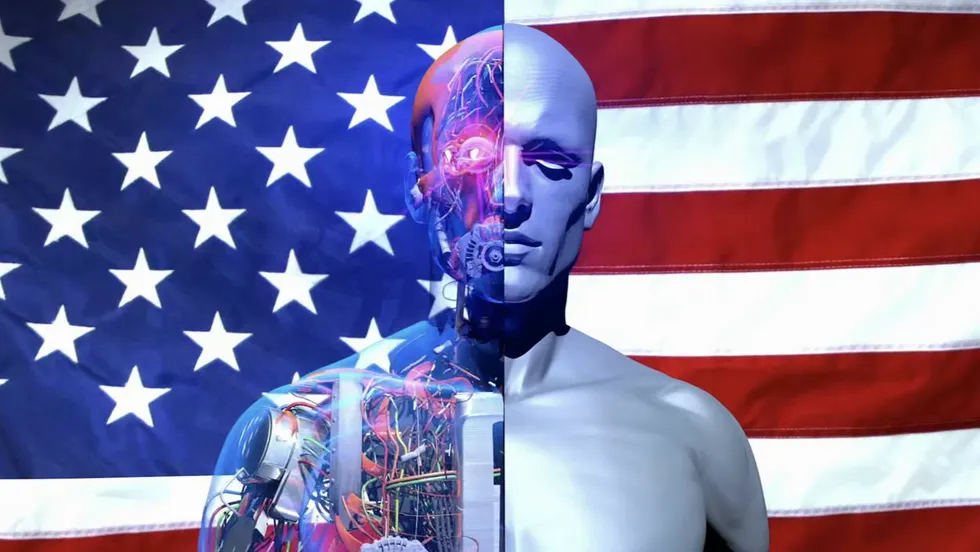
While this appears to be a clear failure of the AI-powered grading system, further review shows a discrepancy for both machine and man. Out of the recorded errors, 58% came from AI, while 42% came from human mistakes. This essentially means that even if AI was removed from the grading system, grading errors would possibly improve, but they wouldn’t go away entirely.
This story, though, does lead to an interesting thought experiment: Even though AI and human errors were both present, the fact that AI was employed to grade the larger written portions of the exams made students and parents too leery to trust their final scores, thus leading to the jump in requests. As the people become increasingly more distrustful of AI, they’re more likely to question the results of anything that AI touches. Until hallucinations are a thing of the past, this is simply a side effect of an AI-powered world.
As for the Texas school system, one must wonder if the extra money it set out to save is worth the trouble, distrust, and future rescore requests that are almost certain to plague the state for years to come. So far, Texas has no plans to suspend automated AI grading at this time.
Like Blaze News? Bypass the censors, sign up for our newsletters, and get stories like this direct to your inbox. Sign up here!
Continue reading...
[H/T Blaze Media]