




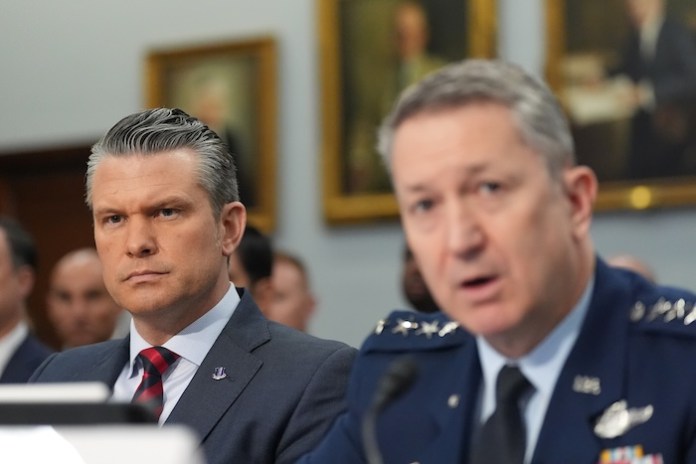
War Secretary Pete Hegseth and Gen. Dan Caine, the chairman of the Joint Chiefs of Staff, will face difficult questions Tuesday from Democrats in particular, who continue to oppose the ongoing war against Iran, which has seen a resumption of daily U.S. strikes over the last week and a half.
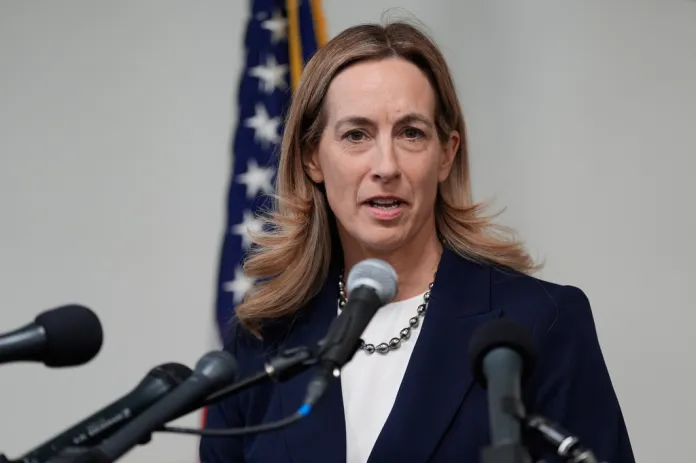
“Tax dollars we could’ve spent helping people afford health care—or building new housing—have been lit on fire by a president who blundered us into a disastrous war. And the costs to families’ bank accounts are staggering. The American people want to see a quick and strategic end to this war, not $70 billion of their tax dollars sent to keep it going,” Sen. Patty Murray (D-WA), vice chairwoman of the Senate appropriations committee, will say in her opening remarks, excerpts of which were obtained by the Washington Examiner.
Murray will say: “The president is threatening escalation and war crimes, and suggesting this could be another forever war. He has told us over 40 times now that a deal is near, and the war will be over soon. But now, he’s asking for $70 billion more—and for us to just trust him it’ll all work out fine. I’ve been very clear: my Democratic colleagues and I will do absolutely everything to ensure we take care of our servicemembers and keep our country safe, but we cannot and will not support rubberstamping a request to bankroll this war and whatever other misadventures Trump wants to get us into next.”
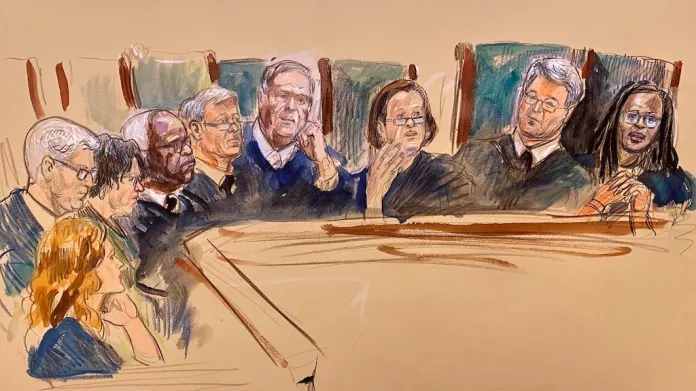
The two leaders will testify in front of the Senate appropriations committee on Tuesday afternoon, along with several other administration officials, who will discuss the Trump administration’s supplemental budget request. The White House has requested Congress pass a supplemental for $87 billion, $67 billion of which is intended for the War Department.
The U.S. military has conducted strikes on Iran consistently for the last week and a half, while Iran has consistently fired drones and missiles at neighboring countries and commercial vessels off its coasts. Slightly less than 100 U.S. troops have been injured in Iranian attacks since July 7, top Pentagon spokesman Sean Parnell said on Monday, adding that 96% of them suffered minor injuries and have returned to duty.
Two U.S. service members, 1st Lt. Tyler James Feehan, 25, and Pvt. Isabella Gonzales, 19, were killed last week in an Iranian attack on Muwaffaq Salti Air Base, a U.S. military base in Jordan. The remains of a third individual were recovered, but their identity has not been released. They were the first Americans Iran was responsible for killing since before the ceasefire agreement that President Donald Trump announced April 7.
Another U.S. service member, Sgt. Michael Emmanuel Swinton, 30, of Fayetteville, North Carolina, was killed during a controlled detonation of a downed Iranian drone on Sunday at Erbil Air Base in Iraq.
“The thing about this senseless war is that there never has been a plan,” Sen. Chris Van Hollen (D-MD), who also serves on the committee, said on CNN on Monday night. “The President said the objective was one thing one day; he changed it to something else another day. And now we see more Americans killed, more Americans injured, more civilians killed.”
Their deaths bring the total number of U.S. troops who have been killed during the war to 17. The Defense Casualty Analysis System, a publicly available department-run database tracking U.S. military casualties, said 447 troops have been injured in the war as of Tuesday, up from the 427 it said had been injured as of Friday.
Trump said on Monday, “Every time Iran kills an American Soldier they will pay for that killing many times over! This directive has been passed on to Secretary of War, Pete Hegseth, Chairman of the Joint Chiefs of Staff, Daniel Caine, and every Leader in the Military,” and on Tuesday, the president said the U.S. will be “hitting” Pickaxe Mountain, one of Iran’s most deeply concealed nuclear facilities which was not targeted during last year’s operation midnight hammer, “pretty soon, and and very heavily.”
The war began over Iran’s nuclear program, but the conflict has largely shifted to control of the Strait of Hormuz, a very narrow waterway off Iran’s coast; prior to the war, roughly 20% of all of the globe’s oil transited it. Iran’s attacks on vessels trying to get through the waterway have led to an economic and oil crisis that could get worse now that the Houthis, an Iranian ally in Yemen, have threatened to do the same in the Red Sea, which would cut off the two main oil export routes simultaneously.
“If something like that happens, we take care of it,” Trump said on Tuesday in the Oval Office alongside Lebanese President Joseph Aoun. “We’ve done that with the Houthis before, and we haven’t heard from them in a while since we did what we did originally.”
Hegseth was one of multiple Cabinet officials in the Oval Office with Trump and Aoun ahead of his testimony on Capitol Hill.
“Iran’s been given every opportunity to negotiate, to show that they’re reasonable on the Strait of Hormuz — but if they’re going to shoot at commercial shipping, then we’re going to hit them, as the president said, 10x harder. Every night, we’re degrading them further and further,” the secretary said.
PENTAGON DISPUTES CHARACTERIZATION IT DOWNPLAYED RECENT CASUALTIES IN IRAN WAR
The Pentagon’s acting comptroller, Jay Hurst, testified before Congress in May that the war cost $29 billion so far, but he acknowledged the total does not account for the damage done to U.S. military bases and related repairs because there is a possibility that host countries could contribute financially. He did not share an updated figure during his confirmation hearing earlier this month.
Continue reading...
[ H/T Washington Examiner ]