


Steve Jobs died 15 years ago. His last words were, “Oh, wow! Oh, wow! Oh, wow!” Don’t you wonder what a man who built the future could see at the moment he passed?
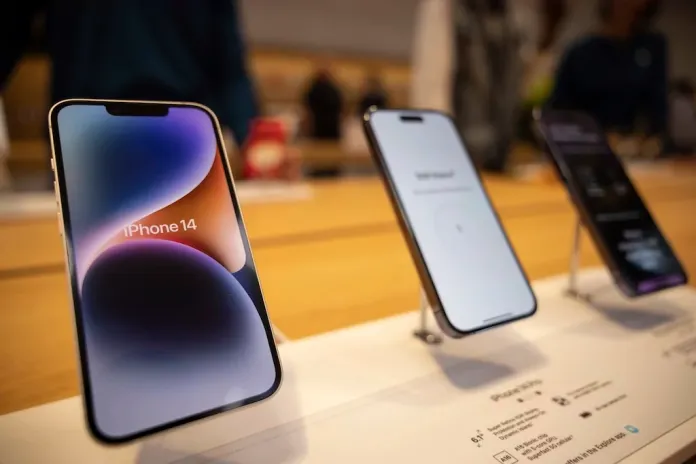
Jobs was a genius who repeatedly changed the world. Before he created the iPhone, everyone used the Blackberry, to which businesspeople were so addicted that they called it the Crackberry. The engineers at Research In Motion told their CEO they could put a phone app on the BlackBerry. The CEO laughed at them, saying, “Nobody’s going to want to talk on the phone on a handheld device.” Jobs knew otherwise. His phone app soon buried the BlackBerry.
Jobs also changed the music industry. Decades ago, music piracy was abundant. People who would never shoplift or commit tax fraud were constantly downloading songs from Napster. Jobs sensed that people wanted to do the right thing and would pay 99 cents a song to own them legitimately. He cajoled the record labels into joining, and iTunes was born, which led to Spotify and the way we listen to music today.
Jobs loved photography and demanded that each successive iPhone contain better and better cameras. These two trends — music and photography — led to a third transformation which goes by the clumsy term “dematerialization.” This means that you don’t need actual stuff anymore. Gone were people’s CDs, DVDs, cameras, photo albums, address books, voice recorders, TVs, radios, alarm clocks, movie and game tickets, checkbooks, stopwatches, compasses, doorbells, and other physical items. Jobs moved almost everything online.
He also transformed our expectations for the appearance of objects, making design as important as engineering. Before the iPhone, and before any of Apple’s computers, technology was clunky, ugly. Design was barely an afterthought. Not for Jobs, who insisted that his machines looked as beautiful as they performed. When was the last time you bought an ugly-looking piece of tech?
There’s so much more to Jobs’s legacy than communication, music, and stuff. Jobs transformed the movie industry through his company, Pixar, where Toy Story was born. Every animated film you see today bears the hallmarks of the relentless high standards Jobs drove, not just in tech but also in mass entertainment.
Jobs singlehandedly brought retail into the 21st century. For years, amazingly, the Apple board of directors refused to allow Jobs to create stand-alone Apple stores. They reasoned that Gateway had tried stores and failed, so why should Apple be different?
Through sheer force of will, Jobs designed and built his own approach to retail, starting with a secret mockup of the first Apple store in a Cupertino, California, warehouse. He personally went to Italy to source the marble for the staircases. He personally chose the tables. He created the Genius Bar. He organized the stores not around objects but around people. The stores succeeded so mightily that they outsell other mall stores per square foot by a factor of 10. Retailers clamor to be near Apple stores because the walk-in traffic always goes up when Apple comes in.
He also created the App Store, an ecosystem allowing companies, big and small, to interact directly with consumers. The App Store, a vital part of Jobs’s legacy, created work and income for millions.
Jobs knew not just what he wanted but what we wanted. He famously did not rely on marketing surveys when he created the iPad. Jobs understood that consumers would want them as soon as they saw them.
Jobs brought Coca-Cola executive John Sculley in to run Apple, and Sculley fired him, so Jobs started a new computer company, NeXT. The software from NeXT allowed British computer scientist Tim Berners-Lee to create the world’s first web browser and web server. It’s not too much of a stretch to say that the entire World Wide Web emerged thanks to technology Jobs developed.
The day before he died, Apple released the iPhone 4.1, the first iPhone with Siri. Jobs was deeply interested in human voice technology, and it’s impossible to imagine where he would have taken Siri had he lived.
Jobs was diagnosed with a treatable form of cancer and refused surgery, a decision he later regretted. When he passed, he left behind a wife of 20 years and four children.
EVEN SEASHELLS WOULD MAKE A BETTER NATIONAL RESERVE THAN BITCOIN
As a boss, Jobs was inspiring but tough, even brutal at times. Still, people loved to work for him because he could see things no one else could imagine. Which makes you wonder what he witnessed at the moment of his passing. What would a visionary like Jobs witness in order to say, “Oh, wow, oh wow, oh wow?”
Must have been some sight. Don’t you wonder what he’s seeing now?
Michael Levin is a two-time New York Times bestselling author. His next novel, 2028, A Political Thriller, will be published by Morgan James in April 2027.
Continue reading...
[ H/T Washington Examiner ]