


East Asia and Ukraine are on fire but the USA elections might have changed everything. Thus, an interregnum now offers some spare time to consider our futures, this week we are in South Africa.
Protect & SurviveMy monthly “Letter from South Africa” was suspended at the beginning of May 2026 due to urgent weekly reports on the war in Iran. The current interregnum, following the US elections, offers an opportunity to evaluate how South Africa (SA) can benefit from a world evolving from a unipolar global economy to that of regional and local economic networks that already exist in SA. This issue (1 of 2 parts), describes disbursed and resilient local financial systems (aka off-grid), as an alternative to the planned Globalist centralised digital model. There are extensive hydrocarbon and raw material resources on the second largest continent in the world – Africa. Instead of merely supplying the world with mainly raw materials, to be processed by developed countries, as in the past, Africa and SA now has a bright future as a manufacturer of finished goods inputs to the global supply chains.
First off, the American election results; John Rubino sums it up rather neatly: “America’s neo-cons (bloodthirsty empire builders who want to bomb the world into submission) kicked the anti-war MAGA faction out of the Republican Party, then proceeded to start a disastrous Middle East war — during a mid-term election campaign! Yesterday, they got the most brutal electoral rebuke since the Great Depression.
Now we face two years of noise, as newly emboldened Democrats push policies resembling those that have landed Europe on its cultural and financial deathbed, most of which will be blocked by a lame duck president whose only remaining weapon is a veto pen. The result: “sound and fury gridlock that produces headlines but little actual change.” Leading, of course, to an epic financial crisis and currency reset. Some specifics:
Austrian’s Newsletter is a reader-supported publication. To receive new posts and support my work, consider becoming a free or paid subscriber.

U.S. Politics: Noise, Then Chaos. Wow, talk about F-ing around and finding out…https://rubino.substack.com/p/us-politics-noise-then-chaos?
John concludes by advising: “Two more years of “neo-cons versus commies” is a soul-crushingly bleak prospect. Except for gold bugs. This financial/political/spiritual endgame became inevitable when Nixon closed the gold window in 1971. It won’t be resolved without a return to Constitutional principles of limited government and sound money. And that requires a repricing of real assets.” John’s Actionable Advice: Tune out the fiat experiment’s death throes and focus on the eventual repricing of gold, silver, and commodities stocks.”
At last now the ‘Great Event’ is out of the way, it looks like peacetime could return for a while – perhaps. However, political scientist Robert Pape says Trump fully controls the timeline until January 3, 2027, which makes this the most dangerous stretch of his lame-duck period (Mark4XX)
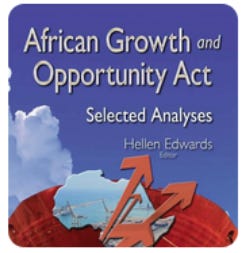
In the meantime, (before beginning The Financial Jigsaw, Part 3 -’Surviving The New Economy’ which is coming soon), I will be reporting on how we are doing in South Africa (SA), which in spite of the usual negative Western press, is doing rather well! “Hope for AGOA: Exporters’ Western Cape chairperson, Terry Gale says that the outcome of the US mid-term elections has opened a fresh opportunity for South Africa to avert its impending exclusion from the ‘African Growth and Opportunity Act’ (AGOA). [Engineering News]
While the world in general frets about diesel, supply chains, and food supplies, SA is giving the world a new approach on how to live without the central banksters trying to control the very life out of everybody. An SA Newspaper, The Daily Maverick, recently wrote:. Agoa is a 3.4% tariff bump, not a door slammed on the US market. A commenter said: “Some 25 years ago when I had a corporate fallout at age 49 and had to fight a three-year court battle which I won and then find a new career, my wife found a fridge magnet which I read every day. It says: “10% of life is what happens to us, and 90% of life is how we respond; it is our choice.”
The last 25 years have been the best career years of my life, and at 73 am still consulting to organisations. Sometimes a crisis brings the best out of us, and I hope that this will bring the best out of us South Africans as we find a new strategy to overcome this setback. Either we can make it temporary or permanent – it’s our choice. So, let’s stop blaming Trump and soon we can thank him for helping us to taking charge of OUR future and making SA great again.” [copy by commenter: firstgraham] Sources
- Wage slavery is coming to an end in the New Global South World Order https://www.dailymaverick.co.za/opi...lt-sweeping-europe-holds-dire-warning-for-sa/?
https://www.dailymaverick.co.za/art...erts-weigh-in-after-trump-boots-sa-from-agoa/?
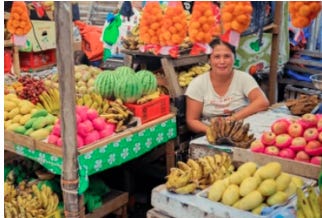
I promised last week to offer my readers hope for the future at the end of my Part 2 series, so here it is: “The future is a “Localised Economic Network”. This 10-minute video explains how informal, local networks are active now in South Africa. As Britain and Europe tackle their many economic troubles, local networked innovation operates the same way in the Western world, as long as governments and bankers get out of the way!
Meet the inspiring ‘kasipreneurs’ of the informal economy, from bakers to backroom rental barons, coffee innovators to goat breeders, kasi delivery people to spaza innovators, mattress makers, backroom builders, vetkoek fryers and chicken dust queens, kota franchises, and backyard auto mechanics.
These kasipreneurs not only sustain their communities but also drive considerable economic growth and social improvement. Each one has a unique story, yet they share a common thread of perseverance, innovative spirit, resilience and ingenuity. While formal statistics paint a bleak picture of widespread unemployment, this book tells a different story: one of ingenuity, resilience, and drive.
These are the men and women who are creating their own opportunities, building livelihoods, and contributing to the economy in ways that often go unrecognised. Their stories challenge the narrative and shine a light on a vibrant, entrepreneurial spirit thriving in the heart of the informal economy.
“KasiNomics Unleashed” is also the story of the corporate pioneers; the executives who thrive doing business in these informal spaces, the listed property companies, township butchery chains, grocery delivery founders, furniture suppliers, financial services entrepreneurs, and township property developers. As you delve into the tales of these enterprising executives, you will discover insights and lessons that transcend the boundaries of conventional business wisdom.
This is, on one hand, a book from GG Alcock about the business opportunities, pitfalls and key success factors for business in these rural and township spaces. But mostly it’s a deeply human story of the inspiring, tenacious entrepreneurs of our SA informal economy who are otherwise invisible. They are the future … a KasiNomic power unleashed.
ABOUT THE AUTHOR: “GG Alcock was born in Msinga, then one of the most poverty-stricken and violent parts of KwaZulu-Natal. His activist parents, Neil and Creina Alcock, raised their two sons in a mud hut with no running water, electricity or modern conveniences and they grew up like young Zulu boys, herding goats and hunting small animals. Zulu reared and bred, the boys learnt the essence of how to survive in a harsh world. These were valuable skills that have undoubtedly contributed to GG’s success as an entrepreneur.
GG has been at times a shebeen owner, political activist, community worker and African adventurer. Fluent in Zulu and conversant in most South African ethnic languages, he was the founder of Minanawe Marketing, a leading activations business in the kasi sector.
He is a regular speaker on a range of topics: from business to motivational, to trend talks on subjects including entrepreneurship, the informal market, diversity and culture, marketing communications to the mass market, and the route to market strategies for the informal sector. GG is the author of four books: Born White Zulu Bred (originally published as Third World Child), KasiNomics Unleashed, KasiNomic Revolution and KasiNomics: https://www.amazon.com/-/he/GG-Alcock-ebook/dp/B0FTL2FTWR Sources
- The rand strengthened on Thursday on early signs that the pro-business Democratic Alliance (DA) party had performed strongly in local municipal elections and on optimism over the overwhelming victory by Democrats in a US midterm vote https://businesstech.co.za/news/5-t...frica-and-the-end-of-an-era-for-south-africa/?
- Sweeping change was not only on the cards in SA this week. American voters delivered a decisive NO to the excesses of the super-rich https://www.dailymaverick.co.za/
- GoTyme Bank introduces Shari’ah for Business, an investment-based funding solution built on a Wakaalah structure and open to all qualifying SA businesses. Read more.

However, in the West there is already an alternative banking model active now: “The Public Bank.” Scott Baker’s proposal for New York City is to opt out of the “money-making-money” business altogether. The city would guarantee retirees their current benefits plus annual cost-of-living increases and pay them as Social Security does now from current revenues. It would dispose of the parasitic external investment managers and get rid of the fund assets gradually over a period.
Part of the proceeds would pay down city debt, immediately raising the city’s credit rating, and lowering borrowing costs. The balance would capitalise a new Public Bank. Baker envisions a bank with some $50 billion in deposits, lending to local small businesses and individuals that the large commercial banks ignore.
The stellar US model is the Bank of North Dakota (BND), founded in 1919. By law. State funds are deposited in the BND, which allocates them to back loans into the state, mostly in partnership with other local banks. As noted above, BND earned net income of $231.8 million in 2025, (17.2% return), and paid $210 million into the state’s general fund and another $48.3 million to other state funds. There is no central intermediary demanding their unearned portion.
Momentum for public banks is building around America and the world generally, especially in South Africa, where one form of public banking is already active, and will be explained in part 2 of this Letter next week. BND was detailed at a Public Banking Institute conference in Philadelphia on October 22-24. In Washington State and New Mexico, enthusiastic support for public bank bills followed presentations earlier this year by BND president, Don Morgan on the mechanics and benefits of the BND model.
City-owned banks are also being planned. On October 21, the Los Angeles City Council voted 11 to 3 to identify $460,000 for a feasibility study for a city-owned bank; and on November 3, two other California cities voted on public bank initiatives. San Francisco’s Proposition B would create a Municipal Finance Corporation as the first step toward a city-owned public bank, and Berkeley voters will decide on a citizen-initiated parcel tax that would raise $58 million over six years to capitalise a public bank. Neither vote had been called as of November 5; California can take up to 30 days to finalise votes.
In Philadelphia, where the City Council voted in 2022 to create a Public Financial Authority as a first step toward a public bank, advocates are pushing “Project Beloved Community,” a ten-year plan that includes a city public bank and proposes investing city pension funds in local housing, clean energy and community-owned businesses. In New York City, Mayor Mamdani and Comptroller Levine have begun moving city deposits to community lenders, a first step while advocates press Albany to pass the New York Public Banking Act. And at the national level, The National Infrastructure Bank Act , (HR 5356), now has 65 co-sponsors.
The money is already belongs to the people, our pension contributions, our tax dollars, and our public deposits. Rather than handing it to a Wall Street casino and government where the house always wins and pensioners absorb the losses, we can put it to work building homes, businesses and infrastructure in our own communities, and keep the profits in the local network. Source
- Ellen Brown: Heads or Tails, Wall Street Wins: Saving Our Pensions From The Casino https://scheerpost.com/2026/11/05/h...eet-wins-saving-our-pensions-from-the-casino/
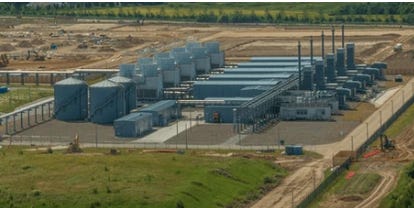
These public bank initiatives are a direct challenge to the globalists’ plan to capture pension funds in order to further finance their insane AI data centres which they need in order to exercise total control over everyone by using CBDC digital money. The first step is to mandate a global Digital ID system, without which their plans cannot proceed, and are already failing. Massive public pushback is also happening. https://austrianpeter.substack.com/p/central-bank-imposed-digital-currencies?
However, even AI itself is failing to yield the planned results thus far. Analysts note that AI has not yet produced the mass unemployment some predicted, (”It is difficult to make predictions, especially about the future” – Yogi Berra). Sam Altman and Dario Amodei have walked back earlier language about rapid entry-level wipe-outs. An EY-Parthenon poll showed the share of CEOs expecting AI to cut headcount falling from roughly 46% in early 2025 to 20% by May 2026. McKinsey has estimated that millions of US workers may need to change occupations by 2035, yet it also projects that redesigned workflows and retraining could create net new roles.
Elon Musk has called AI a “supersonic tsunami” while arguing that rising output can make goods and services far cheaper. He has floated “universal high income” large enough for comfortable living without traditional jobs. Elon doesn’t understand money in spite of his command over trillions of phantom dollars, read: https://austrianpeter.substack.com/p/elon-musk-on-money-uncertainties?
Investor Michael Burry replied that revolution would come first if job loss arrives before abundance. Ray Dalio and others have warned that unequal gains could widen gaps and raise social strain even if total output grows. A publication lays out the exchange: Elon Musk AI Utopia: Universal High Income or Revolution First?.
Practical observers stress that new tasks appear around AI systems: people who direct agents, check outputs, and handle edge cases. Digital skills remain uneven; JPMorgan research has noted that a large share of Americans lack basic digital fluency. Education and mid-career training are the most common policy suggestions. Whether those programs can keep pace with model improvements is an open question: the data have not yet answered.

China’s AI and semiconductor stocks fell sharply in recent months, with one index dropping about 40% from a summer peak. NaturalNews coverage treated the correction as a warning about paper wealth and a possible slowdown in equity funding. At the same time, Chinese open models such as ‘DeepSeek’ have drawn attention for lower cost and local-run options. Western firms continue heavy capital spending on data centres. Finnish authorities opened a probe into tree clearing and drainage at a planned Google site, illustrating local friction around the physical build-out.
Control of the models is a separate dispute. Centralised systems can refuse certain queries, log interactions, and update overnight. Local or open-source versions can be modified or run offline, which some users prefer for privacy and others view as harder to govern. The same tools that raise productivity can also expand surveillance or lower the cost of influence operations. Neither side has a monopoly on the technical facts; the disagreement is largely about who should set the defaults.
Documented events include large announced layoffs at Microsoft, Meta, Block and others, with AI cited in a meaningful share of US cuts this year. Public polling shows majority concern. Early labour data show pressure on younger workers in exposed occupations. Long-range forecasts of hundreds of millions of displaced jobs exist in academic and bank research, but realised unemployment has not matched the highest short-term warnings. Company statements mix efficiency language with continued AI investment.

Remember, Remember, the Fifth of November? Thank goodness there’s no sign of this in South Africa. ‘Bonfire Night’ in Britain is one of those traditions resting sadly again on a false flag conspiracy. But Joe Public still burns an effigy of Guy Fawkes. He actually was the ‘fall-guy’ in this dastardly deed, but only one of many associated with the despotic Royals: (watch…at the 14-minute mark for the truth about Guy Fawkes and others from James Corbett):
Believe your own eyes and experiences. Nothing is ever what you are told it is.
NEXT WEEK; Part 2 – Discover what a South African ‘Stokvel’ is and how it works to free the people from the grasping hands of the Banksters!
Tweet
Continue reading...
[ H/T The Burning Platform ]