



Saudi, Turkey, Pakistan Officials In Tehran For Last-Ditch Diplomacy, As US Prepares 96-Hour Strike Window
There are many indicators that the US and Israel could soon attack Iran again, with media consensus in the US pointing to the likelihood of a renewed bombing campaign after the midterm elections.
In the interim, regional countries are scrambling for a diplomatic breakthrough, seeking to stave off the next escalation round, given also that past Iranian retaliation has imposed a huge cost on America's Gulf allies.
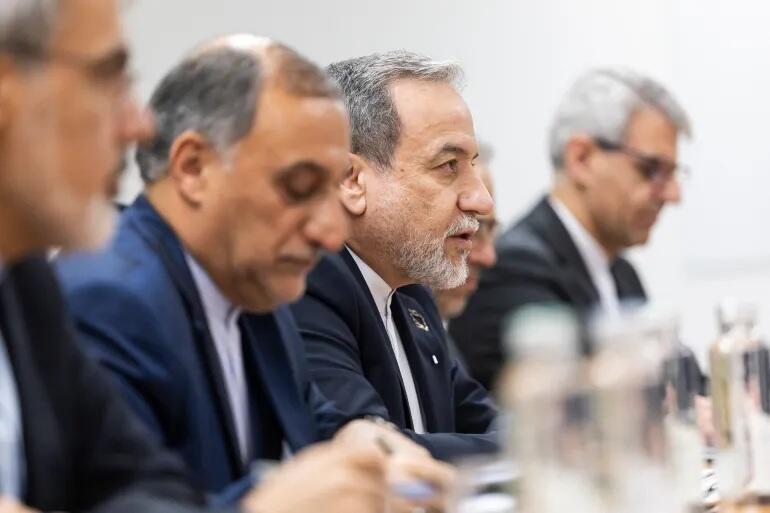
via Associated Press
Senior officials from Saudi Arabia, Pakistan and Turkey in Tehran for high level talks, the deputy secretary of Iran's Supreme National Security Council, Ali Bagheri, has confirmed Monday.
This includes Saudi Defense Minister Khalid bin Salman, Pakistani Army Commander General Asim Munir, and Turkish Intelligence Chief Ibrahim Kalin - who will engage the Iranian side on "regional security".
Notably, these three countries are signatories to the Mecca Defense Pact and are also allies of the United States, with Turkey being a NATO member.
Iran's Bagheri stated, "The Islamic Republic of Iran's model of defense based on internal and domestic capabilities has become a successful model for building national security."
"On the other hand, Iran's strategic policy is to ensure regional security through regional countries and confront any foreign interference and influence, led by the American and Zionist regimes," he added.
Bagheri praised the "fruit of the heroic efforts and struggles of the armed forces and the Iranian nation" and expressed hope that Iranian resistance to US-Israeli aims would result in a "region with stability and peace and on the path of progress."
Reuters has cited a senior Iranian official who says the meeting was initiated by Pakistan.
Jason Brodsky, a hawkish think tank pundit, has reacted to the diplomatic scramble in Tehran:
Over the weekend, just prior to the Mecca Pact countries' delegations going to Tehran, Qatari mediators were also once again in the Iranian capital to "de-escalate regional tensions."
Meanwhile, CNN is reporting that the White House has plans to relaunch major attacks on Iran, and that more American forces are being deployed to the Middle East, so that strikes against Iran could be carried out "within 96 hours of receiving" an order from the president.
According to that reporting:
But it remains the that US administration has yet to define the end goal or 'mission accomplished' moment, now in month eight of what was supposed to be a "two to four-week" conflict. So far, escalation has tended to simply beget more escalation, and not an offramp.
A major new bombing campaign would put immensely more pressure on Iran, but would do the same for America's Gulf allies, given they would probably face a huge wave of retaliation from the IRGC in the form of ballistic missiles and drones.
Tyler Durden Mon, 10/26/2026 - 10:05
Continue reading...
[ H/T ZeroHedge ]
There are many indicators that the US and Israel could soon attack Iran again, with media consensus in the US pointing to the likelihood of a renewed bombing campaign after the midterm elections.
In the interim, regional countries are scrambling for a diplomatic breakthrough, seeking to stave off the next escalation round, given also that past Iranian retaliation has imposed a huge cost on America's Gulf allies.
via Associated Press
Senior officials from Saudi Arabia, Pakistan and Turkey in Tehran for high level talks, the deputy secretary of Iran's Supreme National Security Council, Ali Bagheri, has confirmed Monday.
This includes Saudi Defense Minister Khalid bin Salman, Pakistani Army Commander General Asim Munir, and Turkish Intelligence Chief Ibrahim Kalin - who will engage the Iranian side on "regional security".
Notably, these three countries are signatories to the Mecca Defense Pact and are also allies of the United States, with Turkey being a NATO member.
Iran's Bagheri stated, "The Islamic Republic of Iran's model of defense based on internal and domestic capabilities has become a successful model for building national security."
"On the other hand, Iran's strategic policy is to ensure regional security through regional countries and confront any foreign interference and influence, led by the American and Zionist regimes," he added.
Bagheri praised the "fruit of the heroic efforts and struggles of the armed forces and the Iranian nation" and expressed hope that Iranian resistance to US-Israeli aims would result in a "region with stability and peace and on the path of progress."
Reuters has cited a senior Iranian official who says the meeting was initiated by Pakistan.
Jason Brodsky, a hawkish think tank pundit, has reacted to the diplomatic scramble in Tehran:
Over the weekend, just prior to the Mecca Pact countries' delegations going to Tehran, Qatari mediators were also once again in the Iranian capital to "de-escalate regional tensions."
Meanwhile, CNN is reporting that the White House has plans to relaunch major attacks on Iran, and that more American forces are being deployed to the Middle East, so that strikes against Iran could be carried out "within 96 hours of receiving" an order from the president.
According to that reporting:
But it remains the that US administration has yet to define the end goal or 'mission accomplished' moment, now in month eight of what was supposed to be a "two to four-week" conflict. So far, escalation has tended to simply beget more escalation, and not an offramp.
A major new bombing campaign would put immensely more pressure on Iran, but would do the same for America's Gulf allies, given they would probably face a huge wave of retaliation from the IRGC in the form of ballistic missiles and drones.
Tyler Durden Mon, 10/26/2026 - 10:05
Continue reading...
[ H/T ZeroHedge ]