




Riyadh Airport Closure Extended As Saudi Arabia Projects 'Normalcy', Hosting World Petroleum Congress
Saudi Arabia’s King Khalid International Airport's closure has been significantly extended in an unprecedented move by aviation authorities following the two weekend ballistic missile attacks by Yemen's Houthis which left at least 13 people killed and over 300 injured. Prior strikes rocked the airport last week, and in all 15 have been killed in two weeks, including a Saudi Airlines pilot.
Saudi Arabia's civil aviation body Monday extended the suspension of operations, stating "The General Authority of Civil Aviation has announced the extension of the suspension of operations at King Khalid International Airport in Riyadh in order to complete the necessary procedures to verify the safety of the facilities and their operational readiness."
While it didn't give a date of planned resumption of airport operations, separately a NOTAM (Notice to Air Missions, formerly Notice to Airmen) indicated a likely closure through the entire week, through a least Saturday:
Saudi Energy Minister Prince Abdulaziz bin Salman has said that Houthi attacks on the kingdom's airports are serious and so his country's response must be "equally serious". The Saudis are still lobbying intensely behind the scenes for more direct military help from Western allies, especially the United States, which so far has been largely on the sidelines.
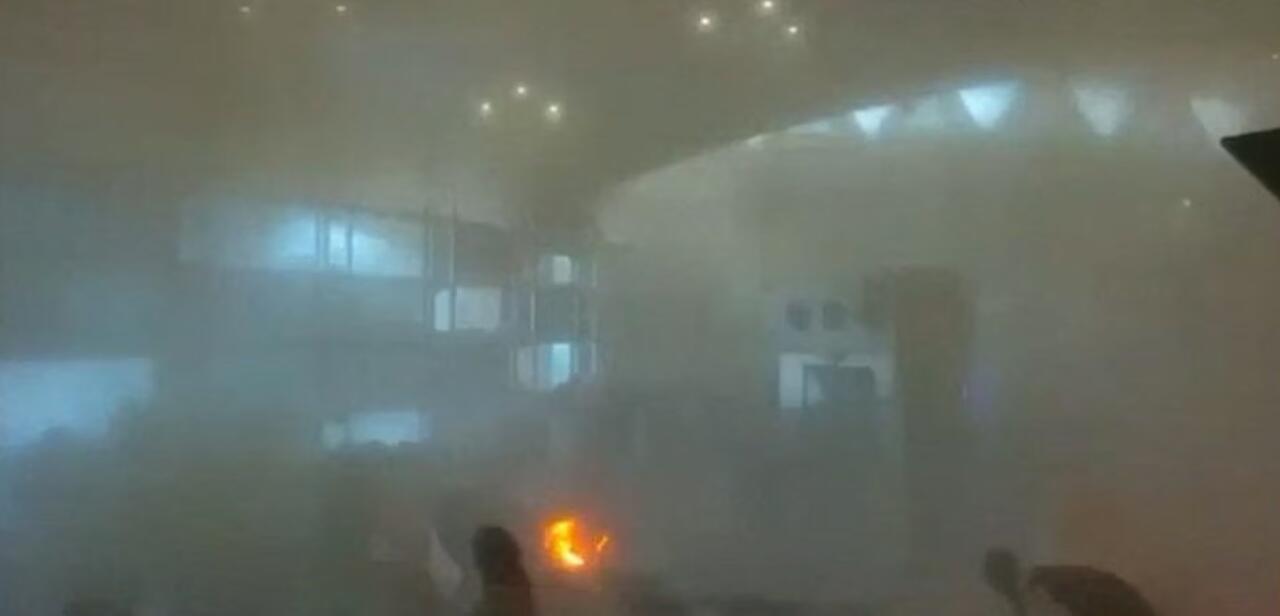
Saudi Ministry of Media handout/Reuters
The Houthis are not just turning up the security pressure on Saudi Arabia, but the economic pressure as well. On Monday CNBC writes, "Australia, New Zealand, the U.K., the U.S., France, Germany, Japan and others have warned against travel to the kingdom, which is hosting the World Petroleum Congress."
The Saudis are actually pressing ahead with the 25th WPC Energy Conference in Riyadh (going all this week), trying desperately to project a sense of normalcy. Where are the missile interceptors?
Oil prices have in the meantime climbed to near two-week highs. WTI is up 1.2% at $93.00 and Brent is at session highs, above $106 having traded in a $102.33-$106.17 range, as Iran insists Hormuz stays shut until all seven of its conditions are met and Trump mulls joining Saudi strikes on the Houthis. Below is a note from Deutsche Bank's Jim Reid:
As for the ability (or inability) of Saudi Arabia and its allies to protect the kingdom's airports and key Aramco oil facilities, this will remain a big open question. Various global airlines will continue their suspensions even after Riyadh and other airports try to open back up for business.
via Al Jazeera...
via Newsquawk...
Continue reading...
[ H/T ZeroHedge ]
Saudi Arabia’s King Khalid International Airport's closure has been significantly extended in an unprecedented move by aviation authorities following the two weekend ballistic missile attacks by Yemen's Houthis which left at least 13 people killed and over 300 injured. Prior strikes rocked the airport last week, and in all 15 have been killed in two weeks, including a Saudi Airlines pilot.
Saudi Arabia's civil aviation body Monday extended the suspension of operations, stating "The General Authority of Civil Aviation has announced the extension of the suspension of operations at King Khalid International Airport in Riyadh in order to complete the necessary procedures to verify the safety of the facilities and their operational readiness."
While it didn't give a date of planned resumption of airport operations, separately a NOTAM (Notice to Air Missions, formerly Notice to Airmen) indicated a likely closure through the entire week, through a least Saturday:
Saudi Energy Minister Prince Abdulaziz bin Salman has said that Houthi attacks on the kingdom's airports are serious and so his country's response must be "equally serious". The Saudis are still lobbying intensely behind the scenes for more direct military help from Western allies, especially the United States, which so far has been largely on the sidelines.
Saudi Ministry of Media handout/Reuters
The Houthis are not just turning up the security pressure on Saudi Arabia, but the economic pressure as well. On Monday CNBC writes, "Australia, New Zealand, the U.K., the U.S., France, Germany, Japan and others have warned against travel to the kingdom, which is hosting the World Petroleum Congress."
The Saudis are actually pressing ahead with the 25th WPC Energy Conference in Riyadh (going all this week), trying desperately to project a sense of normalcy. Where are the missile interceptors?
Oil prices have in the meantime climbed to near two-week highs. WTI is up 1.2% at $93.00 and Brent is at session highs, above $106 having traded in a $102.33-$106.17 range, as Iran insists Hormuz stays shut until all seven of its conditions are met and Trump mulls joining Saudi strikes on the Houthis. Below is a note from Deutsche Bank's Jim Reid:
As for the ability (or inability) of Saudi Arabia and its allies to protect the kingdom's airports and key Aramco oil facilities, this will remain a big open question. Various global airlines will continue their suspensions even after Riyadh and other airports try to open back up for business.
More Latest Developments
via Al Jazeera...
- OPEC has lowered its oil demand growth forecast for this year to 400,000 barrels per day from 1.4 million at the start of the year, Haitham al-Ghais, Secretary General of the organisation says.
- Saudi Aramco CEO Amin Nasser has said that until the Strait of Hormuz is fully reopened, pressure across the energy chain will only intensify.
- Mohsen Rezai, Iran’s Supreme National Security Council secretary, says the Strait of Hormuz will not fully reopen until the US starts fulfiling its commitments and respecting Iranian demands.
- Abolfazl Shekarchi, chief spokesman of the Iranian armed forces, has said the country will not allow the restoration of the US-Israeli regional order in West Asia, according to the IRIB broadcaster.
- Three in four households in Yemen are unable to put food on the table as fighting intensifies in the country, the World Food Programme (WFP) warns.
via Newsquawk...
- Deadly Houthi attacks on the Saudi capital’s main airport over the weekend raised the risk of a wider war that may draw in the US. More missiles and drones were intercepted overnight. BBG
- The United States' response to Iran's seven conditions in a proposal to reopen the strategic Strait of Hormuz was "insufficient", Iran's security chief, Mohsen Rezaei, was quoted by state media on Sunday as saying. RTRS
- Oil swung after US President Donald Trump said Kyiv and Moscow had agreed to an “energy ceasefire,” while in the Middle East, Saudi Arabia suffered its deadliest strikes since the Iran war began. BBG
- Ukraine will continue to respond with long-range strikes against Russia unless Moscow agrees to an energy ceasefire that still hasn’t happened, President Volodymyr Zelenskyy said on Monday. BBG
- Saudi Arabia is looking at ways to expand its oil pipeline capacity to destinations outside the Persian Gulf to 10 million barrels a day within two to three years, said Energy Minister Prince Abdulaziz bin Salman. BBG
- US Senators reportedly demanded that President Trump reverse the Russian fuel imports deal, while Republican Senator Tillis warned that Trump’s Russian diesel deal may be illegal and put American lives at risk.
Continue reading...
[ H/T ZeroHedge ]