





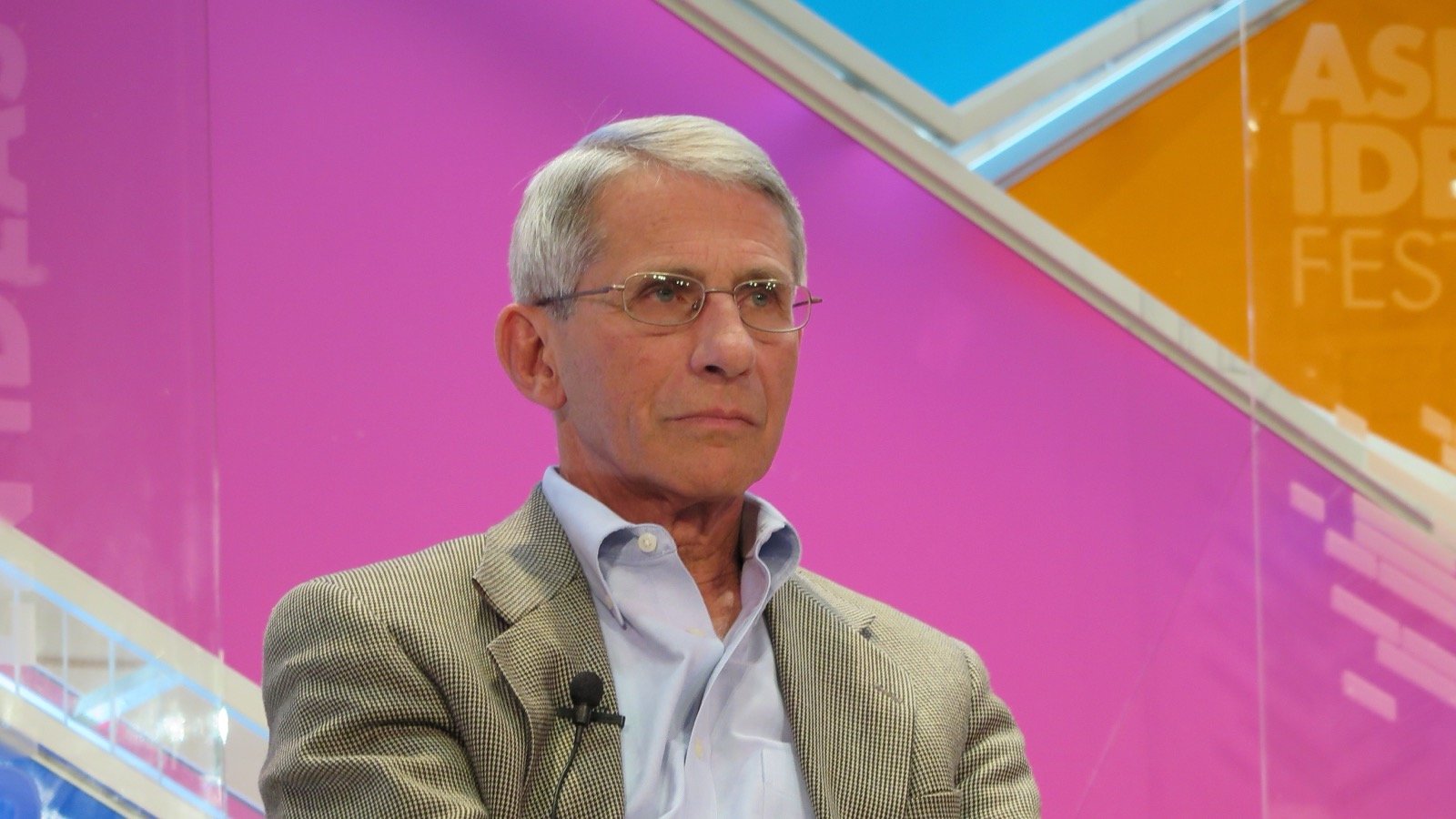
HHS Secretary RFK Jr. put a serious, previously undisclosed allegation about Anthony Fauci on national television Monday night.
Appearing on “The Ingraham Angle,” the HHS secretary said Fauci suffered a pulmonary infarction roughly five months after receiving his COVID-19 vaccine in public. Kennedy accused the former NIAID director of never telling the country about it and suggested the medical event was connected to the shot.
That is a startling allegation. It also requires one crucial line to be drawn clearly: a medical event occurring after vaccination is not, by itself, proof that the vaccine caused HHS Secretary Robert F. Kennedy Jr. accused Dr. Anthony Fauci of failing to disclose a pulmonary health event following his COVID-19 vaccination and alleged Fauci misled the public on multiple aspects of the pandemic response, including masks, social distancing, natural immunity, and vaccine effectiveness.
Fauci has consistently defended his public health recommendations and has denied allegations of intentionally misleading the public.
Watch the clip:
The National Library of Medicine defines a pulmonary infarction as the death of lung tissue caused by an obstruction in its arterial blood supply. The most common cause is a pulmonary embolism, a blockage usually produced by a blood clot.
So this was not a passing complaint about aches or fatigue. Kennedy was describing damage to lung tissue from interrupted blood flow, although he offered no details about Fauci’s symptoms, treatment or recovery.
Kennedy did not hedge his accusation. He said Fauci’s diary showed the episode and argued that it was among the adverse events anticipated after COVID vaccination.
His statement puts two separate questions on the table: whether Fauci experienced the condition when Kennedy says he did, and what medical evidence, if any, connects it to the vaccine. Those questions demand different kinds of proof.
Three records establish what is known so far: the full Fox News interview, the official vaccination account from the National Institutes of Health and the Senate diary package released by Senator Rand Paul’s committee. Together, they confirm the allegation, the vaccination date and the scope of the newly public record, but not a causal link.
In the seven-minute Fox segment, Kennedy tied the alleged episode directly to the private daily record Fauci kept during the pandemic. He used it as one example in a broader argument that Fauci’s public message did not always match what he recorded privately.
NIH’s account confirms that Fauci received his first Moderna dose in front of cameras on December 22, 2020. Five months after that ceremony would place the alleged medical episode around May 2021, the same general period Kennedy identified on Fox.
The 1,141-page public package covers Fauci’s meetings, media appearances, policy disputes and private reactions from December 2019 through December 2022. It does not establish that a vaccine caused a pulmonary infarction, and Kennedy did not present a physician’s finding or clinical record proving that connection during the interview.
A major National Academies evidence review explains why the medical claim cannot be settled by a calendar alone. For both the Pfizer and Moderna COVID-19 vaccines, the committee found the available evidence inadequate to accept or reject a causal relationship with deep-vein thrombosis, pulmonary embolism or venous thromboembolism.
“Inadequate to accept or reject” is not a clean bill of health, and it is not a finding of causation. It means the evidence reviewed by the committee could not support either conclusion.
A pulmonary infarction also has other possible causes and risk factors that were not discussed during Kennedy’s television appearance. Without Fauci’s diagnosis, clinical history and treating physicians’ assessment, the cause remains unresolved.
That leaves Kennedy’s allegation in a precise place. The timeline he described is possible, but the date sequence alone cannot carry the weight of a medical conclusion.
1/9 — My investigation uncovered that Anthony Fauci kept a diary.
What he wrote privately and what he told the country are two different stories.
Today I’m releasing his entries from December 2019 through December 2022.pic.twitter.com/58LvmeYkCN
— Senator Rand Paul (@SenRandPaul) July 25, 2026
Paul’s official reading room says the release spans December 2019 through December 2022, while the committee’s official hearing page lists Fauci as the sole witness for Wednesday morning. The diary release and the hearing now put Fauci’s private record directly in front of the public.
Paul’s published summary focuses primarily on what Fauci wrote about the origins of COVID-19 and the debate over a possible laboratory accident. The senator argues that those private notes conflict with claims Fauci made in public.
Kennedy’s medical accusation is separate from those origin disputes. It should rise or fall on medical evidence, not on whether another section of the diary proves embarrassing or contradictory.
Wednesday’s hearing gives Fauci a direct opportunity to say whether he experienced a pulmonary infarction, when it happened, what doctors concluded about its cause and whether any formal adverse-event report was filed. Kennedy has now made the accusation in public, and Fauci’s answer will determine whether this is a genuine disclosure scandal or an unsupported leap from timing to causation.
Continue reading...
[ H/T WLT Report ]