Republican Lawmakers Are Considering Giving Americans Stimulus Checks To Cheer Up Voters Before Midterms

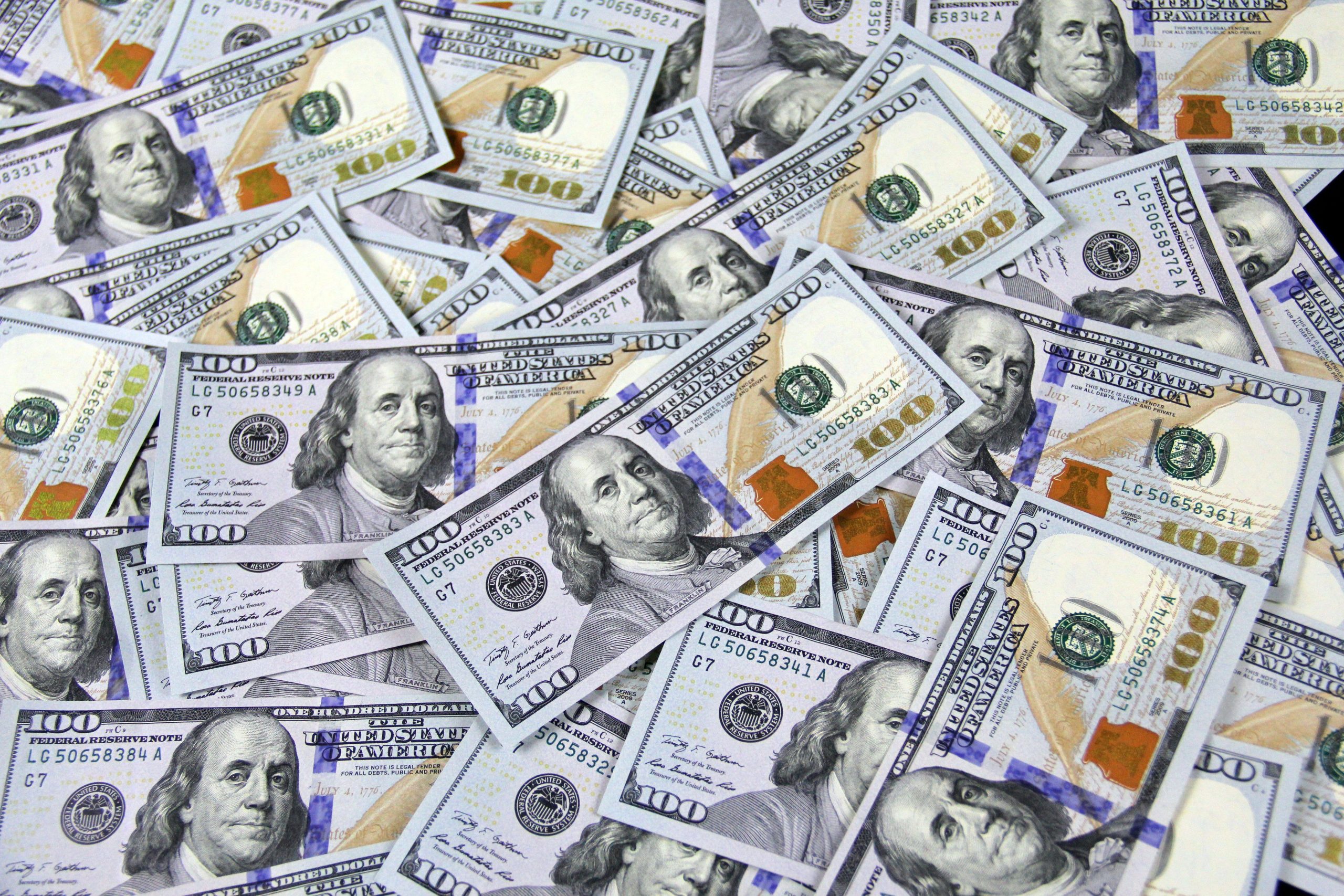
pexels-john-guccione-wwwadvergroupcom-3483098-scaled.jpg

This could help out Americans struggling financially.

But it will not help with the current Federal debt that has now hit $40 trillion.

Several Republican lawmakers in both the House and Senate are pushing for new legislation that will put money in Americans’ pockets before the midterms.

The stimulus checks would come in the form of a tariff rebate check and legislation has already been introduced by Senator Josh Hawley.

However not all Republicans are onboard with the idea.

The Hill provided details on the possible stimulus checks and how much you could receive:

Republicans on Capitol Hill are divided over whether to make a last-ditch push to enact legislation to stimulate the economy and cheer up voters before Election Day as the latest federal data shows the economy is slowing and inflation remains a problem.

House Majority Leader Steve Scalise (R-La.) last month floated a fourth budget reconciliation package to enact additional progrowth tax cuts. He said the package, which could pass the Senate with a simple majority, would also root out waste and fraud and give more money back to U.S. taxpayers.

Some Senate Republicans have also endorsed the idea of going “big” by using another budget reconciliation bill to boost the economy before potentially losing control of the House or both chambers of Congress in the midterms.
Sen. Josh Hawley (R-Mo.) has led the charge to provide tariff relief payments to lower- and middle-class Americans struggling to cope with higher cost-of-living expenses amid President Trump’s trade war with Canada and other countries and the slowdown of oil shipments through the Strait of Hormuz.

Hawley has introduced legislation to provide $600 tariff rebates to almost all Americans and to their dependent children, which would give $2,400 to a traditional family of four.

The desire to give voters some good news, or at least hope of action on a stimulus package, is driven by indicators showing the economy slowing and polls showing voters largely disapprove of Trump’s handling of the economy.
The Commerce Department on Wednesday reported that the personal consumption expenditures (PCE) price index rose by 0.2 percent for the month, amounting to an annual inflation rate of 3.7 percent, well above the Federal Reserve’s target of 2 percent.

The data shows that the affordability of goods and services continues to be a major issue.

Economic growth, meanwhile, slowed to 1.5 percent in the second quarter of 2026, cooling down compared with the first quarter of the year, which saw 2.1 percent growth in gross domestic product.

The Conference Board, a nonprofit business membership organization and research group, on Tuesday reported that consumer confidence dropped in August compared with July.

The rising cost of goods and services combined with slowing economic growth has pushed some Republicans in Congress to call for GOP leaders to pursue a more ambitious agenda for the fall.

But that’s getting pushback from other Republican lawmakers who argue that the window to pass additional tax relief or to give families tariff refund payments has closed and that any new economic initiatives won’t pass before the end of the year.

“The rumor is already the House can’t even stay in past one week. They’re going to pass the CR and then skedaddle,” said a Senate GOP aide, referring to talk on Capitol Hill that jittery House Republicans want to get back to the campaign trail as quickly as possible next week after passing a continuing resolution to fund the government until Dec. 11.
I suspect with midterms approaching the odds of stimulus checks are higher than the odds of a peace deal…. https://t.co/7JsacDTdlq

— Nick DuCate (@Nick_duCat) May 31, 2026


Newsweek reported big tech companies and U.S. manufacturers have already received tariff refunds after President Trump’s tariffs were struck down by the Supreme Court:

Major American companies are adopting different approaches to using the millions of dollars in refunds they are now receiving from the government, after President Donald Trump’s tariffs were struck down by the Supreme Court in February.

Amazon executives last week confirmed that the company received approximately $600 million in tariff refunds during its second financial quarter. In terms of sharing this with consumers, Chief Financial Officer Brian Olsavsky said that Amazon had absorbed the tariffs in most cases, but had identified a “limited set of circumstances” where import surcharges were passed on to customers.

“When we receive those refunds, we will proactively contact affected customers and automatically issue refunds to them,” he said, adding that refunds would also be invested “in low prices for customers.” When approached for comment, Amazon said it had nothing to add beyond Olsavsky’s remarks.

But other firms have made no such commitment, despite consumers having ultimately paid these in cases where companies raised prices to absorb the new duties. According to some estimates, the tariffs effectively amounted to a tax increase of $1,000 per household in 2025.

In February, the Supreme Court ruled that the majority of Trump’s global tariffs were unlawfully imposed using an overly expansive reading of the 1977 International Emergency Economic Powers Act (IEEPA).

According to filings in the U.S. Court of International Trade, over 330,000 importers unduly paid tariffs on more than 53 million shipments thanks to Trump’s IEEPA duties. And since being ordered to do so, the government has returned around half the $166 billion customs officials estimate was paid by importers through the now-invalidated levies.

Kathleen Claussen, a leading international trade expert and professor at Georgetown Law School, told Newsweek that it was “reasonably unlikely but possible” that the government pays back the full $166 billion. This is because not every importer applied for a rebate, there was no automatic system for doing so, and a number of companies may have gone out of business during the tariff period.

“I would anticipate that 10-15 percent of the duties collected will not be refunded,” said Joseph Spraragen, an international trade attorney and partner at GDLSK LLP. “In addition to the ongoing litigation regarding finally-liquidated entries…there are importers who are owed refunds, but who have not filed cases in the U.S. Court of International Trade and/or have not filed administrative claims with CBP via the CAPE portal.”

What are your thoughts?

Continue reading...

[ H/T WLT Report ]

Comments

There are no comments to display
Back
Top