


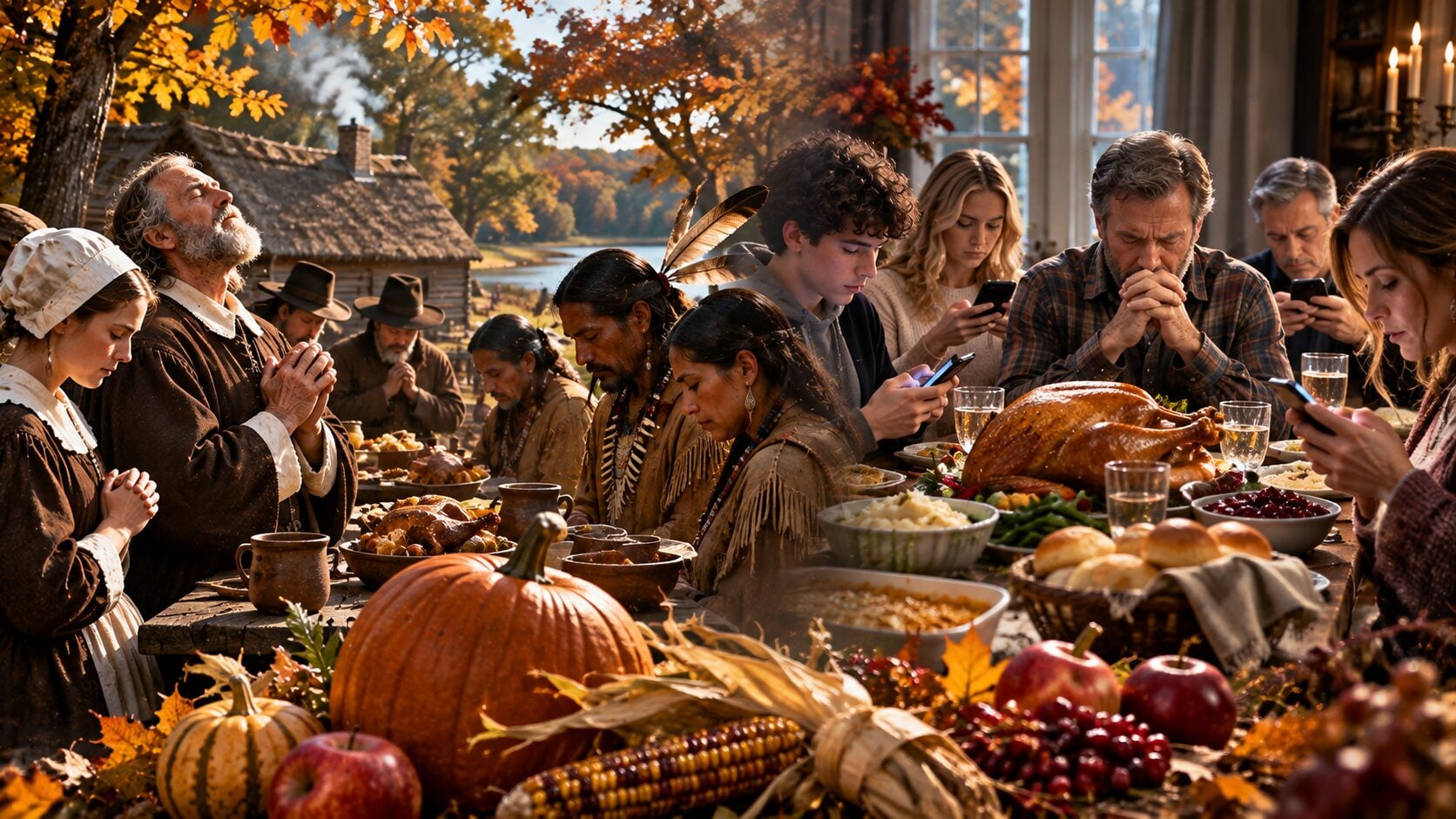



As Americans prepare to gather around their Thanksgiving tables, homes across the country will fill with the familiar sights and sounds of the holiday: the aroma of a turkey roasting in the oven, the laughter of family and friends, the passing of favorite dishes, and traditions that evoke a feeling of warmth and nostalgia.
But this year, I hope we will pause to consider something deeper: What does it truly mean to give thanks?
It is not enough to recognize our blessings; we must also ask ourselves how we will respond to them.
Gratitude is easy when life is going well. It comes naturally when our families are healthy, our tables are full, and our hearts are at peace. But genuine gratitude is something much more profound. It is not simply a response to the blessings we receive, but a choice to recognize God's presence and goodness even when life is difficult, uncertain, or painful.
In fact, one of the most powerful examples of gratitude in American history came during one of the nation's darkest chapters. In 1863, in the midst of the Civil War, President Abraham Lincoln issued a proclamation establishing a national day of Thanksgiving. The country was deeply divided, families were grieving, and the nation's future was uncertain. Yet President Lincoln called on Americans to give thanks for their blessings, even amid tremendous suffering. He understood that gratitude does not require a perfect world. Rather, it gives us the perspective and hope to keep moving forward in an imperfect one.
The Bible teaches us, "Give thanks to the Lord, for He is good; His love endures forever" (Psalm 107:1). Notice that Scripture does not tell us to give thanks only when circumstances are good. It calls us to give thanks continuously, because God is always good.
This distinction matters now more than ever.
We live in a world marked by uncertainty, division, conflict, and fear. In Israel and around the world, countless people continue to face the devastating consequences of war, displacement, and insecurity. For many, the holiday season brings an empty chair to the table and memories of loved ones who are no longer there.
Of course, true gratitude does not ask us to look away from the pain of others. Rather, it opens our eyes to it. When we recognize the blessings in our own lives, we become more aware of our responsibility to help those who have less. Gratitude creates empathy.
RELATED: Yet, I remain grateful — for more than politics can touch
There is a beautiful Hebrew word that captures what our response to gratitude should look like: Hineini, meaning "Here I am."
Throughout the Bible, this simple yet powerful expression is spoken by people answering a call from God. When God calls to the young Samuel, Samuel responds, "Here I am" (1 Samuel 3:4). His response reflects a willingness to listen, to be present, and to answer a call greater than himself.
I believe this is what gratitude should inspire in each of us. It is not enough to recognize our blessings; we must also ask ourselves how we will respond to them. When we see someone in need, our answer should be Hineini. Here I am. When a neighbor is lonely, when a family is struggling, or when someone needs compassion, we should be ready to show up.
Thanksgiving also offers an important reminder of the values of faith that helped shape the United States. America's story has long been intertwined with the biblical ideals of religious freedom, generosity, human dignity, and the belief that America's blessings carry with them many duties and responsibilities.
The Hebrew Scriptures teach that we must care for the stranger, the widow, and the orphan. We are reminded that what we have is not simply ours to enjoy, but something entrusted to us to share. This principle transcends religious boundaries. It is a universal call to see the humanity in one another and to recognize that we are all created with dignity and purpose.
And perhaps this is the greatest lesson Thanksgiving can teach us all: gratitude should never end at our own dinner table.
It should extend to the neighbor who is spending the holiday alone, the struggling family wondering how it will afford a festive meal, the elderly person longing for companionship, and the communities facing hardship and uncertainty. It should inspire us to reach beyond our familiar circles and extend kindness to those whose experiences may be very different from our own.
RELATED: The Marines of Ramadi deserve more than a thank-you
We may not be able to solve every problem, heal every wound, or end every conflict. But each of us can make a difference in the lives of the people God places in our path. Sometimes, the most meaningful expression of gratitude is simply being willing to say, Hineini—here I am, ready to help.
This Thanksgiving, as we gather with those we love, let us remember those who cannot be with us. Let us pray for those who are suffering. Let us give generously, speak kindly, and look for opportunities to bring light into someone else's life.
And let us remember that gratitude is not measured by how much we have, but by what we do with what we have been given.
Thanksgiving may be a uniquely American tradition, but its message is universal. A grateful heart is a hopeful heart. And a hopeful heart is one that believes tomorrow can be better than today.
May this Thanksgiving inspire us not only to count our blessings, but to answer the call to become a blessing to others. May we each find the courage and compassion to say Hineini—here I am.
Continue reading...
[H/T Blaze Media]


