

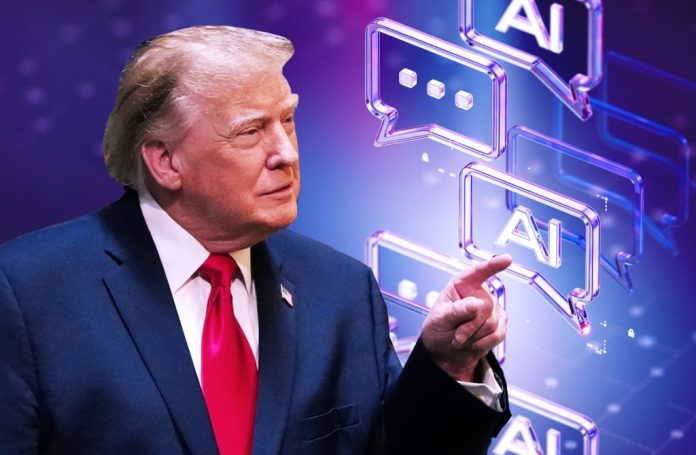
President Donald Trump on Tuesday released an agreement with technology CEOs to self-regulate artificial intelligence, which Trump has renamed “super intelligence,” as public fears grow about the technology’s development.
The agreement, titled the White House Accord on Super Intelligence Joint Commitment on Frontier Responsibilities, outlines guidelines for companies creating AI frontier models to implement internal controls, have an internal oversight team, perform external audits, and have an independent oversight board.
Trump released the agreement following a meeting with leading AI companies and Cabinet officials. Google CEO Sundar Pichai, Meta CEO Mark Zuckerberg, Anthropic CEO Dario Amodei, SpaceXAI CEO Elon Musk, Nvidia CEO Jensen Huang, and OpenAI co-founder and President Greg Brockman all signed on to the agreement. Zuckerberg and Huang have opposed such regulations, but the other CEOs have supported them.
Read the full accord below:
In order to build a positive future for the American people and the world, we believe every company is responsible for developing its own technology safely and in a way that builds trust with customers and the public.
This starts with every company that is training and deploying frontier models having robust internal processes and controls to ensure that their technology behaves as intended and that any issues are promptly identified and resolved. Therefore, in addition to any other precautions, we believe each company should implement the following four layers of controls and audits:
- Implement robust internal controls to monitor the capabilities and alignment of its models during training and deployment around areas like cybersecurity, biosecurity, and chemical threats, and to ensure that its models do not hack or access technical systems in unintended ways.
- Empower an internal team to ensure all of the controls, monitoring, and detection are operating as intended, and that any issues are remediated.
- Partner with an independent external auditor or evaluator to carry out independent assessments of whether the controls, monitoring, and detection are operating as intended.
- Designate an independent committee of the board of directors to oversee and receive reports from the teams operating the controls and the internal and external auditors and evaluators, as well as to ensure any issues identified are remediated.
Together, these steps will give each company, its customers, and the public confidence that the technology is operating as intended.
OPENAI SCRAPS RELEASE OF NEW ‘ASTRA’ MODEL OVER SAFETY CONCERNS
The participating companies will meet regularly to establish standards and best practices to improve the safety of their systems.
Over time, it may make sense to codify these steps into laws or regulations. Regardless of whether this is required of companies, we believe that implementing these controls and audits is critical to ensuring a safe future for everyone, and each of our companies are committed to doing this.
Continue reading...
[ H/T Washington Examiner ]