





In our essay last month, we proposed that presumed incoming Alabama governor Tommy Tuberville (R) pursue an aggressive and innovative political strategy to stem the growth of Islam in his state. His challenge, however, is no longer confined to the spread of the so-called religion of peace.
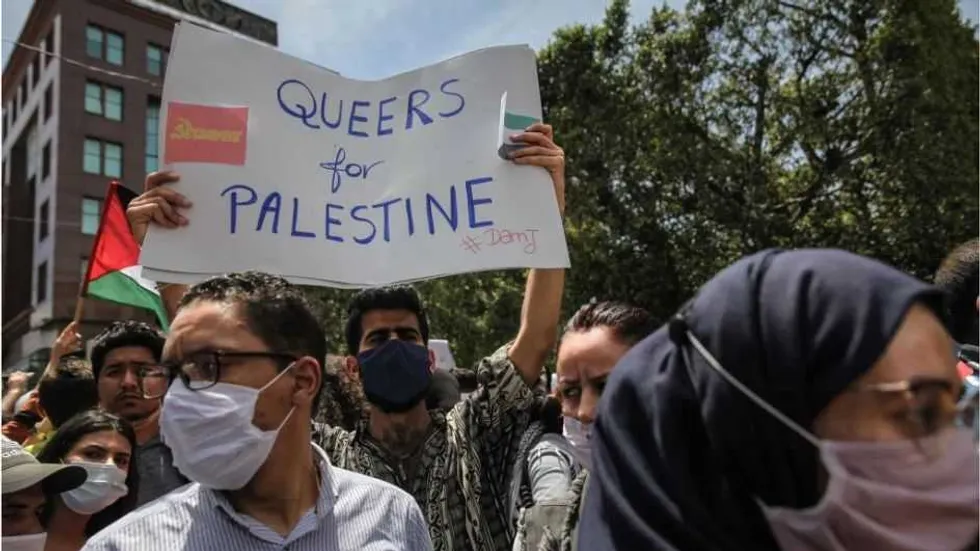
Since the Hamas attacks of October 7, 2023, what had largely been an implicit alliance between Islamist activists and two predominant elements of American progressivism — gender anarchists and racial idolators — has increasingly declared itself in public.
Muslim scriptural and legal traditions often escape the scrutiny applied to Christian texts in progressive circles.
Consider the coalition behind Columbia University's Gaza encampment in April 2024. Columbia University Apartheid Divest brought together 116 student organizations, including the Muslim Students Association, Columbia Queer Alliance, Genderev, the Black Student Organization, and White Coats 4 Black Lives. Its members made common cause under the banner of fighting interconnected systems of oppression. That January, the American Muslim Task Force for Palestine, representing organizations including CAIR and the Muslim American Society, partnered with the left-wing ANSWER Coalition to organize a massive demonstration in Washington.
Strained bedfellows
The alliance is mystifying, to say the least. These two progressive wings treat sex as a social construct and race as the master category of politics. Their Islamist allies adhere to religious traditions that condemn the progressives' core sexual beliefs. What holds them together is a common enemy: the Western political and cultural order, whose foundations are deeply indebted to the Bible.
Classical liberalism and the freedoms associated with it did not emerge from a vacuum or from secular reason alone. The Declaration of Independence's assertion of unalienable rights endowed by a Creator tracks the Bible's claim that human beings bear the image and likeness of God (Gen. 1:26–27). Equality before the law, the restraint of arbitrary power, and the distinction between divine and human authority draw on the Mosaic law's limits on kings (Deut. 17:14–20) and the New Testament's insistence that Caesar's domain is not total (Matt. 22:21; Rom. 13:1–7).
Conscience, proportional justice, the dignity of the individual, and the possibility of ordered liberty under law are human applications, however imperfect, of Old and New Testament teaching. The progressive and Islamist camps challenge this inheritance from very different directions. Progressives increasingly reject biblical moral authority; Islamists seek a political order governed by their interpretation of divine law. Neither has much use for the classical liberal settlement that emerged in the Christian West.
No 'queering' the Quran
Gender idolatry begins by denying the created order stated in Genesis. Male and female are not optional social performances; they are the binary given in the text (Gen. 1:27; 2:18–24). The framework that elevates subjective identity over biological sex treats the Bible's account as an oppressive artifact worthy of dismantling.
Here, traditional Islam and Christianity have considerably more in common with each other than either does with contemporary gender ideology. Both uphold a divinely established sexual order. Both condemn homosexual acts. Their theological foundations differ, but their moral prohibitions frequently overlap.
Traditional Islamic jurisprudence, however, has gone considerably further in the punishments it prescribes. The Quran condemns the conduct of the people of Lot (7:80–81; 26:165–166; 27:54–55; 29:28–29), while one hadith states: "If you find anyone doing as Lot's people did, kill the one who does it, and the one to whom it is done." Iranian law still prescribes the death penalty for certain acts of sodomy. Hamas' record of repression in Gaza offers little comfort to those whose sexual freedom is celebrated in Western progressive salons.
Yet the alliance endures. At New York City's 2024 Pride parade, pro-Palestinian protesters blocked the route beneath a banner proclaiming, "No queer liberation without Palestinian liberation." For these activists, solidarity against a common political adversary evidently outweighs profound differences over sexual morality.
'Race' to conquest
Racial idolatry performs parallel work. The New Testament's declaration that in Christ there is neither Jew nor Greek, slave nor free (Gal. 3:28) supplies an important theological root of the classical liberal rejection of inherited status as the basis of rights. Rights attach to the individual, not to the bloodline, race, or social strata a person is born into.
Intersectionality, as developed by Kimberlé Crenshaw in her 1989 essay "Demarginalizing the Intersection of Race and Sex," examines overlapping systems of discrimination associated with race, sex, and other categories. In contemporary progressive politics, this framework is frequently enlisted to sort political conflicts into hierarchies of oppressor and oppressed. Muslims, once treated as outsiders to the Western political order, now occupy a prominent place in the progressive hierarchy of victimhood.
Muslim scriptural and legal traditions often escape the scrutiny applied to Christian texts in progressive circles. Historical Islamic expansionism and the dhimmi (second-class citizen) system are viewed through the lens of Western imperialism rather than subjected to the same criticism directed at Christianity's historical entanglements with political power. This produces a selective hierarchy of harms and victims: Islamic religious claims may receive deference even as the Bible's moral authority is rejected.
RELATED: Is ‘Islamophobia’ irrational?
A common enemy
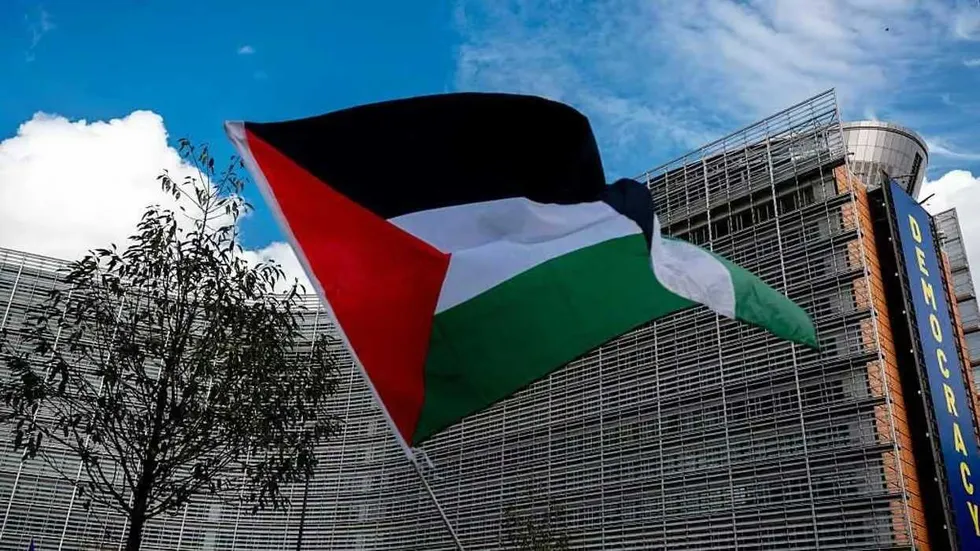
The gender and racial wings, therefore, share an enemy with Islamism that is more precise than "conservatism." Their respective doctrines may be incompatible, but both challenge the Western liberal order, which places limits on the claims of political and religious authority over the individual. Consider Judith Butler's description of the October 7 attacks on Israeli civilians as "armed resistance" rather than terrorism. Butler acknowledged that the attacks were terrible but insisted that they be understood as resistance to oppression. The language makes it possible to place Hamas within a progressive account of political struggle despite the movement's deeply illiberal religious commitments.
Anthropologist Philip Carl Salzman has documented the longer "red-green" pattern: leftist and Islamist actors finding common cause against Western institutions and Israel while maintaining incompatible doctrines on sex, apostasy, and religious authority. Historical precedents are hardly encouraging. Secular allies were pushed aside after the Iranian Revolution, demonstrating how quickly a revolutionary coalition can dissolve once the question of who will govern has been settled. History may not repeat, but it does rhyme, and there is no reason to assume the next stanza will end differently.
American progressives appear confident that the alliance can be sustained indefinitely through the shared vocabulary of equity, anti-imperialism, and opposition to patriarchal power. Islamists, meanwhile, have learned to employ that vocabulary in Western academic and media institutions without abandoning their own religious commitments concerning women, homosexuals, or nonbelievers.
The net result is that the classical liberal inheritance, rooted in the Bible's promises about the dignity of the individual and the limits of coercive state or ethnic power, remains their common obstacle. Our proposal that Alabama initiate a constitutional debate, insisting that the state's history and tradition are not interchangeable with Islamic teaching, is one political means of defending that inheritance.
Progressives will always default to acting as though the obstacle is invisible as long as there are constituents who can claim status as victims. Thus, they hope that a shared basket of purported miseries will be sufficient to sustain what is otherwise a shallow alliance of convenience.
The progressives will discover, too late, that the doctrines they dismantled in the name of anarchy and equity were all that stood between them and the caliphate's scimitar. They will also learn that a fungible hierarchy of victimization offers no sanctuary once the victors decide to rewrite the list.
Continue reading...
[H/T Blaze Media]