

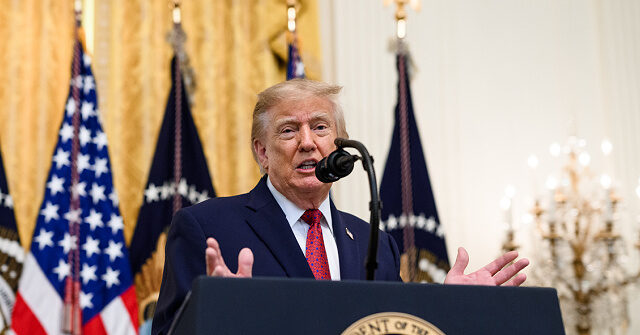




President Donald Trump has reportedly delivered Benjamin Netanyahu a blunt post-election message: the campaign is over, and it is time to move on the Gaza peace plan.
The timing changes everything.
Netanyahu is fighting to keep power after Israel’s election, while opposition leader Gadi Eisenkot has been given the first opportunity to build a new government. President Trump is not waiting for that political drama to settle before pushing his larger Middle East agenda forward.
According to Axios, President Trump told Netanyahu during a Thursday phone call that he wants concrete steps toward implementing the Gaza plan now that voting in Israel is finished. Two people familiar with the conversation provided the account.
Netanyahu initiated the call. Secretary of State Marco Rubio, Jared Kushner and special envoy Steve Witkoff joined President Trump, putting the administration’s principal diplomatic team behind the demand.
One source described the exchange as constructive and said Iran was also discussed. The White House and Netanyahu’s office had not publicly commented when the report was published, leaving Netanyahu’s answer and President Trump’s requested timetable undisclosed.
Former British Prime Minister Tony Blair traveled to Israel the next day as a member of Trump’s Board of Peace. He met separately with Netanyahu and opposition leader Gadi Eisenkot and urged Israeli leaders to give the plan a chance.
The scoop landed Sunday:
President Trump is demanding implementation, beginning with verified disarmament and demilitarization.
The next phase would require Hamas to disarm, Gaza to be demilitarized and civilian authority to move to a new Palestinian technocratic government. Reconstruction would advance only after verified progress on disarmament.
Those conditions are the heart of the standoff.
Netanyahu has argued that Hamas cannot be trusted to surrender its weapons and has warned that the terror organization is rebuilding inside Gaza. President Trump’s team believes the commitment must at least be tested through a phased process with enforcement and verification.
The Times of Israel published the 15-point framework negotiated through Trump’s Board of Peace. It connects verified Hamas disarmament with a phased Israeli withdrawal instead of requiring either side to make its largest concession first.
Armed groups would surrender weapons and dismantle military infrastructure under international supervision. Fighters who reject the process would remain targets for enforcement, while compliant members could receive amnesty or safe passage out of Gaza.
A Palestinian technocratic government would assume civilian administration, supported by a multinational stabilization force and newly trained Palestinian police. Hamas would have no governing role, and Israel would retain a security perimeter during the transition.
Reconstruction would advance in stages only after disarmament milestones are verified. Trump’s Board of Peace has already outlined an initial six-month recovery program involving 66 projects and roughly $2.45 billion, but none of it can proceed at scale without Israeli cooperation.
President Trump put his senior team on the call.
Reporter Barak Ravid shared the administration lineup and the call’s broader scope:
 Behind the scenes: Secretary of State Marco Rubio as well as Kushner and Trump envoy Steve Witkoff also participated in the call between the president and Netanyahu

A source with knowledge of the details described the call, which Netanyahu initiated, as constructive. It… https://t.co/YTHdB9xIkg
— Barak Ravid (@BarakRavid) November 8, 2026
The lineup matters. Rubio provides the diplomatic authority, Witkoff has carried President Trump’s most sensitive negotiations, and Kushner has spent months pressing Israeli officials to test whether the disarmament framework can work.
This was not a casual check-in. It was a coordinated message from the president’s foreign-policy operation.
Israel’s election has weakened Netanyahu’s ability to run out the clock.
The Associated Press reported that President Herzog formally gave Eisenkot the first opportunity to form Israel’s next government after 67 lawmakers recommended him. Netanyahu received 46 recommendations, leaving the incumbent prime minister well behind his rival at the opening of coalition talks.
Eisenkot has 28 days to assemble a governing majority and may receive a 14-day extension. If he fails, Israel’s parliament would get another 21 days to identify a candidate who can command enough support.
Netanyahu is not automatically finished. Israeli coalitions are fluid, smaller parties can extract major concessions, and Eisenkot could still fall short despite starting with more recommendations.
The new balance nevertheless limits Netanyahu’s ability to delay diplomacy while he negotiates for power. President Trump endorsed him before the election, but the American plan now sits above Israel’s coalition maneuvering on Washington’s calendar.
AP summarized the political turn:
The hardest question remains Hamas.
No peace framework is serious if it allows Hamas to rearm, rebuild tunnels or regain control under a new label. Israeli skepticism is grounded in the consequences of October 7 and years of failed promises.
President Trump’s approach appears to be that skepticism cannot become permanent paralysis. His plan ties Israeli withdrawal and reconstruction to measurable demilitarization instead of asking Israel to rely on trust alone.
The test will come when weapons are surrendered, security authority changes hands and violations bring immediate consequences.
President Trump is trying to force that test now.
If Netanyahu cooperates, the plan could move from diplomatic paper to a real sequence of disarmament, governance and rebuilding. If he refuses while struggling to form a government, Washington may find a more receptive Israeli partner across the table.
Either way, the election is over—and President Trump has made clear that the waiting period is over with it.
Continue reading...
[ H/T WLT Report ]


