




$2.5 billion.
That’s the amount of money wagered on the results of the 2026 midterm elections through Kalshi, a prediction market that lets anyone bet on the outcome of just about anything.
It truly is a brand new world we live in. Even the most inconsequential moments in sporting events can be wagered on. You can bet who will be cast as the next James Bond or what the price per gallon of diesel will be tomorrow.
Democrats obviously won big on Tuesday night in what can only be described as a Cat-5 hurricane crashing into a blue tsunami. And sure, shellackings like this have occurred in the modern era, including Bill Clinton losing 54 seats in 1994, George W. Bush losing 30 in 2006, Barack Obama losing 63 seats in 2010, and Donald Trump losing 41 in 2018.
Checks and balances are on full display during midterm elections, and the party in power almost always loses seats. Losses even occurred in 1986, when President Ronald Reagan, who won 49 states two years prior in trouncing Walter Mondale, saw his party lose seats in the House and lose its majority in the Senate despite presiding over a roaring economy and sitting at 63% approval in Gallup polling.
Going into Election Day on Tuesday, the thought process in this space and on TV was that we would see a repeat of 2018, with Dems easily taking back the House while Republicans held on to the Senate. My reasoning around this was seemingly pragmatic and straightforward: Republicans are always undervalued in polling, Democrats are as unpopular with voters as they’ve ever been, and its candidates were flawed and weak.
On top of all that, the map required the blue team to win in states Trump had won in 2024: Michigan, Ohio, Iowa, Kansas, Texas, Mississippi, North Carolina, Georgia, Florida, and Alaska. In the case of seven of these nine states, Trump won by more than 10 points.
But another set of numbers from a relatively new place was increasingly impossible to ignore: the prediction markets that showed Democrat candidates in a position to win quite easily in most of these states, including the usual slam-dunks for the GOP in Texas and Ohio.
In Texas, for example, James Talarico was given a 73% chance to win by Kalshi the morning of the election, but the average of polls showed a statistical dead heat. And in Ohio, Democrat Sherrod Brown was also given a 73% chance of winning on Kalshi despite the RCP average also showing Brown and Republican John Husted essentially tied.
Kalshi had the Senate going to Democrats with odds around 75%, or a 3-in-4 chance of happening on the day of the election. And in Michigan, where a political earthquake occurred just two days before the election after Democrat Haley Stevens endorsed Republican candidate Mike Rogers, Abdul el Sayed’s chances only increased on Kalshi, jumping from having a 69% chance to win to 79% despite the RCP average of polls showing el Sayed with only a thin 1-point lead.
(Davide Bonaldo/Sipa USA via Newscom)
" data-large-file="https://www.washingtonexaminer.com/wp-content/uploads/2026/09/sipaphotostwentysix079114.jpg?w=1024" height="684" width="1024" src="https://www.washingtonexaminer.com/wp-content/uploads/2026/09/sipaphotostwentysix079114.jpg?w=1024" alt="A person holds up their phone with the logo of prediction market platform Kalshi on their screen." class="wp-image-4710653" srcset="https://www.washingtonexaminer.com/wp-content/uploads/2026/09/sipaphotostwentysix079114.jpg 1700w, https://www.washingtonexaminer.com/.../sipaphotostwentysix079114.jpg?resize=300,200 300w, https://www.washingtonexaminer.com/.../sipaphotostwentysix079114.jpg?resize=768,513 768w, https://www.washingtonexaminer.com/...sipaphotostwentysix079114.jpg?resize=1024,684 1024w, https://www.washingtonexaminer.com/...ipaphotostwentysix079114.jpg?resize=1536,1026 1536w" sizes="auto, (max-width: 1024px) 100vw, 1024px">
(Davide Bonaldo/Sipa USA via Newscom)
And therein lies the rub: How can a candidate in a statistical dead heat in polls, the same polls that have undercounted Republican support in recent big elections, enjoy an 8-in-10 chance of winning in the prediction markets? What did the prediction markets see that the pundits and polls didn’t?
My calculation as a pundit on Larry Kudlow’s show on Fox Business before the polls closed pointed to a Mike Rogers win, for example. My reasoning seemed pragmatic at the time: el Sayed did not have the black vote he needed, nor the Jewish vote. And one would think rank-and-file UAW members would also be against el Sayed based on his advocacy of government-run healthcare and ending private insurance plans — UAW workers have what’s called the “Cadillac Plan” of insurance, complete with great benefits and relatively lower premiums. An el Sayed world aims to end such plans, and given the United Auto Workers’ strength in numbers, that should have been enough to hand the race to Rogers.
Obviously, that’s not what happened. El-Sayed won going away. The prediction markets were spot on. In Kansas, where a Democrat has not won a Senate seat since the Great Depression, Adam Hamilton won by 5 points despite polls showing the race within the margin of error on Election Day. As for the betting markets, Hamilton was given 63% odds of winning before the polls closed, despite those historical headwinds.
The same thing happened in Texas, where polls showed James Talarico and Ken Paxton in a statistical dead heat, but the betting markets had the Democrat, who once declared there are six genders and claimed God was nonbinary, as a favorite to win with 76% odds. And when the votes were counted, Talarico not only defeated Ken Paxton, he delivered a Texas-sized blowout to the tune of a 12-point victory.
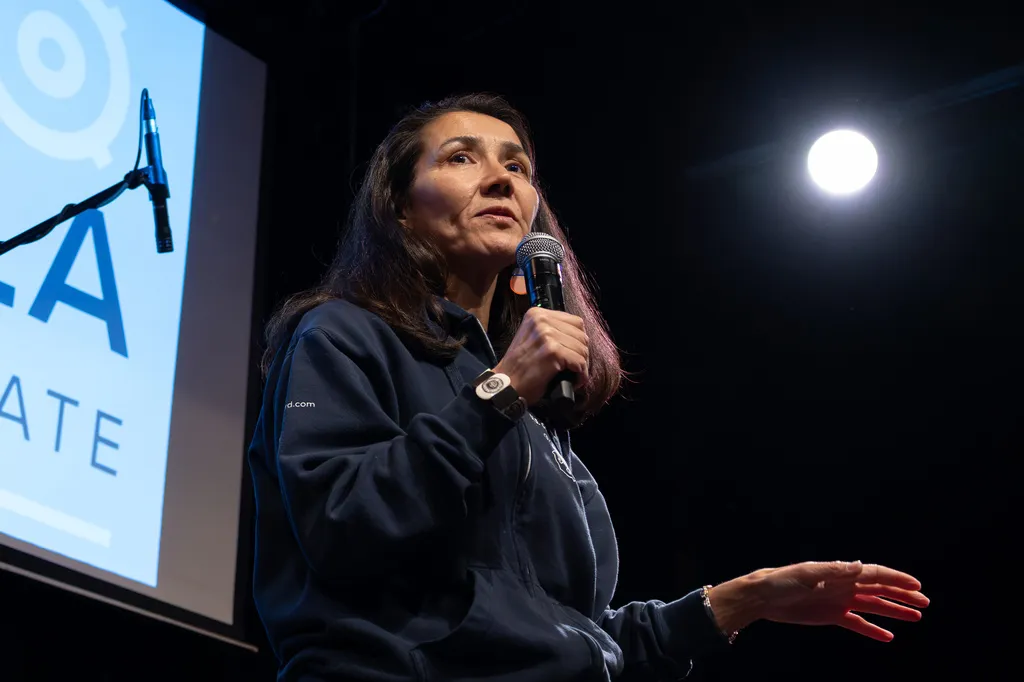
Overall, every Senate candidate favored in races seen as statistically tied but decidedly favored in the prediction markets all won. Alaska is yet to be decided, but Kalshi, as of this writing Friday afternoon, is giving Democratic candidate Mart Peltola a 97% chance of winning over the actual Dan Sullivan, despite there only being a 600-vote margin between the two candidates.
“This was the first true prediction markets election,” Harry Crane, professor of statistics at Rutgers University, told Reuters. “The markets projected Democratic wins across the board throughout the closing weeks of the campaign, and were quick to react in real time to voting information as it rolled in.”
And apparently it’s never too early to bet on the outcome of the 2028 presidential election: Already $1.2 billion has been wagered on an election that sits more than 700 days away.
DEBATE DISPUTES TAKE CENTER STAGE IN HIGH-STAKES TEXAS MIDTERM RACES
Overall online wagering now eclipses $160 billion, up from $135 million in 2025, or almost 20%.
The wagers are endless, including macabre ones where you can even bet on whether a major meteor strikes Earth before 2030. The odds on that are disturbingly high at 47%. Yikes.
More than ever, one thing is abundantly clear about human beings in 2026: A good chunk of the population believes they’re Nostradomus-meets-Jimmy-the-Greek, and the prediction markets that are only a swipe away will only continue to explode as an industry.
Continue reading...
[ H/T Washington Examiner ]