


For Poles, Sept. 17 is a day of mourning. On that date in 1939, 16 days after Adolf Hitler invaded Poland from the west, Josef Stalin’s Red Army invaded from the east, under the secret protocol to the Molotov-Ribbentrop Pact. Under communist rule, public commemoration of the date was censored and suppressed.
Seventy years later, on Sept. 17, 2009, the Obama administration announced it was abandoning the missile defense site former President George W. Bush had planned for Poland. The night before, then-President Barack Obama had tried to call Polish Prime Minister Donald Tusk. The call never took place. The Polish side proposed talking the next day instead.
Washington may not have noticed the date. Warsaw certainly did. Russian President Dmitry Medvedev called the decision “responsible.”
IN AMERICA, YOU GET CANCELED. IN EUROPE, YOU GET ERASED
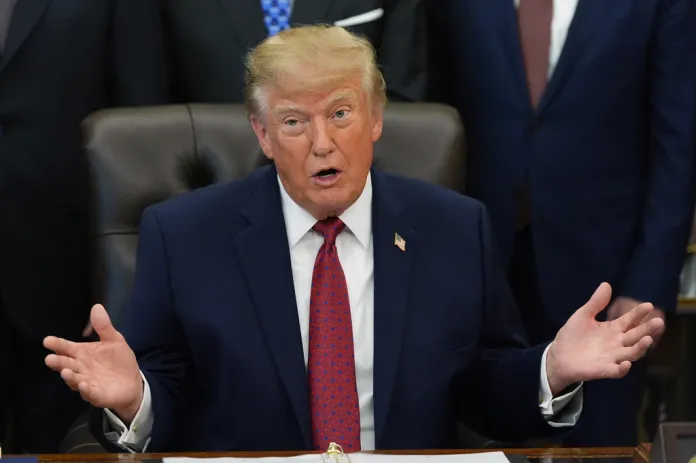
On Sept. 17, 2026, President Donald Trump posted on Truth Social: “GREAT NEWS! Thanks to the bold leadership of my friend, Karol Nawrocki, President of Poland, major progress is being made toward establishing a U.S. Army base in Poland.”
Moscow’s objections to American ties with Poland are older than the missile shield. In July 1947, Czechoslovakia accepted an invitation to the Paris conference that launched the Marshall Plan. Stalin summoned its leaders to Moscow and ordered them to pull out. Foreign Minister Jan Masaryk reportedly told friends that he had gone to Moscow as the foreign minister of an independent state and returned “as a lackey of the Soviet Government.” Poland did not get even that far. Moscow announced Poland’s refusal before the government in Warsaw had made it. The countries that took part received more than $13 billion. Poland received nothing.
That principle outlived Stalin, communist Poland, and the Soviet Union. In February 2008, Tusk, then in his first term as prime minister, met Russian President Vladimir Putin in Moscow to discuss the Bush plan for missile interceptors at Redzikowo, near Poland’s Baltic coast. “President Putin is not an enthusiast of this project — you’ll appreciate the delicacy of my phrasing,” Tusk told reporters. Russia, he added, wanted to be able to verify that the site was not aimed at it, and Washington might accept some form of monitoring.
Tusk’s government did sign the deal in August 2008, less than two weeks after Russian troops moved into Georgia. A year later came Obama’s “reset” with Moscow, and the plan was scrapped. The Redzikowo site was eventually built in a different form under the plan Obama adopted instead. Construction began in 2016 under Poland’s conservative Law and Justice government, which oversaw almost all of it. The site opened in November 2024, six years behind schedule. Days later, Russia’s Foreign Ministry said it had long been a priority target. Putin has not changed his mind.
In early May, the Pentagon said it would pull about 5,000 troops out of Germany. For Warsaw, it was an obvious moment to ask for some of them. Tusk, back in office since 2023 and a former president of the European Council, saw it differently. “We probably shouldn’t, as a country, poach — I don’t know if you know what I mean,” he told reporters in Yerevan on May 4. “I will not allow Poland to be used in any way to break solidarity or cooperation at the European level.”
Alliance solidarity matters. But Germany did not ask for Poland’s opinion when it built Nord Stream with Russia.
On May 21, in a separate decision, Trump announced he would send “an additional 5,000 Troops to Poland,” citing “the successful Election of the now President of Poland, Karol Nawrocki, who I was proud to Endorse.” Unlike in the United States, Poland’s president does not run the government. Nawrocki, a conservative historian elected in 2025, is head of state and commander of the armed forces. Tusk’s pro-EU coalition controls the Cabinet, and the two camps are open rivals. Days later, Poland’s defense minister proposed a new permanent U.S. base, and in June, the Pentagon said it was open to the offer. The president’s National Security Bureau estimates that infrastructure for about 5,000 U.S. troops could cost Poland 11 billion to 17 billion zlotys, roughly $2.9 billion to $4.4 billion.
“I think that this matter is for sure confirmed because President Trump is famous for keeping his word,” Nawrocki told Bloomberg, adding that he would like the base to be named Fort Trump. Administrative and financial questions remain open. Asked about it on Sept. 23, Tusk said: “Well, that’s nice.” Poland, he added, “is ready.” The next day, Foreign Minister Radoslaw Sikorski said the government and the president were working together toward “a second permanent American base in Poland,” but that proposing the name Fort Trump would be “a display of servility.” He would prefer Pulaski, Kosciuszko, or Reagan.
Second, because permanent American installations already exist. The U.S. Navy runs the Redzikowo site, and since March 2023, the U.S. Army has kept a permanent garrison at Camp Kosciuszko in Poznań, home to the forward headquarters of V Corps, set up while Law and Justice was still in power. The name of the next base seems a strange priority for Polish diplomacy. Jan Masaryk could have told the minister what servility looks like.
In these pages on Sept. 1, I wrote about Tom Rose, the U.S. ambassador who broke with diplomatic convention in a feud with Wlodzimierz Czarzasty, the speaker of Poland’s parliament. In February, after Czarzasty said Trump did not deserve the Nobel Peace Prize, Rose cut off contact with him. Tusk replied that “allies should respect, not lecture, each other.” In April, after Czarzasty told the Financial Times that Trump was “becoming a leader of chaos,” Rose called him “a menace” and “a notorious far-left, ex-communist apparatchik.” From 1983 to 1990, Czarzasty belonged to Poland’s Communist Party, which treated Sept. 17 as taboo. His party is now part of Tusk’s governing coalition.
Tusk now calls the base “a gigantic effort” and “big money.” His camp has been far more cautious about Washington than about Berlin. Berlin is never too close.
Recently, I spoke with a Belarusian woman who fled Minsk for Poland. Her friends from Belarus and Ukraine, she told me, all say the same thing: There is a war, and you have to flee to Germany, because the American army is there. I asked whether she knew that American soldiers are in Poland, too. She did not. She was surprised to hear there are roughly 10,000 of them here.
Their calculation is simple: Where the Americans are, you feel safer. With U.S. troops in Poland, an attack on Poland could mean a clash with the United States from the first day.
Why do her friends know that Americans are in Germany but not that they are in Poland? Part of the answer may be political. Poland’s government talks a great deal about solidarity with Berlin and far less confidently about its American alliance.
JD VANCE WARNED US ABOUT EUROPE’S ‘THREAT FROM WITHIN.’ POLAND PROVED HIM RIGHT
Poland has spent too much of its history waiting for Moscow, Berlin, or Washington to decide what kind of security it may have. If Tusk’s government really wants a permanent American base now, it should stop sounding embarrassed about wanting one.
When I told the woman from Minsk that Poland’s president was working to secure a permanent U.S. Army base, she said: “If Nawrocki gets it done, I’m not running anywhere. There won’t be a war.”
Miłosz Manasterski is a Polish essayist, political commentator, and CEO of Agencja Informacyjna. A former Middle East correspondent based in the UAE, he writes on Central European political economy, historical memory, and culture for The European Conservative and Brussels Signal. He holds the Knight’s Cross of the Order of Polonia Restituta and the U.N. ECOSOC Medal.
Continue reading...
[ H/T Washington Examiner ]