



.jpg)
-50.png)
-51.png)
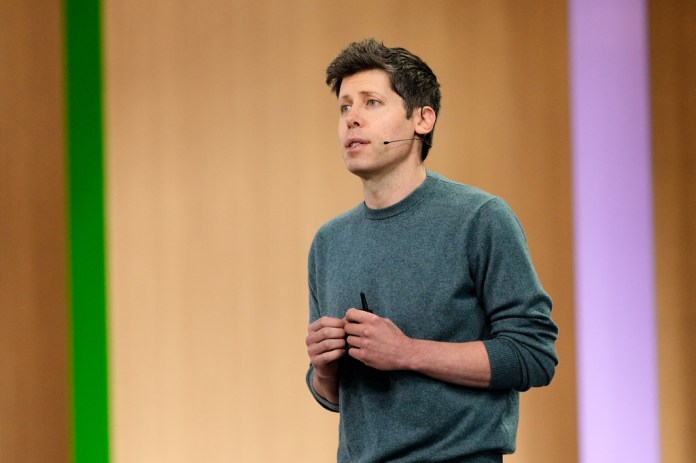
Sam Altman’s OpenAI on Friday pushed back against allegations by three fired employees that the company could be undermining external checks on artificial intelligence, stating that the AI firm views safety and research debates as “highly critical” to success.
The saga began on Thursday, when three safety researchers at OpenAI released a letter announcing their termination by the company. Tomek Korbak, Jasmine Wang, and Mikita Balesni suggested they were fired for collaborating with outside experts on safety concerns, intimating that OpenAI is becoming less open to its researchers working in tandem with independent entities to create safety mechanisms for AI.
OpenAI fired back the following day. In a public statement, the company said its investigation found the trio “violated clear policies on handling sensitive information,” and uncovered “a significant breach of trust beyond what’s outlined in the letter they published.” The statement offered little detail on why the three were fired, but claimed: “These decisions were not about them raising safety concerns.”
“We are actively finalizing contracts with third-party safety assessors and will announce details in the coming weeks. People across the company have been working really hard on getting these partnerships up and running,” OpenAI’s statement read. “We are committed to embedding external assessors and continue to make close collaboration with independent safety organizations a core part of our safety work. Many of our researchers already work with 3p safety organizations productively.”
In their letter, Korbak, Wang, and Balesni said OpenAI has historically been open to safety collaboration with third parties, writing that traditionally, employees “could raise safety concerns and disagree openly, and were encouraged to draw on the expertise of independent safety organizations.” The trio suggested that culture is changing, warning “we do not believe the path to superintelligence can be navigated safely if the people closest to the risks can no longer work in high-trust, high-bandwidth ways with each other and with third parties.”
“We are concerned that our firings may be used to justify ending OpenAI’s work with METR, or otherwise providing external auditors much more limited access and scope,” their letter read. “Those of us who work on safety see risks before anyone else, and we rely on close collaboration with outside experts to work out how to address them. The freedom to do so without fear, and to have well-defined internal procedures that enable this work, is itself an essential safety mechanism.… It is that culture we are writing to defend.”
BIG TECH IS LEADING THE ‘AI SAFETY’ GUARDRAILS PUSH: FOR PROTECTION OR PROFIT?
OpenAI has called for more safety controls and third-party oversight in recent weeks, after another of its former employees sparked the recent wave of national panic about AI, triggering a push in Washington to reform the industry.
“I spent the last three years doing pretraining research at both OpenAI and Anthropic. Neither company is acting responsibly,” former Anthropic and OpenAI researcher Jacob Coxon said in a post to X. “The people building AI earnestly believe that it could kill us all by the end of the decade. This is not a marketing stunt. If anything, many executives and senior researchers will couch their phrasing in the press to sound sensible – but I hear the same people express fear privately. No other human activity poses this level of danger.”
Continue reading...
[ H/T Washington Examiner ]