








Oil Surges As Saudi Pipeline Crisis Puts 4% Of Global Supply At Risk; Bernstein Warns Of $150 Crude
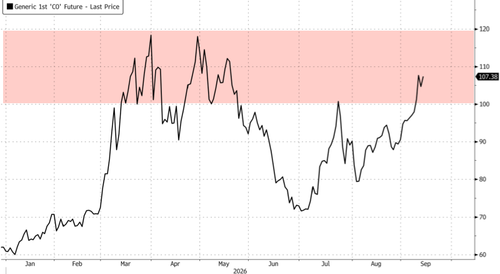
Brent crude futures jumped overnight after Saudi Arabia shut its East-West pipeline following drone attacks last week, threatening a critical route for bypassing the highly contested Strait of Hormuz chokepoint and a loss of what could amount to 4% of global supply.
The global oil benchmark rose as much as 3.7% to above $108 a barrel before trimming gains to $107.70 by 6:00 a.m. ET, while WTI futures traded around $103.
Riyadh described the shutdown as precautionary but gave no timetable for restarting the pipeline, which can transport upwards of 7 million barrels a day.
New geospatial intelligence shows what appears to be high-resolution satellite imagery of the aftermath of the drone attack that destroyed pumping infrastructure. Vantor produced this satellite imagery and shared it on X via The Hormuz Letter.
UBS energy expert Dominic Ellis summarized the weekend and overnight events unfolding across the Gulf region:
Saudi oil traders told Reuters on Sunday that if the East-West pipeline is not restarted promptly, then Saudi Arabia will run out of oil stocks for Red Sea exports.
More color per the outlet:
Gulf developments over the weekend prompted Bernstein analysts Neil Beveridge and Brian Ho to warn that Brent could rally to between $120 and $150 a barrel as East-West pipeline disruptions collide with ongoing troubles along the Strait of Hormuz and the Bab el-Mandeb Strait in the southern Red Sea.

Beveridge described the market as "chronically undersupplied" and said their existing $90 Brent forecast for 2026 had been "overtaken by events."
Combined flows through Hormuz, Bab el-Mandeb and the Suez Canal remain below 7 million barrels a day, compared with roughly 20 million before the conflict, according to Bloomberg.
One of the biggest restraints on crude prices this summer has been the 5 million-barrel-a-day reduction in Chinese imports. But analysts said that decline partly reflects Beijing tapping its estimated 1.5 billion barrels of SPR. Imports are now recovering and bidding up oil prices around the world.
Tyler Durden Mon, 09/14/2026 - 07:20
Continue reading...
[ H/T ZeroHedge ]
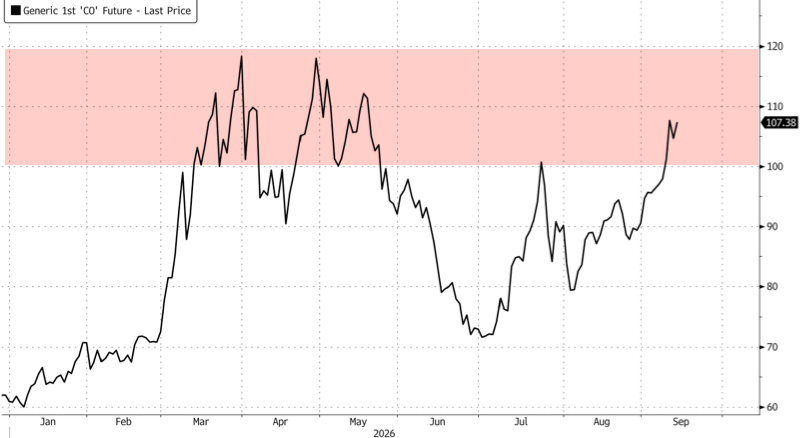
Brent crude futures jumped overnight after Saudi Arabia shut its East-West pipeline following drone attacks last week, threatening a critical route for bypassing the highly contested Strait of Hormuz chokepoint and a loss of what could amount to 4% of global supply.
The global oil benchmark rose as much as 3.7% to above $108 a barrel before trimming gains to $107.70 by 6:00 a.m. ET, while WTI futures traded around $103.
Riyadh described the shutdown as precautionary but gave no timetable for restarting the pipeline, which can transport upwards of 7 million barrels a day.
New geospatial intelligence shows what appears to be high-resolution satellite imagery of the aftermath of the drone attack that destroyed pumping infrastructure. Vantor produced this satellite imagery and shared it on X via The Hormuz Letter.
UBS energy expert Dominic Ellis summarized the weekend and overnight events unfolding across the Gulf region:
Saudi oil traders told Reuters on Sunday that if the East-West pipeline is not restarted promptly, then Saudi Arabia will run out of oil stocks for Red Sea exports.
More color per the outlet:
Gulf developments over the weekend prompted Bernstein analysts Neil Beveridge and Brian Ho to warn that Brent could rally to between $120 and $150 a barrel as East-West pipeline disruptions collide with ongoing troubles along the Strait of Hormuz and the Bab el-Mandeb Strait in the southern Red Sea.

Beveridge described the market as "chronically undersupplied" and said their existing $90 Brent forecast for 2026 had been "overtaken by events."
Combined flows through Hormuz, Bab el-Mandeb and the Suez Canal remain below 7 million barrels a day, compared with roughly 20 million before the conflict, according to Bloomberg.
One of the biggest restraints on crude prices this summer has been the 5 million-barrel-a-day reduction in Chinese imports. But analysts said that decline partly reflects Beijing tapping its estimated 1.5 billion barrels of SPR. Imports are now recovering and bidding up oil prices around the world.
Tyler Durden Mon, 09/14/2026 - 07:20
Continue reading...
[ H/T ZeroHedge ]