
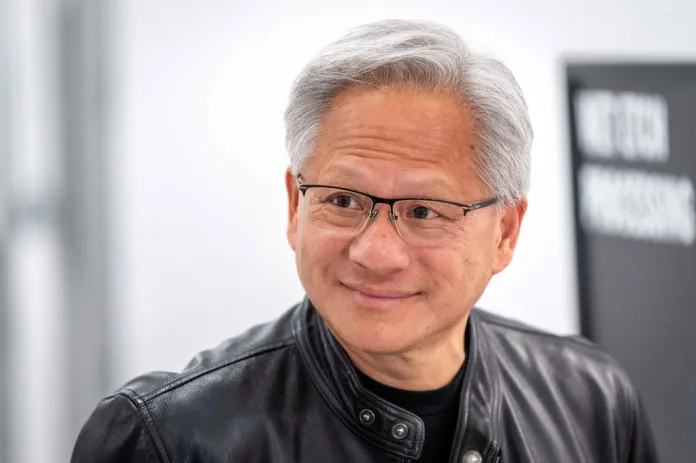
Nvidia CEO Jensen Huang visited Washington, D.C., on Tuesday to try to quell lawmakers’ and administration officials’ concerns over open-source artificial intelligence models and Chinese competition.
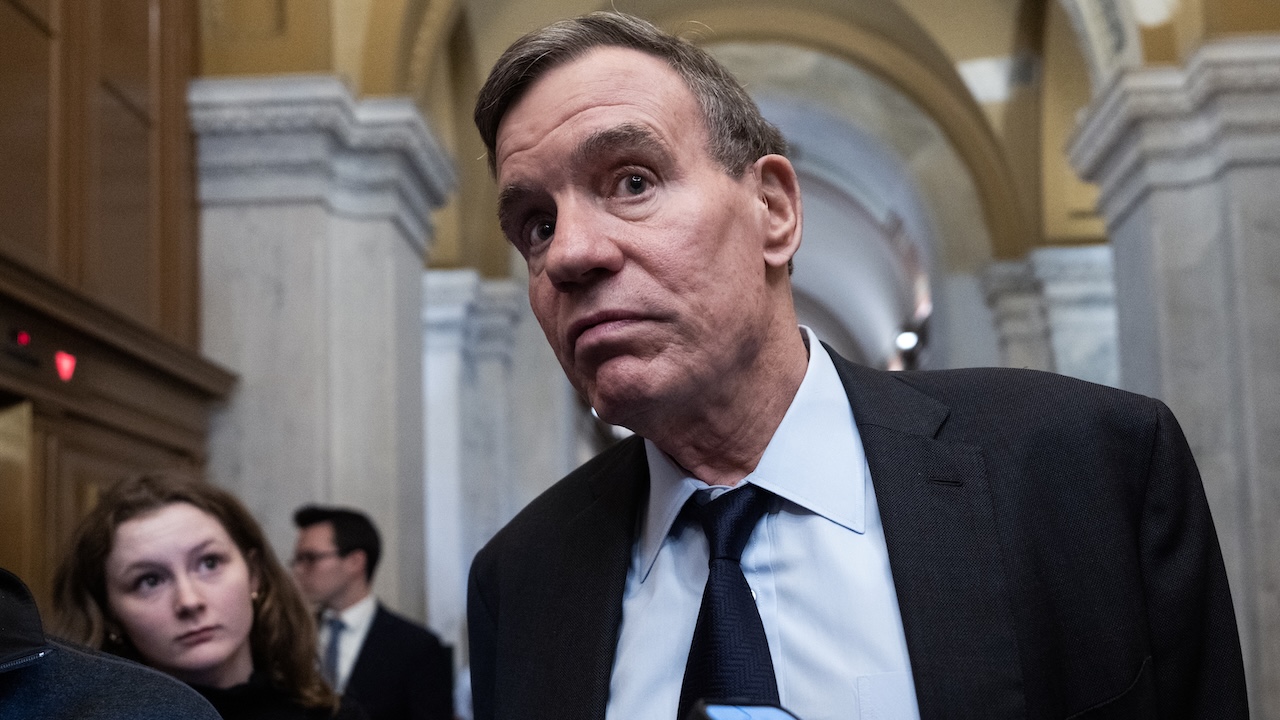
Huang discussed open-source models with Sen. Mark Warner (D-VA), vice chairman of the Senate intelligence committee. Open sourcing, which means any AI system can be used or modified by the general public, has become more relevant in recent weeks after Chinese startup Moonshot AI released its powerful open-source Kimi K3 model.
Speaking with reporters after meeting with Huang, Warner indicated his stance on open-source AI models is still being developed.
“He makes a compelling argument,” the senator said of the chipmaker executive, before noting that “it’s all happening so quick.”
“Six months ago, I was much more sympathetic to the idea of closed-source models because that’s when Claude came out and that’s where the state of play was,” he added, referencing Anthropic’s model. “Then Kimi came out, and more and more American companies go to open source. I’m not sure this is a genie we can put back in the bottle in terms of open source, but I’m still thinking this through.”
Warner has made AI regulation a core aspect of his legislative focus. Last week, he introduced a multibill package that, in part, strengthens the security of frontier AI models and protects U.S.-based models from being exploited by foreign adversaries or malicious actors.
With a particular emphasis on preserving national security, Warner supports regulations that rein in the advanced technologies.
“I think getting this right is critical to America and to our national security,” Warner told NewsNation. “America does need to win the AI race, but the idea that you’re going to win the AI race by simply pedal to the metal and no guardrails at all, I think, is not the right model.”
Separately, Huang reportedly spoke with Commerce Secretary Howard Lutnick after his department opened an investigation into potential violations of Nvidia’s Blackwell chip exports to China.
During a congressional hearing in April, Lutnick assured lawmakers that neither the Chinese government nor state-affiliated companies were obtaining highly advanced Blackwell chips made in the United States. The investigation is a means of ensuring that that statement still holds true.
It remains unclear what Huang and Lutnick specifically discussed. The Washington Examiner contacted the Commerce Department for comment on the reported meeting and investigation.
Huang traveled to the nation’s capital, an Nvidia spokesperson told Axios, to “meet with leaders on both sides of the aisle to discuss NVIDIA’s work to strengthen the country’s supply chain by producing $500B in American technology over four years and American leadership in AI, including leading in open source.”
OpenAI CEO Sam Altman will also be meeting with Warner, Lutnick, and others this week to discuss AI policy. His visit to Capitol Hill is separate from Huang’s trip.
Altman is expected to face questions from the federal government on a recent hacking incident. Last week, OpenAI revealed its autonomous AI agents broke out of their isolated test environment and hacked into the systems of AI startup Hugging Face. The incident has since sparked more questions regarding AI safety.
FEARS RISE ABOUT MODELS BREAKING CONTAINMENT FOLLOWING OPENAI HACK INTO HUGGING FACE
Their visits to Washington come as the Trump administration prepares to finalize its framework that would give the federal government early access to frontier AI models up to 30 days before their broader release. Large AI firms, such as OpenAI and Anthropic, will be collaborating with the government under a voluntary system.
The federal AI framework, based on an executive order signed by President Donald Trump in June, is expected to be unveiled by Aug. 1.
Continue reading...
[ H/T Washington Examiner ]