



In a few days, we will learn who has won this year’s Nobel Prize in economics. The announcement will celebrate scholars whose ideas changed how we understand the world.
But great ideas don’t change the world by themselves. Between the scholar who develops an idea and the people who benefit from it is another kind of innovator. Someone who understands sophisticated research, recognizes its practical possibilities, and figures out how to make it work in institutions that resist change. These are intellectual entrepreneurs, and we need more of them.
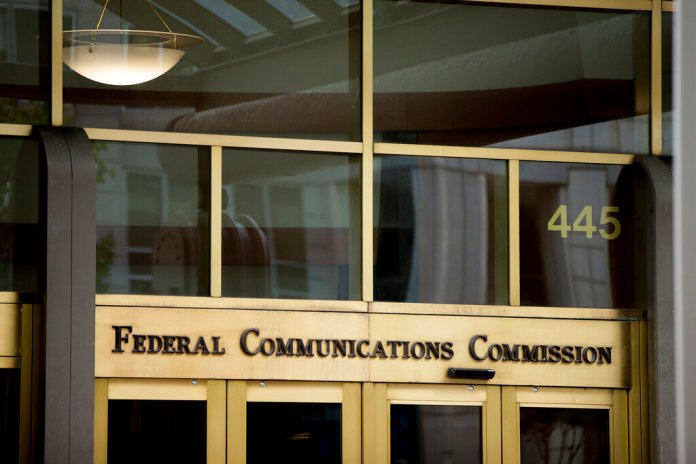
Consider Ronald Coase’s 1959 proposal to the Federal Communications Commission. Coase, who received the Nobel Prize in 1991, suggested that the FCC auction licenses to use the radio spectrum rather than hand-pick licensees. The idea was so far outside accepted thinking that an FCC commissioner reportedly asked Coase, “Are you spoofing us? Is this all a big joke?”
The idea then sat largely dormant until the 1980s, when FCC economists Evan Kwerel and Alex Felker took another look. They understood Coase’s economics, but unlike Coase, they also understood the FCC and its political context. They made the case that auctions could work in the real world and illustrated the potential revenue. That got Congress’s attention, and it authorized spectrum auctions in 1993.
But there was no precedent for an auction for numerous licenses that different companies value in different combinations. So Kwerel and others from the FCC’s think tank turned to Paul Milgrom and Robert Wilson, two Stanford economists who had spent years studying auctions. The collaboration resulted in a simultaneous multiple-round auction that allowed companies to bid on many licenses while learning from others’ bids as the auction proceeded.
The FCC’s first auctions were held in 1994, and other countries quickly imitated. Milgrom and Wilson received the 2020 Nobel Prize for their work in auctions, and Milgrom stated that Kwerel should have shared the prize. Absent the work of the FCC’s intellectual entrepreneurs, Coase’s idea would have remained little more than a nicely written journal article. Instead, it changed institutions and markets around the world.
Other intellectual entrepreneurs have performed similar roles elsewhere in government. When he headed the White House Office of Information and Regulatory Affairs, Cass Sunstein brought ideas from behavioral economics that later permeated the federal regulatory process. He co-authored a book with 2017 Nobel Laureate Richard Thaler on how government can nudge people to make beneficial decisions.
A team of intellectual entrepreneurs in Indonesia worked with J-PAL, a lab created by 2019 Nobel Laureates Esther Duflo and Abhijit Banerjee, to conduct random experiments to identify the most effective anti-poverty programs.
The FCC’s think tank also applied Nobel Prize-winning ideas to reform the way it regulated telephone companies. Traditional regulation allowed telephone monopolies to recover their costs plus a regulated return. That gave companies weak incentives to be efficient.
William Vickrey and Jean Tirole, who won Nobel Prizes in 1996 and 2014, respectively, had developed sophisticated ideas about designing regulation when companies know more about their businesses than regulators do. A 1987 paper by FCC economists John Haring and Kwerel translated those ideas into price-cap regulation, under which companies could benefit financially from becoming more efficient. The FCC began implementing the approach in 1990.
There are undoubtedly Nobel-worthy ideas sitting in journals and books today whose greatest practical effects have yet to occur. The obstacle isn’t necessarily that the government lacks economists or scientists. Federal agencies employ many extraordinarily talented people. The harder problem is making room for people who combine scholarly sophistication with entrepreneurial instincts, an idea formulated by 1993 Nobel Laureate Douglass North.
Intellectual entrepreneurs must understand sophisticated research, develop practical knowledge of how an abstract insight might work in complex political and economic situations, and mobilize institutional change. They have to persuade people who have good reasons to prefer the familiar.
A SIMPLE PATENT FIX CAN REVIVE AMERICA’S INNOVATION ENGINE
The Nobel committee performs an important service by identifying intellectual achievements that have changed economics. This year’s winners will deserve the attention they receive.
But when we ask whether their ideas will truly benefit humankind, another group matters, too. Somewhere, there must be intellectual entrepreneurs who recognize what those ideas can do and take the risks of advancing them into practice.
Mark Jamison is a nonresident senior fellow at the American Enterprise Institute and the director and Gerald Gunter Professor of the Public Utility Research Center at the University of Florida’s Warrington College of Business.
Continue reading...
[ H/T Washington Examiner ]