








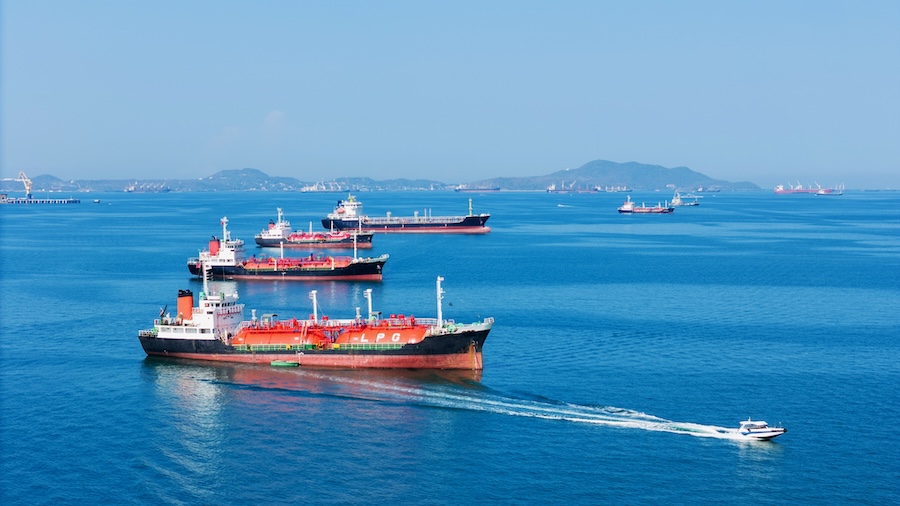
About 60 commercial vessels transited the Strait of Hormuz on Wednesday, carrying the highest daily volume of crude oil since early July, according to a U.S. official who spoke with Reuters on condition of anonymity.
According to that account, about 40 of the ships coordinated with the U.S. military for protection, accounting for about 22 million barrels of oil in addition to other cargo. Prior to the eruption of the conflict on February 28, the strait typically handled about 125 large commercial vessels a day, including tankers, gas carriers, bulkers and container ships, and accounted for about 20 percent of the world’s daily crude oil and liquefied natural gas supply.
Reuters also cited a separate Singapore dispatch earlier on Thursday based on preliminary ship-tracking data. That report counted 10 AIS-visible commodity vessels on Wednesday, up from seven a day earlier and below a 10-day moving average of about 17.
Nine of those tracked ships were inbound, including Supramax bulkers carrying metals, grain and other dry cargo and an empty very large gas carrier. One outbound Supramax carrying fertilizer left the strait.
The tracking figures notably exclude vessels that may have crossed with transponders off. This practice, known as “dark transits,” has been common throughout the conflict due to the threat of Iranian attacks.
The official figure appears to include U.S.-facilitated and other traffic that does not show up on public commodity trackers. The AIS count records only ships broadcasting identity and position. That gap has been a standing feature of Hormuz reporting since the war began.
U.K. maritime summaries have previously shown U.S.-stated facilitated transits running several times higher than AIS-derived counts on some days.
POLL: Is JD Vance A Better Vice President Than Mike Pence?
Oil-volume data from other recent Reuters reporting sits between those two snapshots. A September 21 Reuters commentary citing Kpler put Hormuz exports at about 6.5 million barrels a day so far in September, the highest since the brief rebound after the June ceasefire, which lifted traffic into early July before fighting resumed.
In the week of September 13, Reuters reported that 22 tankers, mostly very large crude carriers, exited with 42 million barrels of crude, with Saudi Arabia and Iraq each accounting for 43 percent of that weekly volume. Saudi crude exports were described as above 4 million barrels a day so far in September. Ship-to-ship loadings in the Gulf of Oman were expected at about 2.5 million barrels a day in September, up from 1.4 million in August, or roughly 40 percent of current Hormuz-related volumes.
The reported milestone comes as U.S. and Iranian negotiators in New York are discussing a phased path that would involve reopening the strait and lifting the U.S. blockade of Iran, according to sources close to the talks. Those talks have been described as incomplete and ongoing as of this report.
The Wednesday figures also follow a key overall traffic report from U.S. Central Command (CENTCOM) earlier this month. On September 19, CENTCOM commander Admiral Brad Cooper said U.S. forces had supported more than one billion barrels of crude oil leaving the Gulf through the Strait of Hormuz over the previous couple of months and had assisted more than 2,000 commercial ship transits with coordinated protection.
Cooper said primary transit lanes were clear of mines and that the volume of crude oil, cargo and liquefied natural gas over the preceding two weeks was higher than at any point in the previous six months. That six-month window includes the early-July period after the June ceasefire, when traffic last reached a temporary peak.
RELATED: Trump Holds Impromptu Meeting With Iranian Officials At UN
Continue reading...
[ H/T Trending Politics ]