




President Donald Trump’s latest push to wind down the Iran war sent oil prices tumbling Tuesday, with Brent crude briefly breaking below $90 a barrel for the first time since August.
The drop offered a potential reprieve for consumers after months of volatile energy prices and came a week after Republicans suffered punishing midterm losses that Trump and Vice President JD Vance have partly attributed to the conflict and rising costs.
Brent touched $89.03 a barrel, its lowest level since Aug. 31. At the time of the report, the international benchmark was down 2.1% at $90.68, while U.S. benchmark West Texas Intermediate was down 1.6% at $85.45.
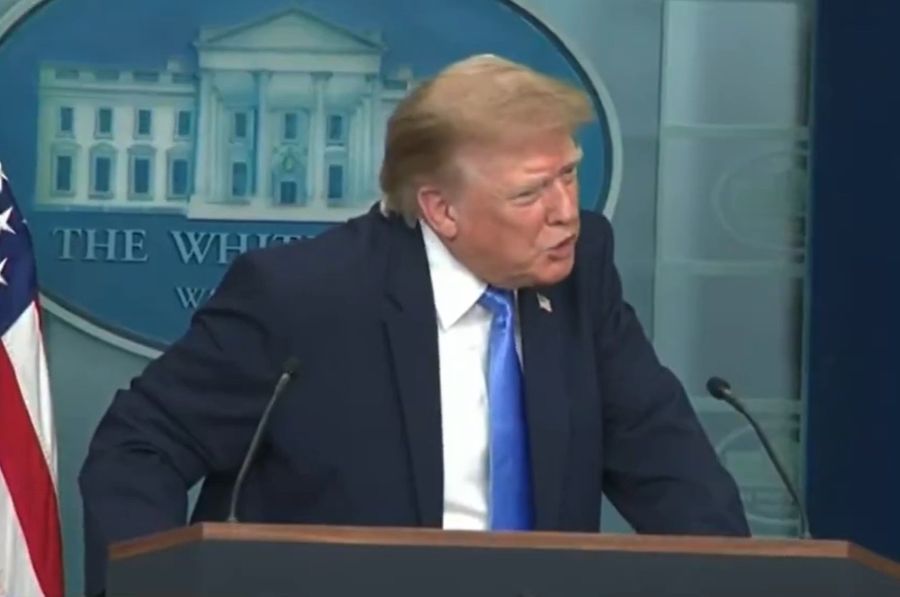
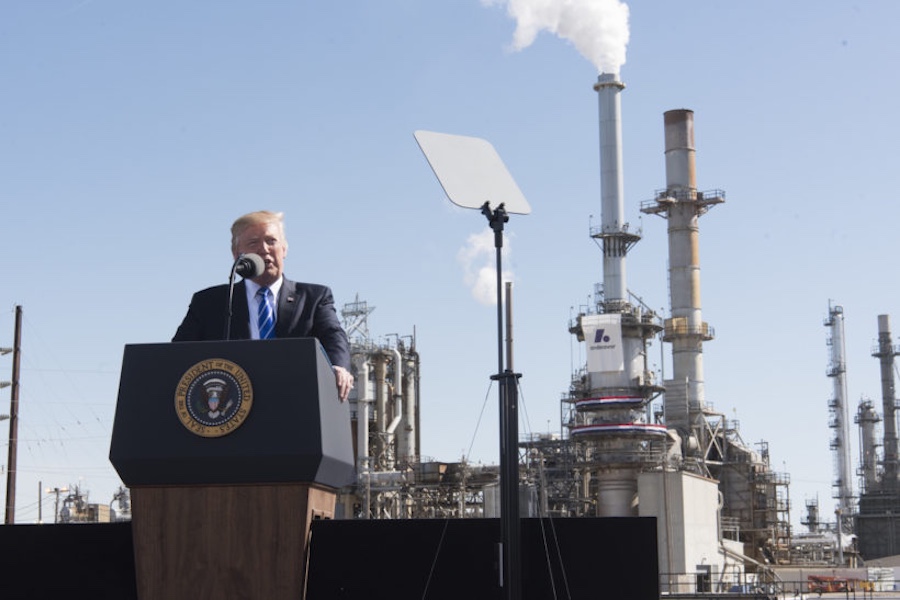
Trump struck an optimistic tone Monday after meeting at the White House with Qatar’s prime minister, Sheikh Mohammed bin Abdulrahman Al Thani.
“We’re seeing momentum toward the end of this conflict. I think it’s going to be ending fairly soon,” Trump said.
“Iran militarily is effectively over,” he told reporters.
The president also said Tehran was “talking very politely” with Washington as the nearly nine-month conflict dragged on.
But the market’s optimism came with a warning from an energy industry veteran who said the two countries remained far apart on the demands standing between them and a deal.
Fereidun Fesharaki, chairman of energy consultancy FGE, told CNBC’s “Squawk Box Asia” on Tuesday that he still saw no prospect of a peace agreement.
“The difference between the two sides is so wide, it cannot be bridged. Most importantly, the U.S. wants all the nuclear material, enriched material, to be transferred out of Iran, and there is no way that the Iranian regime would agree to this, and there is no way the Iranian regime would agree to let the Strait of Hormuz be open for a free flow of oil the way it was before the war,” Fesharaki said.
“So, with these two in between, I just can’t see a deal being made.
“Trump has to decide. Either he says, ‘I declare victory and walk away,’ or he goes to war. If he goes to war, he’s got only a window of two weeks from today for himself and for [Israeli Prime Minister] Netanyahu, or there will be no war at all on a long-term basis,” Fesharaki added.
The Strait of Hormuz remains a central dispute, even as crude shipments through the vital waterway have largely recovered.
Trump said in a Truth Social post that Qatar, Saudi Arabia, the United Arab Emirates, Bahrain and Kuwait would “prefer the status quo,” with a naval blockade maintained against Iran and restrictions preventing the country from moving advanced weapons and other materials over land.
U.S. and Iranian officials have continued exchanging hostile statements, but Washington had largely held off on military strikes since September. Trump said in early October that attacks would not resume until after the midterms.
The U.S. carried out what Trump called “minor strikes” against Iran. Reports said two missiles struck Qeshm Island, near the Strait of Hormuz off Iran’s southern coast.
POLL: Did You Vote Republican In The Midterms?
Analysts remain divided over whether Democrats’ sweeping election victories will push the administration toward a settlement or further military action.
For now, expectations of easing tensions and recovering oil shipments are helping pull prices lower, according to ING strategists Ewa Manthey and Warren Patterson.
“The market has continued to unwind some of the geopolitical risk premium built into prices in recent weeks as expectations grow that the conflict between the US and Iran could move towards de-escalation,” they said in a note Tuesday.
“Signs that regional oil flows are recovering have added to the downward pressure… Reports that Iran may be softening its position on control of the Strait of Hormuz have also reduced concerns over a prolonged disruption to one of the world’s most important oil transit routes.”
Oil prices have swung sharply throughout the U.S. and Israeli conflict with Iran, reacting to signs of both escalation and possible diplomatic progress.
Brent began the year around $60 a barrel before surging as high as $130 as military strikes intensified in March and April. Prices eased in June and July, then climbed back toward those highs as the war appeared increasingly entrenched.
The recovery in crude shipments through Hormuz has not erased the strain on consumers. A shortage of refining capacity, compounded by Houthi attacks on Saudi Arabia and the Russia-Ukraine war, has helped drive up gasoline, diesel and jet fuel prices.
The ING strategists cautioned that the latest retreat in crude prices remains vulnerable to another turn in the conflict.
“For now, the return of more Gulf barrels and the prospect of easing tensions are taking some of the geopolitical premium out of crude. However, with regional negotiations still uncertain and infrastructure risks persisting, we expect oil prices to remain sensitive to developments in the Middle East.”
POLL: Will America Regret Giving The Democrats Power?
Continue reading...
[ H/T Trending Politics ]