




Texas Sen.-elect James Talarico is already eyeing a major overhaul of Senate rules after Democrats reclaimed control of Congress, openly calling for the elimination of the filibuster in a move that could dramatically weaken Republicans’ ability to block legislation.
Talarico, who defeated Republican Ken Paxton in Tuesday’s midterm elections, made the controversial declaration during an interview with NBC News correspondent Ryan Chandler.
Asked whether Democrats should abolish the longstanding Senate procedure, the incoming Texas senator wasted no time answering.
“Yes. I believe that the majority has the right to govern in this country,” Talarico said. “And the filibuster, which is not in the Constitution — it’s a Jim Crow relic. It is leading to gridlock in our nation’s capital.”
The comments offer an early glimpse into the potential legislative battles awaiting Washington after Democrats secured majorities in both chambers of Congress.
Under current Senate rules, most legislation requires 60 votes to overcome a filibuster, preventing a narrow majority from advancing controversial bills without some support from the opposing party.
Democrats won control of the Senate on Tuesday but failed to secure the 60 seats generally necessary to overcome Republican opposition.
Eliminating the filibuster would allow Democrats to advance most legislation with a simple majority, significantly reducing the minority party’s influence over the legislative process.
James Talarico on the filibuster
“I believe that the majority has a right to govern in this country. And the filibuster, which is not in the Constitution, is a Jim Crow relic.”
“It is leading to gridlock in our nation’s capital.”
#TexasSenate https://t.co/s2WLYWODOs
— Politics & Poll Tracker(@PollTracker2024) November 4, 2026
Talarico argued that the change would help lawmakers address rising prices for groceries, gasoline, utilities and health care.
He also maintained that the same standard should apply regardless of which political party controls the chamber.
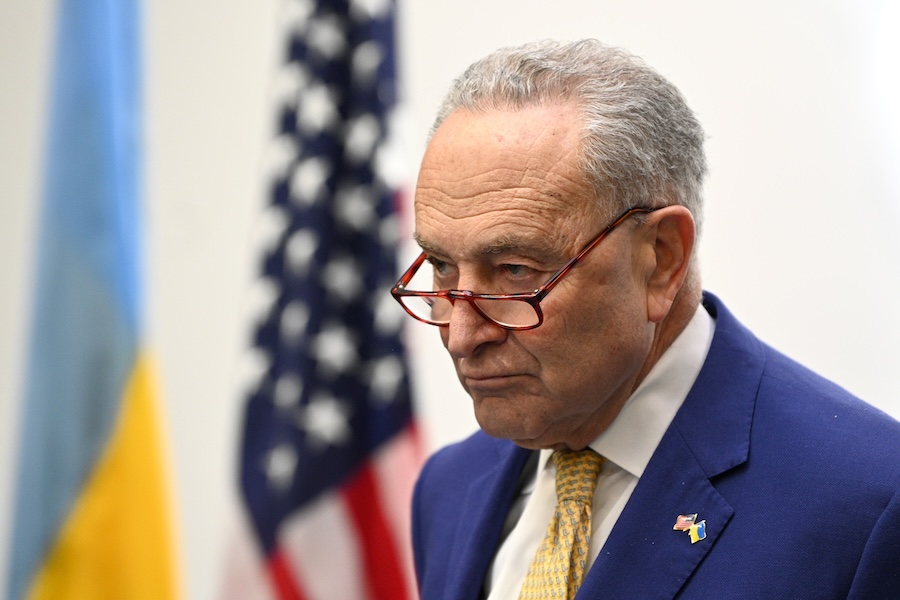
However, Senate Democratic Leader Chuck Schumer, D-N.Y., has been considerably more cautious about endorsing such a dramatic procedural change.
POLL: Did You Vote Republican In The Midterms?
Asked Wednesday whether Democrats intended to eliminate the filibuster following their election victories, Schumer declined to provide a definitive answer.
“Look, we are focused — the first thing we’re going to do is reduce people’s costs and work the legislative process,” Schumer said.
The uncertainty sets up a potential disagreement among Democrats before the incoming Congress even convenes.
The debate also carries an ironic twist for Republicans.
President Donald Trump repeatedly urged Senate Republicans to eliminate the filibuster while they controlled the chamber, arguing that the procedural hurdle prevented his administration from advancing key legislative priorities.
During a December 2025 interview with Politico, Trump called for eliminating the rule “without question.”
RELATED: John Thune Announces Decision On Run For GOP Senate Leader
The president had previously demanded similar action during the 2025 government shutdown, arguing that Republicans should use their majority to advance legislation without relying on Democratic cooperation.
But Senate Majority Leader John Thune, R-S.D., resisted those demands, maintaining that Republican lawmakers lacked the necessary votes.
Thune described the proposed rule change as “not happening.”
Trump renewed his push in July 2026 while advocating passage of the SAVE America Act, a Republican-backed election measure involving proof-of-citizenship requirements for voter registration.
Thune again declined to pursue eliminating the filibuster.
RELATED: JUST IN: Talarico Caught Red-Handed After NYT Digs Into His Past
Several Republican senators defended the procedure, arguing that it protects the minority party and encourages bipartisan negotiations.
Others warned that Democrats could eventually attempt to eliminate the same safeguard once they returned to power.
Sen. Ron Johnson, R-Wis., was among those who raised that concern, arguing that Republicans risked handing Democrats an opportunity to rewrite Senate rules in the future.
Now, with Democrats preparing to reclaim the majority, Talarico is publicly advocating precisely that kind of change.
Still, eliminating the filibuster would not automatically allow Democrats to enact their entire legislative agenda.
President Trump remains in the White House and retains his constitutional authority to veto legislation approved by Congress.
Overriding a presidential veto requires a two-thirds majority in both the House and Senate, a threshold that would remain unchanged even if lawmakers abolished the legislative filibuster.
Democrats would also need sufficient support within their own Senate conference to approve any procedural overhaul.
POLL: Do You Believe James Talarico’s Promise To Be A Moderate Senator?
Continue reading...
[ H/T Trending Politics ]