

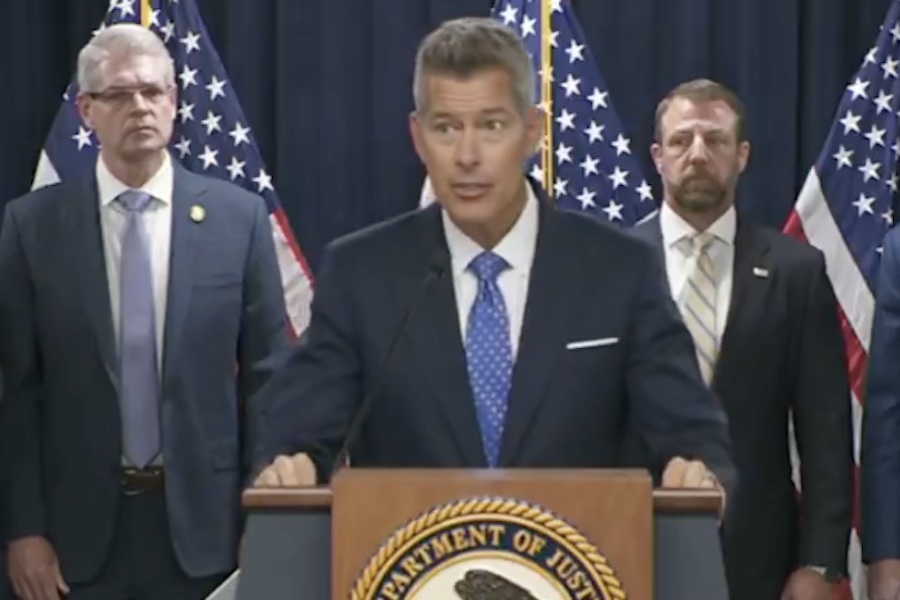
Transportation Secretary Sean Duffy addressed the cause of Friday’s nationwide ground stop during updates provided this morning, including a scheduled press briefing at the U.S. Department of Transportation headquarters.
The Federal Aviation Administration issued the ground stop after telecommunications issues affected facilities and Terminal Radar Approach Control facilities across the country beginning at 3:36 p.m. Eastern Time. Duffy has described the root issue as instability in radar data and communications stemming from the system’s aging infrastructure.
“At 3:36 p.m., we experienced instability for our radar and our communications and our centers and our TRACONs across the country. So, at airports we have towers. The next rung out is a TRACON. After that, we have En Route Centers. At the TRACONS and the centers, we started to have inconsistency in the data from the radars and our communication with airplanes,” Duffy said during Saturday’s press conference.
More than 3,500 aircraft were airborne at the time the stop was ordered. Duffy noted that “they all engaged and last time I looked we had less than 400 in the airspace as they were all coming in to safely land.” The FAA confirmed that not all radar or telecommunications were lost, and exceptions allowed critical medevac, life-saving cargo, and law enforcement flights to continue.
The ground stop was ultimately lifted at 8:15 p.m. Eastern Time after technicians restored functionality at centers and TRACONs.
POLL: Will America Regret Giving The Democrats Power?
Duffy attributed the failure to the system’s analog TDM telecommunications equipment. “What we have is an incredibly old air traffic control system. … We have TDM telecom–so this is analog telecom. Our switches, our routers actually got overloaded with data and they started to give us inconsistency in the data from those routers, and because of that we shut the system down. Now, I have already replaced some of those switches with President Trump and our new IP switches did not go down. It’s the old hardware that went down,” the secretary explained.
Officials have reported no evidence of a cyberattack. The SMART airspace management tool under development was not connected to the affected systems and did not contribute to the outage.
This morning, Duffy reported that recovery is progressing on schedule. “Operations are slowly returning to normal this morning. Planes are pushing back, taxiing, and taking off, and it is safe to fly. We are in close coordination with the airlines to support the ongoing recovery. You will continue to see some delays and cancellations as carriers reschedule flights and reposition aircraft/crews where they are needed most. Our top priority right now is making sure travelers get home safely to their families as quickly as possible,” he said.
“To our air traffic controllers, pilots, and flight crews who are working around the clock: the nation thanks you for your professionalism and dedication to the flying public.”
Duffy reiterated calls for action to rework the system, noting that previous funding has been insufficient for a full modernization. He has stated that President Trump requested resources for a complete build of a new air traffic control system, with Duffy seeking $50 billion in total to replace legacy hardware, software, and telecommunications rather than continue partial fixes.
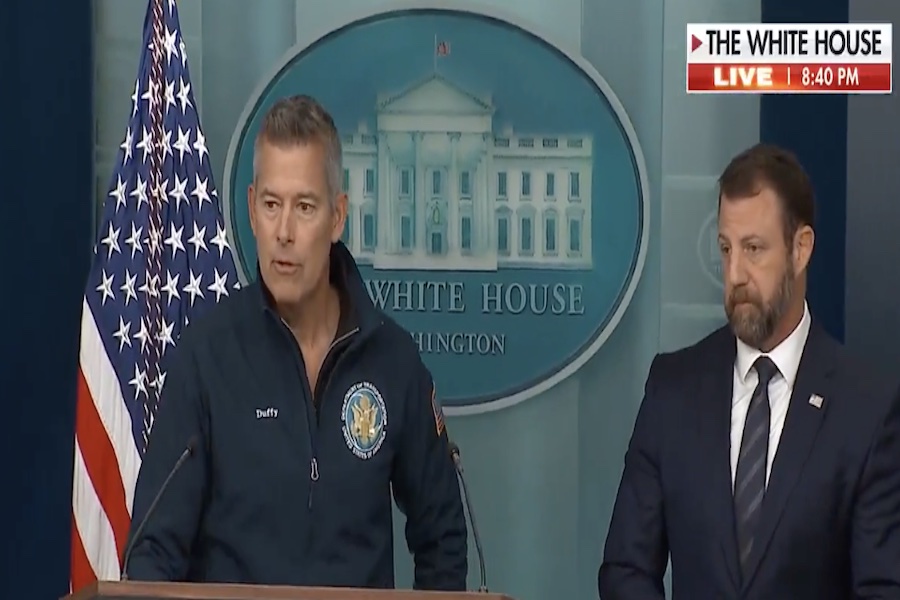
“Let’s not do a patchwork fix to a system that’s critical for every single family,” he told reporters at the White House on Friday evening.
RELATED: Walmart, Major Retailers Report Outages
Continue reading...
[ H/T Trending Politics ]