








The city told a man he needed a permit to pray in his own living room. The Supreme Court just agreed that’s worth a second look.
Daniel Grand is an Orthodox Jew who lives in University Heights, Ohio. In January 2021, he emailed about a dozen friends and invited them to walk to his house for a Sabbath minyan, the quorum of 10 adults Jewish law requires for certain communal prayers. Orthodox practice forbids driving on the Sabbath, so a home gathering wasn’t just a convenience. It was the only way he could pray with a minyan at all. Before a single prayer was said, the city’s law director sent him a cease-and-desist letter ordering him to stop using his home as “a place of religious assembly” unless he got a special use permit.
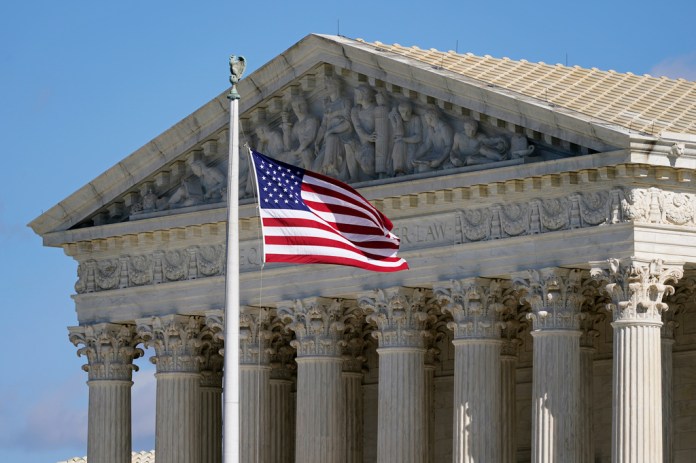
City officials went further, directing police to drive past his house and encouraging neighbors to report visitors. One neighbor wrote in opposition that she didn’t want the area “labeled as Jewish.” Grand withdrew his permit application rather than move his family, then sued. The lower courts threw his case out, ruling he’d jumped the gun by suing before the city reached a final permitting decision. In June, the Supreme Court agreed to hear Grand v. City of University Heights, and the question it’s taking up says as much about the state of religious liberty as the underlying dispute does.
MY CITY SAYS I NEED A LICENSE TO PRAY WITH FRIENDS IN MY HOME. THE CONSTITUTION SAYS OTHERWISE
The First Amendment doesn’t ration its protections. It doesn’t say Congress may pass laws respecting religious assembly so long as the paperwork clears first. It guarantees the free exercise of religion and the right of the people to assemble, full stop. Those aren’t privileges a city extends after a public hearing. They are limits on what the government can do to you before you ever fill out a form.
The founders wrote the free exercise and assembly clauses to keep government out of a citizen’s prayer life, not to hand local zoning boards a veto over it. They’d seen state-established churches use licensing and permission as tools of control, and they built a Constitution that denied the government that tool. A permit requirement for praying with friends in your own house is precisely the kind of prior restraint the First Amendment exists to forbid.
The Sixth Circuit didn’t reach that question. It ruled Grand’s claims weren’t ripe because he hadn’t finished the permit process before he sued, even though finishing that process would have required him to treat his home as a regulated house of worship. That’s the procedural trap at the center of the case: cities can string a permit application along indefinitely, and courts have told citizens they can’t challenge the burden until the government finally says no. Meanwhile, the burden, the surveillance, the hostile neighbors, and the withheld certificate of occupancy sit there unresolved.
The court’s 2021 decision in Tandon v. Newsom points the other way. There, the justices held that if a government treats comparable secular gatherings better than religious ones, strict scrutiny applies and the government almost always loses. University Heights allows plenty of secular groups to gather in homes without a special use permit. It singled out a minyan.
I’ve spent 30 years structuring real estate transactions and sitting through zoning hearings on behalf of private clients, and I’ve watched plenty of municipalities use permitting authority as a delay tactic when they don’t have the nerve to say no outright. It rarely announces itself as hostility. It shows up as missing paperwork, rescheduled hearings, and a process that never quite concludes. (University Heights managed to keep Grand in limbo for more than four years without ever issuing a final decision.) Cities don’t need to ban a synagogue outright when they can simply never finish deciding whether to allow one.
That’s the structural problem the Grand case exposes. A ripeness doctrine built for garden- variety land use disputes, a duplex owner fighting a setback requirement, gets applied to a constitutional right that isn’t supposed to require the government’s permission in the first place. When the process itself is the punishment, telling a citizen to wait for a final decision means telling him his rights don’t apply until the government decides they do.
A JEWISH MAN IN OHIO TRIED TO PRAY AT HOME. HIS MAYOR SAID NO
Susette Kelo lost her house because a city called private development a public use in Kelo v. City of New London. Grand nearly lost the ability to pray with his own community because a city called a living room a zoning violation.
Different amendments, same instinct: treat a citizen’s rights as administrative matters, subject to permission, rather than as limits on what government may do at all. The Constitution says otherwise. The Supreme Court now has the chance to say so, too.
Jay Rogers is a financial professional with more than 30 years of experience in private equity, private credit, hedge funds, and wealth management. He has a Bachelor of Science in criminal justice from Northeastern University and has completed postgraduate studies at UCLA, the University of Pennsylvania, and Harvard. He writes about issues in finance, constitutional law, national security, human nature, and public policy.
Continue reading...
[ H/T Washington Examiner ]