



Mystery Explosions: Syria's Recovering Gas Network Keeps Getting Sabotaged
Syria has reported at least two acts of major sabotage against its gas infrastructure in six weeks, and it raises questions over who or what group is behind it, and what this means for future energy transit projects.
Monday evening saw a fire rage out of control for many hours at a gas pipeline between al-Shola and Deir Ezzor following a mystery explosion.
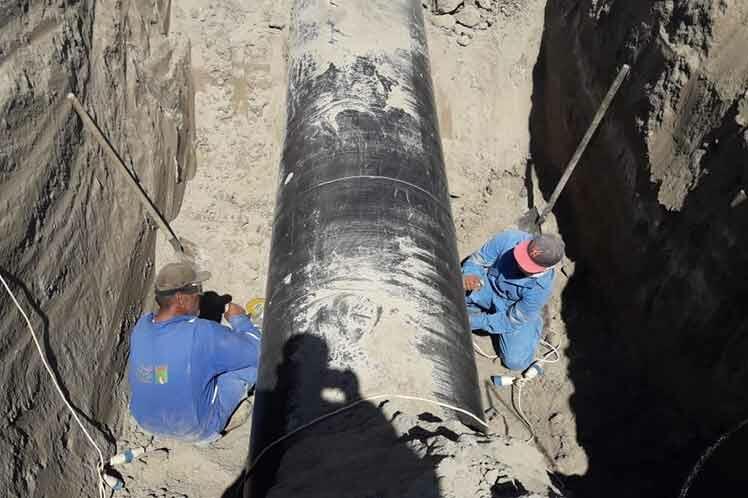
Syrian media: illustrative file image.
Syrian Petroleum Company (SPC), which oversees the site, called it an act of sabotage which abruptly halted gas flows from the Jbeissa gas plant to power generation stations, according to details from state-run SANA.
The New Arab writes that "In January, the SPC began pumping raw gas from the Jbeissa fields in Hasakah to the Furqlus gas plant in Homs province, with around 1.2 million cubic metres passing through the network each day to support electricity generation."
The report adds, "Damascus has also been working to reconnect other major eastern gas facilities to the national network."
For several years stretching through much of the last decade, Syrian cities - including the capital - have suffered intermittent and long power outages. It was especially during the tail-end of the proxy war to oust Assad that lack of fuel and electricity became a major crisis.
Damascus residents, for example, often had a mere one hour of electricity in their homes per day - if at all. Entire remote villages and towns simply proceeded with daily life amid a total and persistent blackout. This was to a large degree the result of a US-led sanctions war which in effect strangled the population. US troops had even for years directly occupied Syria's eastern oil and gas fields, which had been crucial for meeting domestic energy needs.
But now after Jolani and his HTS jihadists seized power, and with Washington sanctions declared removed, the country is trying to restore and rebuild services.
While no group has yet claimed responsibility for sabotaging facilities in the east, it illustrates how the country is still in a deeply unstable situation.
As for the initial attack among these two latest, it happened on August 18 and involved an explosion at the Jbeissa plant's gas export pipeline. Other sabotage examples back when the war was at its height are plentiful.
One explanation which has emerged for Monday's incident is being reported in The National:
Whether sabotage or theft, it raises big questions as regional officials talk about 'reviving' energy pipelines crossing Syria as an 'alternative' to Hormuz Strait shipping, given the war-ravaged country's longtime geopolitical importance and access to the Mediterranean. A future Iraq-Syria oil pipeline, for example, could be a prime target for unknown terror entities.
Tyler Durden Tue, 09/29/2026 - 18:50
Continue reading...
[ H/T ZeroHedge ]
Syria has reported at least two acts of major sabotage against its gas infrastructure in six weeks, and it raises questions over who or what group is behind it, and what this means for future energy transit projects.
Monday evening saw a fire rage out of control for many hours at a gas pipeline between al-Shola and Deir Ezzor following a mystery explosion.
Syrian media: illustrative file image.
Syrian Petroleum Company (SPC), which oversees the site, called it an act of sabotage which abruptly halted gas flows from the Jbeissa gas plant to power generation stations, according to details from state-run SANA.
The New Arab writes that "In January, the SPC began pumping raw gas from the Jbeissa fields in Hasakah to the Furqlus gas plant in Homs province, with around 1.2 million cubic metres passing through the network each day to support electricity generation."
The report adds, "Damascus has also been working to reconnect other major eastern gas facilities to the national network."
For several years stretching through much of the last decade, Syrian cities - including the capital - have suffered intermittent and long power outages. It was especially during the tail-end of the proxy war to oust Assad that lack of fuel and electricity became a major crisis.
Damascus residents, for example, often had a mere one hour of electricity in their homes per day - if at all. Entire remote villages and towns simply proceeded with daily life amid a total and persistent blackout. This was to a large degree the result of a US-led sanctions war which in effect strangled the population. US troops had even for years directly occupied Syria's eastern oil and gas fields, which had been crucial for meeting domestic energy needs.
But now after Jolani and his HTS jihadists seized power, and with Washington sanctions declared removed, the country is trying to restore and rebuild services.
While no group has yet claimed responsibility for sabotaging facilities in the east, it illustrates how the country is still in a deeply unstable situation.
As for the initial attack among these two latest, it happened on August 18 and involved an explosion at the Jbeissa plant's gas export pipeline. Other sabotage examples back when the war was at its height are plentiful.
One explanation which has emerged for Monday's incident is being reported in The National:
Whether sabotage or theft, it raises big questions as regional officials talk about 'reviving' energy pipelines crossing Syria as an 'alternative' to Hormuz Strait shipping, given the war-ravaged country's longtime geopolitical importance and access to the Mediterranean. A future Iraq-Syria oil pipeline, for example, could be a prime target for unknown terror entities.
Tyler Durden Tue, 09/29/2026 - 18:50
Continue reading...
[ H/T ZeroHedge ]