


Cancer medicine had an extraordinary weekend in Madrid.
At the European Society for Medical Oncology Congress, Amgen’s Imdelltra, added to AstraZeneca’s Imfinzi as maintenance therapy for extensive-stage small-cell lung cancer, cut the risk of death by 58%. Median survival rose from just under 13 months to a little over 21 months.
Then came another landmark result: Merck and Moderna reported Phase 3 data showing that a personalized mRNA cancer vaccine, intismeran, given with Keytruda after surgery for high-risk melanoma, reduced the risk of recurrence or death by 42% and the risk of cancer spreading or causing death by 38%.
Both were remarkable advances. Only one arrived burdened by a political history.
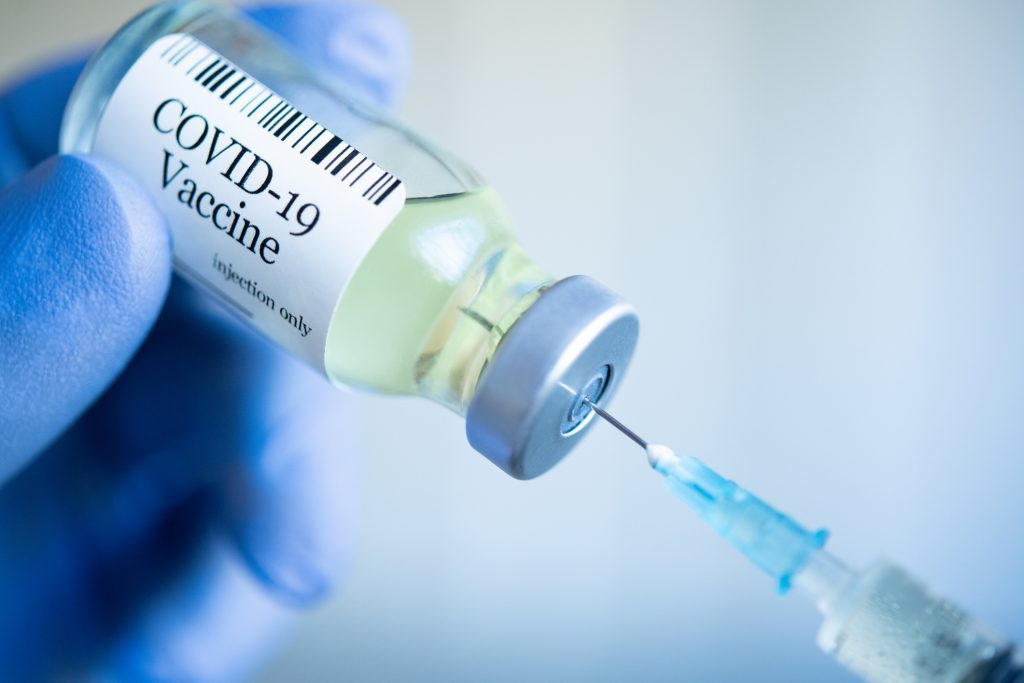
Somewhere during the COVID-19 pandemic, messenger RNA stopped being merely a biotechnology and became a political identity. Cancer may finally force us to separate the two.
For melanoma patients, the new numbers are not abstract.
At two years, 82.2% of patients receiving intismeran plus Keytruda were alive without their cancer returning, compared with 70% receiving Keytruda alone. Put another way, roughly 12 additional patients out of every 100 avoided recurrence or death by that point.
After roughly a century of mostly failed attempts to make cancer vaccines work, this was the first successful Phase 3 trial of a personalized mRNA cancer vaccine.
Severe treatment-related side effects occurred in 14.2% versus 13.4%. Overall-survival data are not yet mature. The treatment remains investigational. We do not know what it will cost, which patients will benefit most, or how it will compare with newer strategies that give immunotherapy before surgery.
Those caveats matter. So does the result.
For someone who has already had a dangerous melanoma removed and now lives with the possibility that microscopic cancer remains, “recurrence-free survival” is not merely a clinical-trial endpoint.
It is more time without hearing that the cancer is back.
Doctors sequence a patient’s tumor and identify mutations unique to that cancer. Moderna then makes a personalized strand of mRNA carrying instructions for several of those tumor markers. After injection, the patient’s cells briefly make those markers, giving the immune system a kind of wanted poster showing what the cancer looks like.
Keytruda, an immunotherapy drug, helps by releasing one of the brakes that can keep immune cells from attacking cancer.
That is very different from using mRNA to vaccinate a healthy person against a virus. The underlying tool is related, but the disease, patient, goal, and acceptable risk are different.
That distinction should be obvious. Politically, it increasingly is not.
At the ESMO Congress, Dana-Farber oncologist Toni Choueiri warned that mistrust and misinformation are “a key challenge to adopting anything that is mRNA”. Some people have even moved away from calling products such as in terms of “vaccines,” preferring terms such as personalized cancer therapy.
The political pressure is current. Last month, Americans for Health Freedom called on President Donald Trump and Health Secretary Robert F. Kennedy Jr. to “ban mRNA/gene therapy-derived technologies for all vaccines”, describing them as an “abject failure” in safety and efficacy.
Whatever one thinks about a particular COVID shot, that is the wrong level at which to make a medical judgment. A healthy young adult considering another respiratory-virus vaccine is making a very different risk-benefit calculation from a patient with high-risk melanoma deciding whether to reduce the chance that a potentially lethal cancer returns.
Different disease. Different baseline risk. Different product. Different benefit. Different tolerance for side effects.
The common ingredient is a technology.
We do not judge every monoclonal antibody by the success or failure of one antibody drug. We do not reject surgery because one operation failed. A platform can work brilliantly in one setting, disappoint in another, and remain worth studying in a third.
I made a similar argument in these pages in August, when the topline melanoma result had been announced but the detailed Phase 3 data were not yet available. One mRNA failure does not condemn the platform, I argued, and one success does not vindicate every mRNA product.
Now the stakes are less theoretical.
Kennedy’s Department of Health and Human Services last year wound down 22 mRNA vaccine development investments at the Biomedical Advanced Research and Development Authority, or BARDA, the federal program that helps fund vaccines and other medical countermeasures against public health threats.
That decision targeted mRNA vaccines for respiratory infections, not cancer. The distinction matters.
There is nothing inconsistent about questioning one application while supporting another if the distinction follows the evidence. The danger comes when “mRNA” itself becomes the conclusion.
These melanoma results do not prove that every criticism of COVID vaccination was wrong. They do not settle arguments over mandates, boosters, or which populations benefit enough from particular infectious-disease vaccines to justify them. Nor do they yet prove that intismeran helps patients live longer overall.
Each question deserves its own evidence.
The small-cell lung cancer result at ESMO will largely be judged as medicine: Does it prolong life? What are the side effects? Which patients should receive it?
The mRNA melanoma vaccine deserves the same treatment.
DOCTORS SPLIT THE VOTE. THEIR TEACHERS HAVE A ONE-PARTY PROBLEM
For the patient sitting across from an oncologist, the useful question is not whether messenger RNA belongs to the political left or right. It is whether this treatment, for this disease, in this patient, offers more benefit than risk.
Messenger RNA is neither a miracle nor a menace. It is a tool. A molecule should not have a party affiliation.
Arie Blitz, M.D., M.B.A., is a retired physician and independent writer in Weslaco, Texas, who writes on foreign policy, medical ethics, and public policy.
Continue reading...
[ H/T Washington Examiner ]