



Back in the 1960s, when the Vietnam War was raging, a familiar scenario played out in small towns. During election years, you’d see a “Nixon’s the One!” sign planted right next door to a “McGovern for President” banner. Neighbors would be mowing the grass around their respective slogans, stop to wipe their brows, and wave across the property line. After chores, they’d share a beer or iced tea on the porch. They disagreed fiercely, but they hadn’t lost their collective minds.
Today, in the run-up to November’s midterm elections, that neighborhood camaraderie has left the building. As the press prep breathlessly for the “Midterms of Rage,” a dissenting political sign becomes a declaration of war. Incidents of vandalism and assault over political differences are legion.
Rage-baiting in the public arena
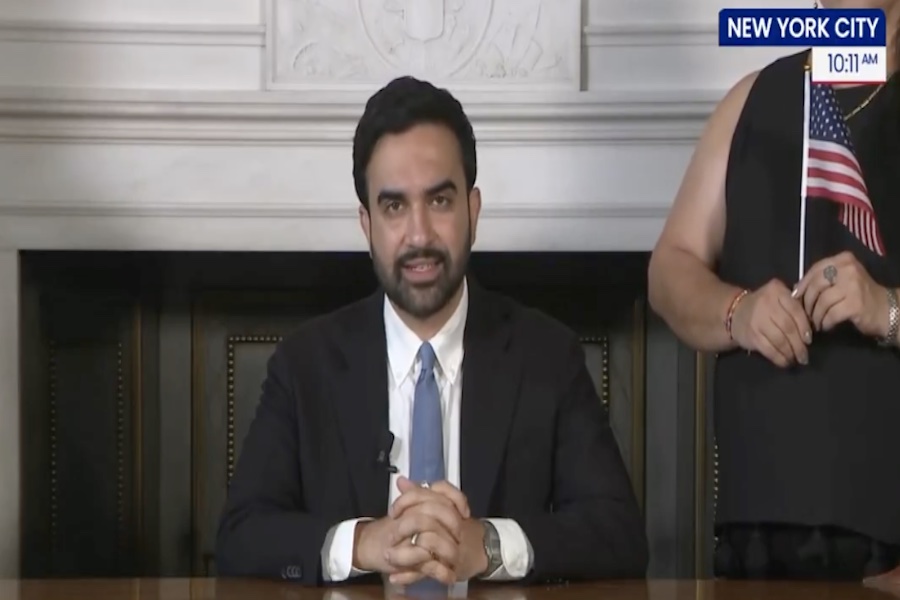
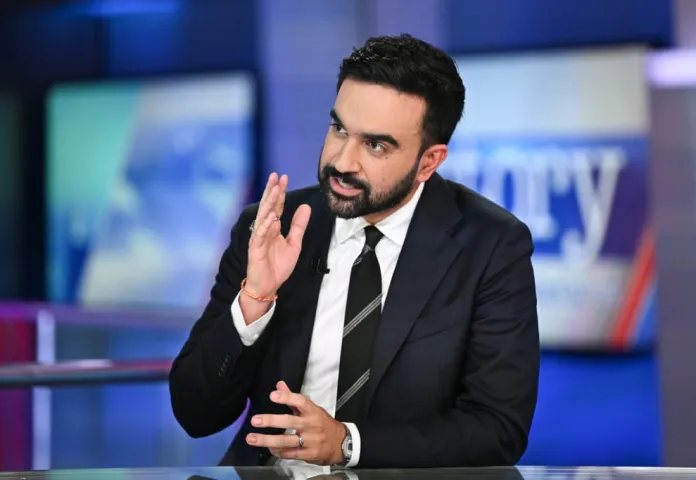
The rot has seeped deeply into the halls of governance. In New York, Mayor Zohran Mamdani’s administration spent nine weeks weaponizing a searchable municipal database as a kind of digital panopticon. By publishing a map-integrated “hit-list” identifying wealthy property owners under the guise of a pied-à-terre tax, the city handed a tactical plan to radicalized activists — maybe even potential Luigi Mangione copycats — eager to turn class resentment into a street-level brawl. A state judge finally stepped in this week to halt the madness, but the game’s well afoot. The state is now actively manufacturing a toxic, tribal vendetta.
Conventional wisdom blames algorithms, partisan networks, and a failing education system. The harder truth is that we can no longer discuss politics anywhere without screaming, red-faced walkaways. We are a society of emotional illiterates.
Maybe the ancients were onto something…
But maybe our real problem is structural and linguistic. Because language wires our brains, it essentially dictates what we’re capable of perceiving. Vocabulary is our toolbox. Yet today we’re attempting to navigate a hyper-complex psychological warzone with a vocabulary of basically one word: anger. Synonyms like rage, fury, and ire are just variations of intensity, not category. We have words for how hot the fire is, but we’ve lost the ability to name the type of fire.
Tellingly, ancient Greek thinkers didn’t see anger as a single river, and they mapped its tributaries with forensic precision. They had thumos (θυμός), the sudden flash of road rage that flares and dies like smoke. They had orge (ὀργή), the slow-burning, entrenched resentment born from a perceived injustice — an anger that sits and ripens. Most importantly, they feared menis (μῆνις), a cosmic, generational wrath aimed at total annihilation of the enemy. This is the exact word Homer chose to lead off the Iliad to describe Achilles’ world-destroying frenzy. In case there’s any doubt, Mamdani’s digital hit-list is pure, unadulterated menis.
Today, we’re trying to navigate a political minefield with emotional nuance numbed into a monolithic category of anger. We treat a momentary online irritation with the same weight as a systemic injustice. And our click-driven media ecosystem hungrily exploits this linguistic bankruptcy for financial gain. Partisan platforms stimulate a flash of thumos for every fleeting online offense, instantly morphing it into a false sense of orge — convincing their audience that a momentary annoyance is worthy of a righteous moral crusade against an invading force.
Suddenly, a nuanced policy debate is a tribal warzone: ICE’s actions are branded “worse than the Holocaust,” and a quietly provocative debater such as Charlie Kirk becomes a subhuman who deserves to get shot in the neck. We saddle every minor transgression with the historic weight of menis.
WHEN POLITICS BECOMES YOUR IDENTITY, DISAGREEMENT BECOMES WAR
Anthropologists often note that Eskimos have dozens of distinct words for snow — separating slush from walkable hardpack, drifts from the dreaded “ice that kills.” Far from a mere parlor trick, this was a vital tool kit for arctic survival. Name the exact texture of the freeze, and you can avoid death in the cold reaches.
We find ourselves in a similar tundra today, trying to survive a hostile political climate with a broken linguistic tool kit. Until we rebuild a nuanced language of conflict and learn to separate brief flashes of irritation from generational, soul-consuming vendettas, we will remain trapped in a cycle of perpetual outrage — and entirely unequipped to get through these “interesting” times in one piece.
Lou Mulkern is a former New York City trade journalist and PR director who resides in Thailand, where he teaches English part-time.
Continue reading...
[ H/T Washington Examiner ]