




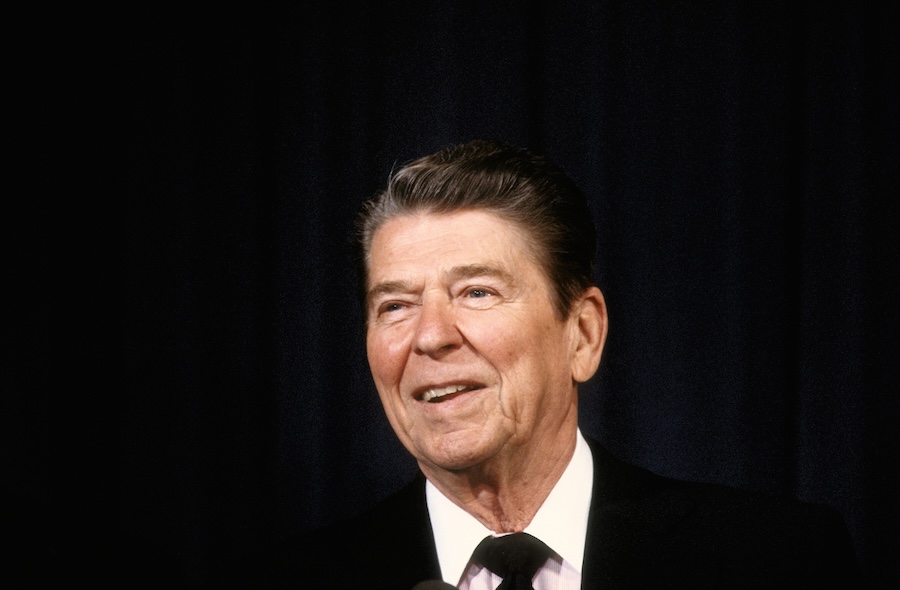
Richard Posner, one of the most influential legal scholars in American history and a longtime federal appeals court judge appointed by President Ronald Reagan, has died at the age of 87.
Posner died Tuesday, November 10, according to the University of Chicago Law School, where he spent decades teaching and helping shape modern legal thought. His death marks the passing of a towering figure in the American judiciary whose writings influenced generations of judges, attorneys, and legal scholars.
During his 36 years on the U.S. Court of Appeals for the Seventh Circuit, Posner developed a reputation for his sharp intellect, unconventional legal reasoning, and willingness to challenge established judicial thinking. He authored approximately 3,300 opinions before retiring in 2017.
Despite being appointed by a Republican president, Posner frequently defied traditional political labels, issuing decisions that drew praise and criticism from both conservatives and liberals.
Born in New York City in 1939, Posner demonstrated extraordinary academic ability from an early age. He attended Yale University before graduating first in his class from Harvard Law School in 1962.
He subsequently clerked for Supreme Court Justice William Brennan Jr. and eventually joined the University of Chicago Law School faculty in 1969.

Judge Richard Posner at Harvard University 19 November 2009
Posner became a leading figure in the emerging field of law and economics, which examines how legal decisions influence economic behavior, incentives, and broader society.
His groundbreaking 1973 book, Economic Analysis of Law, helped establish the discipline as a major force in American legal scholarship. Throughout his career, he published hundreds of academic articles and dozens of books covering subjects ranging from constitutional law to economics and public policy.
Reagan appointed Posner to the Seventh Circuit in 1981, beginning a judicial career that would span more than three decades. He later served as the court’s chief judge from 1993 until 2000.
Although initially associated with conservative legal philosophy, Posner increasingly challenged prominent conservative jurists, including the late Supreme Court Justice Antonin Scalia.
He became an outspoken critic of originalism, the judicial philosophy that interprets the Constitution according to its original public meaning.
His evolving views were reflected in several consequential decisions.

In 2014, Posner authored an opinion striking down same-sex marriage bans in Wisconsin and Indiana, dismissing arguments that traditional marriage restrictions served legitimate government interests.
Three years later, he participated in a landmark ruling concluding that federal civil rights protections against sex discrimination extended to sexual orientation.
Posner also publicly criticized the Supreme Court, accusing the institution of becoming overly political and questioning the qualifications of some sitting justices.
His outspoken personality and independent approach made him one of the judiciary’s most recognizable intellectual figures, even though he never served on the nation’s highest court.
Posner retired unexpectedly in September 2017, citing disagreements over the treatment of individuals representing themselves in federal court. He was subsequently diagnosed with Alzheimer’s disease, according to accounts disclosed by his attorneys.
University of Chicago Law School Dean Adam Chilton paid tribute to Posner’s extraordinary career, describing him as a scholar whose influence extended throughout the American legal system.
“There has never been a legal scholar quite as prolific, influential, and endlessly curious as Dick Posner,” Chilton said.
Posner is survived by his wife, Charlene Horn, their two sons, Kenneth and Eric, and four grandchildren.
Continue reading...
[ H/T Trending Politics ]