

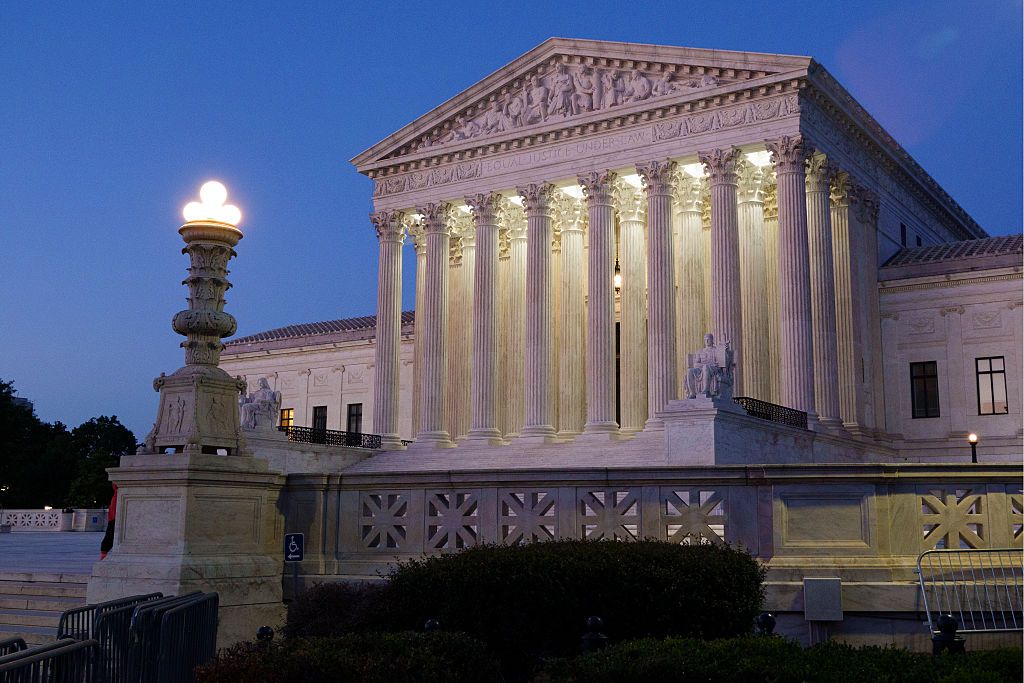




The U.S. Supreme Court has cleared the way for Tennessee to move forward with the execution of Christa Gail Pike after a federal appeals court issued an eleventh-hour stay.
The high court vacated the Sixth Circuit’s order Wednesday evening, removing the legal barrier that had halted the execution only hours earlier.
The ruling does not itself confirm that the lethal injection has been completed. It restores Tennessee’s authority to proceed under the active death warrant.
The first report captured the immediate result and the three-justice dissent.
The legal fight moved with extraordinary speed.
Pike’s lawyers had already asked the Supreme Court to stop the execution in a separate case. The Court denied that request and her petition for review on Tuesday.
Then, on Wednesday morning, the Sixth Circuit voted 2-1 to impose a short stay while it considered whether Pike’s claims about childhood sexual abuse had received adequate consideration during sentencing.
Tennessee immediately returned to the Supreme Court and asked the justices to vacate that stay.
The U.S. Supreme Court docket shows Tennessee filed emergency application 26A428 on September 30 in the name of prison warden Kenneth Nelsen.
The application came from the Sixth Circuit case numbered 26-5864. Pike filed her response the same day, and Tennessee filed a reply as the state pressed for a decision before its death warrant expired.
The docket identifies Justice Brett Kavanaugh as the justice who received the emergency application. The matter was then presented to the full Court, which vacated the lower court’s stay.
That sequence followed Tuesday’s denial in Pike’s separate application 26A414, which challenged the death sentence through the Tennessee court system. The two proceedings show how the case moved through overlapping state and federal channels in its final hours.
The Supreme Court’s order drew dissents from Justices Sonia Sotomayor, Elena Kagan and Ketanji Brown Jackson.
The history attached to the ruling made it one of Tennessee’s most closely watched death-penalty cases in decades.
Fox News noted the execution would be the first of a woman in Tennessee in more than two centuries.
Pike was 18 when she took part in the 1995 killing of 19-year-old Colleen Slemmer, a fellow student at a Knoxville job-training center.
Prosecutors said Slemmer was lured away, beaten and stabbed in a prolonged attack. Pike was convicted of first-degree murder and sentenced to death in 1996.
The brutality of Slemmer’s murder should never disappear behind the procedural language of the appeals.
A victim was tortured and killed. Her family then spent more than 30 years watching courts revisit a sentence imposed for that crime.
The Associated Press reported that witnesses had gathered at Riverbend Maximum Security Institution in Nashville when the Sixth Circuit issued its stay roughly an hour before the scheduled lethal injection.
The appeals court said it needed time to consider Pike’s argument that evidence about severe childhood abuse had not been fully weighed at sentencing. Her attorneys also pointed to her age at the time of the murder and her mental-health history.
Tennessee argued that the litigation had already run for decades and that the victim’s family was entitled to finality. Slemmer’s mother had traveled to Nashville to witness the execution after years of waiting.
The AP said Justice Sotomayor wrote that the Court’s ruling allowed the execution to proceed while legal challenges were still pending. Justices Kagan and Jackson joined her dissent, while the Court’s majority vacated the stay.
Governor Bill Lee had denied Pike’s clemency request on Monday, leaving the courts as her remaining avenue for relief.
The Supreme Court’s decision was the decisive legal development.
The Associated Press announced the reversal after the Sixth Circuit’s intervention.
The Gateway Pundit reported that the Supreme Court acted after Tennessee challenged the last-minute stay and asked the justices to let the execution move forward.
The report emphasized the rapid reversal: Pike had been scheduled for lethal injection Wednesday morning, the Sixth Circuit paused the process, and the Supreme Court later removed that pause.
It also identified the three dissenting justices and placed the ruling against Pike’s conviction for Slemmer’s 1995 murder. That context matters because the emergency litigation concerned whether the sentence could be carried out, not whether Pike committed the crime.
The Court’s action returned the case to the posture Tennessee sought. The state was legally free to proceed, while officials still had to carry out the execution within the remaining life of the warrant.
This was not a new trial and it was not an acquittal fight.
It was a final-hour battle over whether another court-imposed delay would stop a sentence that had survived decades of litigation.
The Sixth Circuit said wait.
The Supreme Court said Tennessee could proceed.
Read the full Supreme Court order here: Pike v. Tennessee.
This is a Guest Post from our friends over at WLTReport. View the original article here.
The post JUST IN: Supreme Court Vacates Last-Minute Stay, Clears Way For Christa Pike Execution appeared first on 100PercentFedUp.com.
Continue reading...
[H/T 100PercentFedUp]


