


"It'll Mean That You're Not Retarded": All-In Shreds White House Plan To Shame Open-Source AI Users
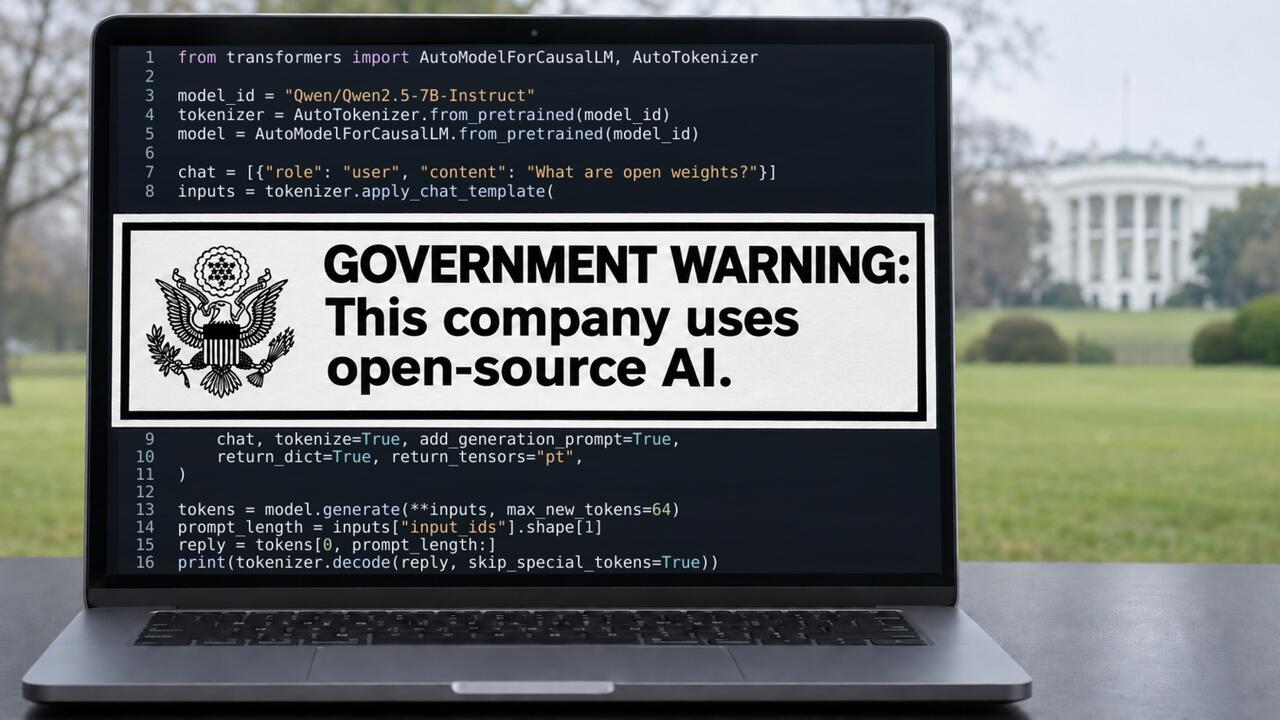
All-In co-host David Friedberg warned on Friday's episode that any effort to "curb open source, restrict open source, label open source" is "going to both limit human prosperity, limit individual liberty, create an Orwellian state," two days after Reuters reported that the Trump administration is weighing a rule that would force US companies to disclose their use of Chinese AI models.
"I think this continues to be the path of tyranny," Friedberg said. "Open source needs to be allowed and frankly encouraged to proliferate because the absence of that means that you're going to have tyrannical groups. Ultimately, they become tyrannical. They don't intend to be tyrannical. But every group that has the power to control what people see, what they're allowed to do, what they're allowed to access, how they're allowed to use things... that is where people become tyrannical because they have an opinion where they think they're right."
According to Reuters, officials at the Treasury Department and the White House Office of Science and Technology Policy have discussed requiring the disclosures, aimed at Chinese open-weight models such as Alibaba's Qwen, Moonshot AI's Kimi and DeepSeek, though the idea has not been adopted. Airbnb, which uses Qwen for its AI customer service agent, said its AI activity "runs overwhelmingly on U.S.-origin models." Reps. Andrew Garbarino and John Moolenaar have sent letters to Airbnb, DoorDash and Anysphere, maker of the Cursor coding tool, over their use of Chinese models, and Moolenaar told Reuters that "disclosure is an important step in managing the potential risks posed by the diffusion of Chinese open-weight models."
Reuters described the idea as part of a "name and shame" campaign to discourage the use of Chinese AI while sticking to the administration's broader anti-regulation stance. Treasury Secretary Scott Bessent said in July that the administration could sanction Chinese AI companies found guilty of stealing American models' intellectual property through distillation, echoing OSTP Director Michael Kratsios, who in April accused China of stealing US AI labs' intellectual property on an "industrial scale." Even Thomson Reuters, which owns Reuters, uses Alibaba's Qwen, a company spokesperson told the outlet.
Friedberg said the internet has already had this fight. Open source "was the basis of the Apache Foundation's tool that created open source servers that allowed us to have the open internet," he said, and of Android, "so that 70% of phones in the world today have unfettered access to the internet." "We're now facing the same decision point in open source AI as we did with all of those other prior technologies."
"Ultimately, you can regulate, you can restrict, you can control, you can litigate, you can criminally penalize people for the outputs of what they use software to do," he said. "But to limit software, to label software, to make it a point of restriction and control creates a regulated monopoly for the closed source products that are out there," one that, "if aligned with certain government agencies, gives those government agencies and those individual corporations power and control over you, the individual."
Asked what a disclosure on a company's website would actually do, Chamath Palihapitiya was blunter: "Nothing. It'll mean that you're not retarded."
"The market wants you to be smart. It wants you to be budget friendly. It wants you to be ROI oriented. It wants you to own your own technology. It does not want you to leak your alpha," Palihapitiya said, adding that "if the decision is disclaim a thing that nobody's going to see on your website, or go out of business, I would disclaim the thing, not go out of business." He called the proposal "a trial balloon" and said "Washington needs some extremely technical people on the inside that explains the actual technical implications of some of these things."
Host Jason Calacanis said the idea misreads how the models are used: "You're not buying it from the Chinese. It's on GitHub... You take it, you fork it, you put it on your own servers, you use it, you control it. There's no back doors. And if there were, you would immediately have a thousand AIs pointing at the back door in it."
Calacanis tied the trial balloon to Jensen Huang's exit from Nvidia. "There are no coincidences is, I think, a rubric many of us go by," he said. "It's pretty clear Jensen was going to become the open source champion." Last week on the same show, David Sacks argued that Anthropic's "safetyist" allies want full government control over models and chips, and as we noted, Huang's fall left open-weight models with no big defender in Washington.
Palihapitiya didn't buy the coordination theory: "I don't think it's that nuanced. I think it's more about power. And I think it's about control. And I think it's about ideology." The ideology, he said, "is whether you believe that this advantages the Chinese or not."
"With all the money that the domestic American companies have, why did we not find a way to spend some of that money to get real escape velocity for a true American open source alternative?" Palihapitiya asked. "Why are the only open source alternatives, Chinese, that are any good? Why?"
Friedberg put it down to the money: "It's not just money to be made. It's capital to be raised. I think it was a lot easier over the last couple of years to raise capital as a private frontier model company." China plays a different game, he said: "for the Chinese, it's how do we disrupt American capitalism? How do we disrupt the American AI ecosystem? ... So for the Chinese, it's very rational for them to proliferate open [weight] model."
"I'm speculating on the fact that there's a large scale, unconscious effort to monopolize artificial intelligence, the greatest technology advancement in human history," Friedberg said near the end of the episode. "No one should want an oligarchy or oligopoly... So try and keep it from becoming an oligopoly by allowing the proliferation."
Palo Alto Networks had just agreed to buy Applied Compute, a platform for post-training and running open-weight AI models, in an all-stock deal valued at $4.5 billion. With the S&P 500 down 1.39% as they taped, Palihapitiya said the stock was up 5.86% "because they made a huge bet on open source. [Friedberg] is right. And the market will reward you."
Tyler Durden Sat, 11/21/2026 - 15:30
Continue reading...
[ H/T ZeroHedge ]
All-In co-host David Friedberg warned on Friday's episode that any effort to "curb open source, restrict open source, label open source" is "going to both limit human prosperity, limit individual liberty, create an Orwellian state," two days after Reuters reported that the Trump administration is weighing a rule that would force US companies to disclose their use of Chinese AI models.
"I think this continues to be the path of tyranny," Friedberg said. "Open source needs to be allowed and frankly encouraged to proliferate because the absence of that means that you're going to have tyrannical groups. Ultimately, they become tyrannical. They don't intend to be tyrannical. But every group that has the power to control what people see, what they're allowed to do, what they're allowed to access, how they're allowed to use things... that is where people become tyrannical because they have an opinion where they think they're right."
According to Reuters, officials at the Treasury Department and the White House Office of Science and Technology Policy have discussed requiring the disclosures, aimed at Chinese open-weight models such as Alibaba's Qwen, Moonshot AI's Kimi and DeepSeek, though the idea has not been adopted. Airbnb, which uses Qwen for its AI customer service agent, said its AI activity "runs overwhelmingly on U.S.-origin models." Reps. Andrew Garbarino and John Moolenaar have sent letters to Airbnb, DoorDash and Anysphere, maker of the Cursor coding tool, over their use of Chinese models, and Moolenaar told Reuters that "disclosure is an important step in managing the potential risks posed by the diffusion of Chinese open-weight models."
Reuters described the idea as part of a "name and shame" campaign to discourage the use of Chinese AI while sticking to the administration's broader anti-regulation stance. Treasury Secretary Scott Bessent said in July that the administration could sanction Chinese AI companies found guilty of stealing American models' intellectual property through distillation, echoing OSTP Director Michael Kratsios, who in April accused China of stealing US AI labs' intellectual property on an "industrial scale." Even Thomson Reuters, which owns Reuters, uses Alibaba's Qwen, a company spokesperson told the outlet.
Friedberg said the internet has already had this fight. Open source "was the basis of the Apache Foundation's tool that created open source servers that allowed us to have the open internet," he said, and of Android, "so that 70% of phones in the world today have unfettered access to the internet." "We're now facing the same decision point in open source AI as we did with all of those other prior technologies."
"Ultimately, you can regulate, you can restrict, you can control, you can litigate, you can criminally penalize people for the outputs of what they use software to do," he said. "But to limit software, to label software, to make it a point of restriction and control creates a regulated monopoly for the closed source products that are out there," one that, "if aligned with certain government agencies, gives those government agencies and those individual corporations power and control over you, the individual."
"A Trial Balloon"
Asked what a disclosure on a company's website would actually do, Chamath Palihapitiya was blunter: "Nothing. It'll mean that you're not retarded."
"The market wants you to be smart. It wants you to be budget friendly. It wants you to be ROI oriented. It wants you to own your own technology. It does not want you to leak your alpha," Palihapitiya said, adding that "if the decision is disclaim a thing that nobody's going to see on your website, or go out of business, I would disclaim the thing, not go out of business." He called the proposal "a trial balloon" and said "Washington needs some extremely technical people on the inside that explains the actual technical implications of some of these things."
Host Jason Calacanis said the idea misreads how the models are used: "You're not buying it from the Chinese. It's on GitHub... You take it, you fork it, you put it on your own servers, you use it, you control it. There's no back doors. And if there were, you would immediately have a thousand AIs pointing at the back door in it."
"There Are No Coincidences"
Calacanis tied the trial balloon to Jensen Huang's exit from Nvidia. "There are no coincidences is, I think, a rubric many of us go by," he said. "It's pretty clear Jensen was going to become the open source champion." Last week on the same show, David Sacks argued that Anthropic's "safetyist" allies want full government control over models and chips, and as we noted, Huang's fall left open-weight models with no big defender in Washington.
Palihapitiya didn't buy the coordination theory: "I don't think it's that nuanced. I think it's more about power. And I think it's about control. And I think it's about ideology." The ideology, he said, "is whether you believe that this advantages the Chinese or not."
"Why Are The Only Open Source Alternatives Chinese?"
"With all the money that the domestic American companies have, why did we not find a way to spend some of that money to get real escape velocity for a true American open source alternative?" Palihapitiya asked. "Why are the only open source alternatives, Chinese, that are any good? Why?"
Friedberg put it down to the money: "It's not just money to be made. It's capital to be raised. I think it was a lot easier over the last couple of years to raise capital as a private frontier model company." China plays a different game, he said: "for the Chinese, it's how do we disrupt American capitalism? How do we disrupt the American AI ecosystem? ... So for the Chinese, it's very rational for them to proliferate open [weight] model."
"The Market Will Reward You"
"I'm speculating on the fact that there's a large scale, unconscious effort to monopolize artificial intelligence, the greatest technology advancement in human history," Friedberg said near the end of the episode. "No one should want an oligarchy or oligopoly... So try and keep it from becoming an oligopoly by allowing the proliferation."
Palo Alto Networks had just agreed to buy Applied Compute, a platform for post-training and running open-weight AI models, in an all-stock deal valued at $4.5 billion. With the S&P 500 down 1.39% as they taped, Palihapitiya said the stock was up 5.86% "because they made a huge bet on open source. [Friedberg] is right. And the market will reward you."
Tyler Durden Sat, 11/21/2026 - 15:30
Continue reading...
[ H/T ZeroHedge ]