



Iran is no longer simply waiting for America’s midterm elections. It is trying to influence them.
According to Reuters reporting, Iranian officials acknowledge that Tehran has prolonged negotiations with Washington, hoping to deny President Donald Trump a political victory before Americans vote. The calculation: sustain pressure on voters and improve Iran’s bargaining position.
But Tehran may be making a dangerous assumption. Trump promised not to resume military strikes against Iran before the elections, while American and Israeli planners are preparing options for renewed attacks afterward. Iran may discover that the election it hopes will restrain Trump instead removes one reason he has delayed.
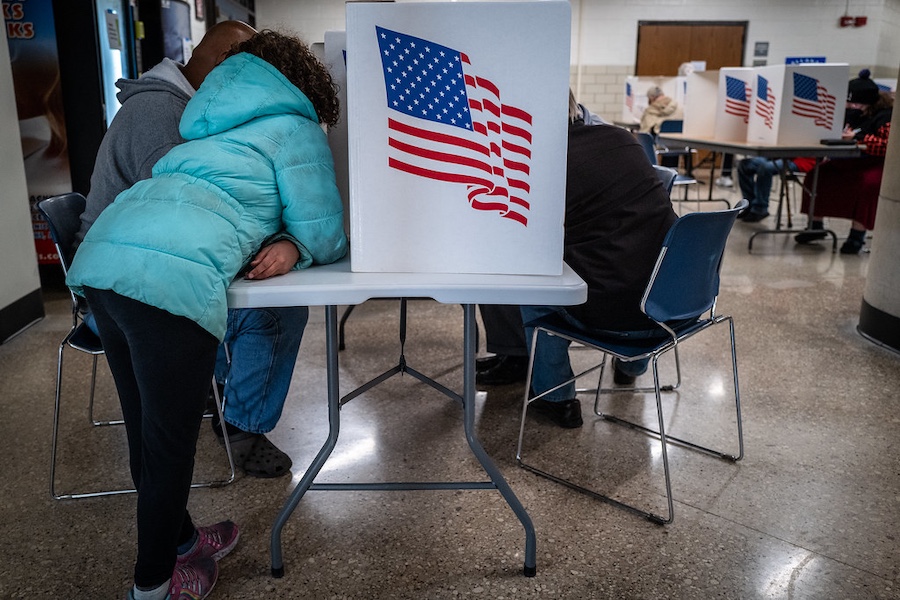
Americans will vote on prices, immigration, and economic uncertainty. In Tehran, Jerusalem, Beijing, and Moscow, governments will examine Trump’s room to maneuver. Foreign governments will interpret the results as an indication of Washington’s freedom to act.
Iran has already placed its bet. Tehran understands that the war, gasoline prices and uncertainty over the Strait of Hormuz have become domestic liabilities. It hopes to exploit those pressures while preserving leverage.
But time is not necessarily on Iran’s side. The American naval blockade has reduced Iranian oil exports. According to Kpler data reported by the Wall Street Journal, Iranian crude aboard tankers in Asian waters has been almost entirely depleted. The shadow fleet remains, but the oil sustaining it is disappearing.
Washington wants concessions over Iran’s nuclear program and the Strait of Hormuz, while Tehran wants relief from the blockade. Both have reasons to wait, but neither knows whether the election will improve its position.
According to ABC News, American and Israeli planners have developed options for strikes after the midterms, potentially targeting Iranian energy and nuclear facilities. Defense Secretary Pete Hegseth discussed Iran during an unannounced Israel visit this week. Military planning does not guarantee action, but the options are being prepared.
Iranian leaders can watch American forces assemble. What they cannot know is how the election will influence Trump’s decisions. Israel’s election complicates that calculation.
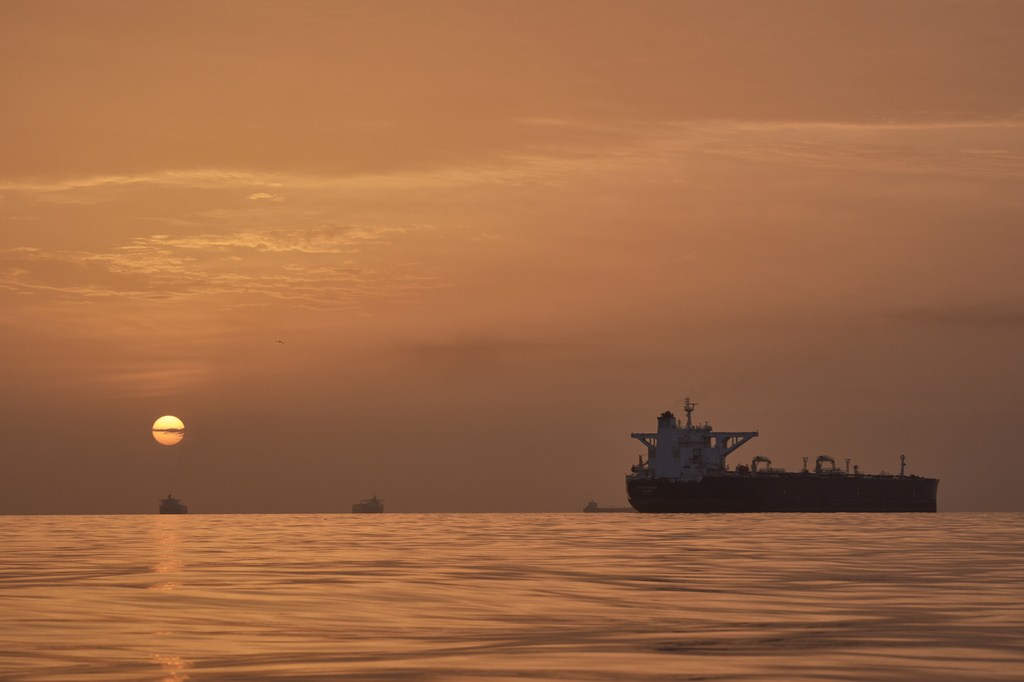
The sun rises behind tankers anchored in the Strait of Hormuz off the coast of Qeshm Island, Iran, Saturday, April 18, 2026. (AP Photo/Asghar Besharati)
" data-large-file="https://www.washingtonexaminer.com/wp-content/uploads/2026/11/AP26108447289863.jpg?w=1024" src="https://www.washingtonexaminer.com/wp-content/uploads/2026/11/AP26108447289863.jpg?w=1024" alt="Qeshm Island strikes" class="wp-image-4788974" srcset="https://www.washingtonexaminer.com/wp-content/uploads/2026/11/AP26108447289863.jpg 1024w, https://www.washingtonexaminer.com/wp-content/uploads/2026/11/AP26108447289863.jpg?resize=300,200 300w, https://www.washingtonexaminer.com/wp-content/uploads/2026/11/AP26108447289863.jpg?resize=768,512 768w" sizes="(max-width: 1024px) 100vw, 1024px">
The sun rises behind tankers anchored in the Strait of Hormuz off the coast of Qeshm Island, Iran, Saturday, April 18, 2026. (AP Photo/Asghar Besharati)
Israelis voted Oct. 27, but the election produced no governing majority. With counting underway, Prime Minister Benjamin Netanyahu’s right-wing and religious bloc held approximately 54 seats, Gadi Eisenkot’s opposition bloc 47, and Arab parties 19. Neither bloc reached the 61 seats required to govern. Netanyahu remains in office without a clear path to forming a government.
The uncertainty could last months. President Isaac Herzog must select a candidate to form a government after results are published, beginning a process that could end in another election. Netanyahu remains caretaker prime minister, retaining national security authority. Political paralysis does not mean military paralysis.
That distinction matters for Iran. Netanyahu’s opponents disagree over judicial reform, military conscription and his political future, but share his assessment of Iran as a major security threat. A different coalition might alter the timing and coordination of military operations without changing Israel’s strategic objectives.
Netanyahu faces conflicting incentives. Confronting Iran could reinforce his security credentials, but major operations during coalition negotiations carry risks. Tehran may interpret the deadlock as weakness when it could instead encourage Netanyahu to demonstrate resolve.
The elections create overlapping uncertainties. Israel may spend months negotiating a government while Washington emerges with a divided Congress. Tehran must then decide whether those distractions favor prolonged negotiations or signal a narrowing window before military pressure resumes.
A Democratic House could bring investigations, war powers resolutions, and appropriations disputes complicating Trump’s Iran policy. But congressional opposition does not automatically prevent military operations. In 1999, the Republican House deadlocked on authorizing Bill Clinton’s Kosovo campaign, which continued. In 2011, the House rejected authorization for Barack Obama’s Libya operation without cutting off funding.
Tehran could mistake political opposition for operational paralysis. A divided Congress might raise the costs of military action without removing the president’s ability to act.
A Republican victory presents another calculation. Trump might interpret continued congressional control as support for a tougher approach, though hardly a mandate for renewed fighting. Tehran could face an administration more willing to use military pressure.
The danger is that neither side correctly interprets the elections. Iran could believe that a Democratic House and an Israeli deadlock will restrain military action, while Trump concludes that the election has removed his reason to delay. Netanyahu might see an opportunity to press Israel’s advantage before Tehran recovers.
The risks extend beyond the Middle East. Moscow will watch for weakening Western unity over Ukraine, while Beijing examines American commitments in the Pacific. Caracas will assess whether Trump’s position changes the costs of resisting Washington. Europeans will consider whether America remains a reliable security partner.
But Election Day offers a measure of American political dissatisfaction. Foreign governments will draw conclusions, whether justified or not. The danger lies less in the election than in the decisions others make after interpreting it.
A Republican Congress would not guarantee Trump unrestricted freedom of action. A Democratic House would not necessarily signal American retreat. Netanyahu’s lack of a parliamentary majority does not necessarily weaken Israel’s willingness to confront Iran.
The greatest danger may be conflicting signals. Tehran might perceive its adversaries as distracted and believe it can extract better terms. Jerusalem might see a narrowing window for military action. Washington might conclude that the political constraints delaying a decision have disappeared.
The result could be an escalation none of the parties fully intended.
Americans should vote according to their priorities. This is not an argument for either party. But their choices will be studied by governments whose interests frequently conflict with America’s.
US SAYS IT CONDUCTED DEFENSIVE STRIKES AGAINST IRAN ON EVE OF MIDTERM ELECTIONS
Tuesday matters internationally not because Americans are choosing a foreign policy. It matters because foreign governments may behave as though they are.
When the final close House race is called, some of the most consequential interpretations may come not from Washington, but from a bunker outside Tehran. And the decisions made there could matter far more on Wednesday than anything Americans decided the day before.
Continue reading...
[ H/T Washington Examiner ]